

 English





























Best Canada PR Pathways in 2026 (Complete Guide for Immigrants)


If you are planning to immigrate to Canada, wipe the slate clean. Everything you thought you knew about Canadian immigration shifted dramatically this year.
The federal government has aggressively slashed temporary resident visas—cutting study permits and temporary work permits by nearly 50%—in an effort to stabilize the housing market and infrastructure. If you try to use the old “come as a student and figure it out later” strategy, you are walking into a trap.
However, the door is far from closed. The permanent residency target remains locked at a historically high 380,000 admissions for 2026. The government hasn’t stopped accepting immigrants; they have simply changed who they want and where they want them to go. To find the best Canada PR pathway 2026, you need to stop following outdated advice from a few years ago and align your application with the government’s new, highly targeted economic goals.
Let’s break down the exact programs the Canadian government is prioritizing this year, decode the massive upcoming Express Entry overhaul, and chart the absolute easiest routes to secure your permanent residency.
Table of Contents
- The 2026 Reality Check: What Changed?
- Provincial Nominee Programs (PNP): The New Golden Ticket
- The 2026 Express Entry Overhaul: What You Need to Know
- The Hidden Gem: Skilled Temporary Workers Initiative
- Express Entry vs PNP vs Pilot Programs (Comparison)
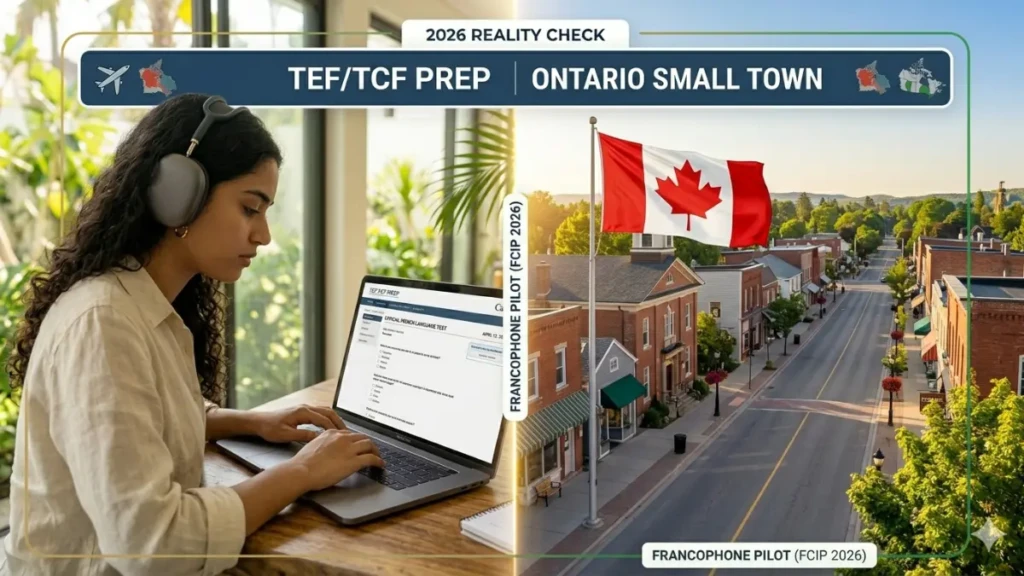
- Expert Insight: The French-Language Fast Track
- Frequently Asked Questions (FAQ)
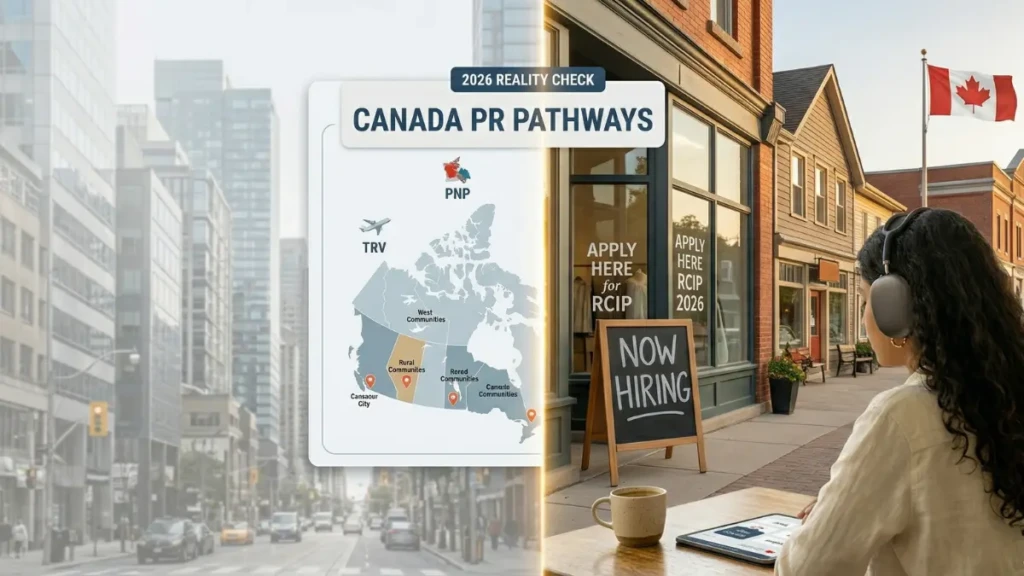
The 2026 Reality Check: What Changed in Canadian Immigration?
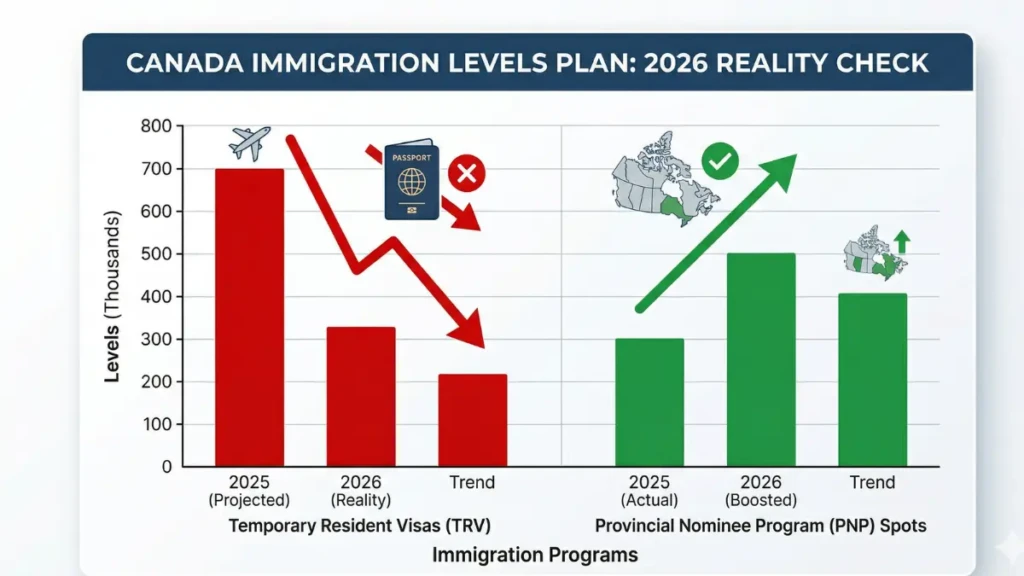
Before choosing a program, you must understand the math behind the 2026-2028 Immigration Levels Plan.
Canada is deliberately shifting away from temporary residents and heavily prioritizing targeted economic permanent residents.
- Temporary Cuts: New temporary arrivals (students and workers) are dropping from 673,650 in 2025 to just 385,000 in 2026.
- Permanent Stability: The PR target is fixed at 380,000 for 2026, with economic immigration accounting for a massive 64% of those spots.
The takeaway? The government wants people who are ready to hit the ground running in high-demand sectors, not people looking for temporary stepping stones.
Provincial Nominee Programs (PNP): The New Golden Ticket
If you are looking for the easiest way to get PR in Canada right now, you need to look outside of Toronto and Vancouver. The Provincial Nominee Program (PNP) has officially become the cornerstone of Canada’s economic immigration strategy.
In 2026, the federal government increased the PNP allocation by a staggering 66%, jumping to 91,500 dedicated spots. The government is actively using PNPs to push skilled talent into smaller cities and provinces that desperately need workers.
How to Leverage the PNP in 2026:
- Target Regional Hubs: Provinces like Alberta (AAIP), Saskatchewan (SINP), and Manitoba (MPNP) are practically rolling out the red carpet for tradespeople, healthcare workers, and agriculture specialists.
- The Ontario/BC Strategy: Even highly competitive provinces are doing massive targeted draws. In early 2026, British Columbia issued high-volume invitations specifically to candidates in healthcare, childcare, and technology, while Ontario heavily targeted the Regional Economic Development through Immigration (REDI) pilot.
- The 600-Point Boost: If you secure an “enhanced” provincial nomination through a province that aligns with Express Entry, you are awarded an additional 600 Comprehensive Ranking System (CRS) points. This essentially guarantees your PR invitation in the very next draw.
The 2026 Express Entry Overhaul: What You Need to Know
For the last decade, Express Entry has been the undisputed king of Canada immigration programs 2026. However, the system is currently undergoing its biggest structural overhaul since its inception in 2015.
Immigration, Refugees and Citizenship Canada (IRCC) is in the process of replacing the three legacy programs—the Federal Skilled Worker (FSW) class, the Canadian Experience Class (CEC), and the Federal Skilled Trades (FST) class.
What is happening?
The government plans to merge these three categories into a single, streamlined “Federal High-Skilled” class by the end of the year. The goal is to simplify the eligibility criteria and build a more dynamic pool of talent that responds directly to immediate labour shortages rather than just rewarding candidates for having a generic master’s degree.
How to prepare:
Until the new system is fully rolled out, IRCC is heavily relying on category-based selection draws. If you want an Express Entry invitation today, your CRS score matters less than your occupation. The absolute highest priorities for 2026 are:
- Healthcare professionals (NOC 3)
- STEM professionals (Tech, Engineering, Math)
- Skilled Trades (Carpenters, Plumbers, Electricians)
- Transport and Agriculture
The Hidden Gem: Skilled Temporary Workers Initiative
If you are already inside Canada on a work permit, pay close attention. One of the most critical updates in the 2026-2028 levels plan is the introduction of a one-time initiative to transition 33,000 skilled temporary workers to permanent residents.
- Who is it for? This is specifically targeted at temporary foreign workers (often on employer-specific permits) who have established deep roots in their communities, pay taxes, and work in essential sectors like agriculture, rural healthcare, and manufacturing.
- The Requirements: While final points grids are still rolling out, candidates are generally expected to need a baseline language score (CLB 5) and proof of continuous employment in a targeted region.
If you fit this demographic, this is arguably the fastest and least competitive PR route available this year.
Express Entry vs PNP vs Pilot Programs
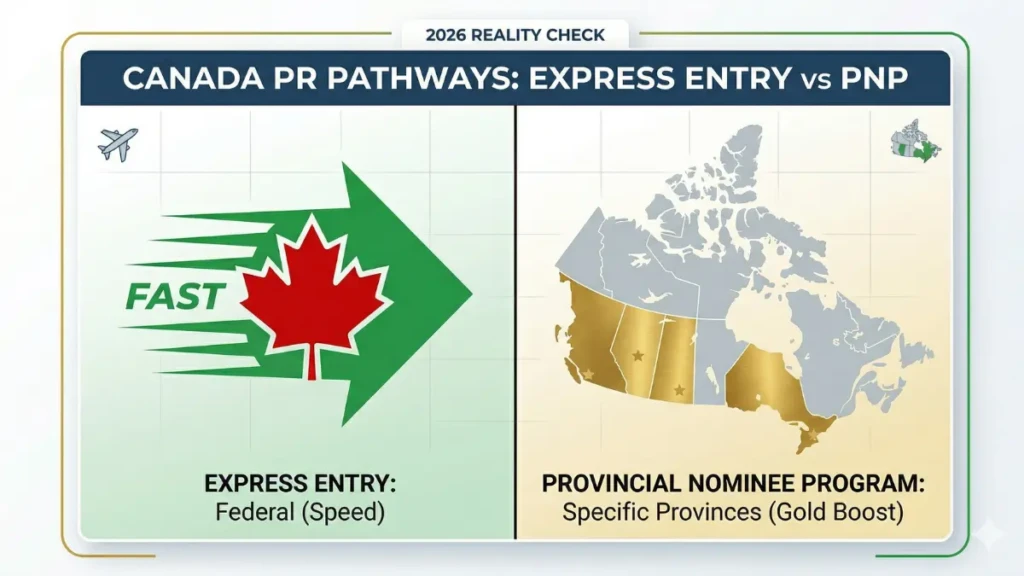
When evaluating your Canada PR options 2026, analyzing the data side-by-side will save you months of wasted effort.
| Feature | Express Entry (Federal) | Provincial Nominee Program (PNP) | Targeted Pilot Programs (e.g., AIP, Rural) |
| Processing Time | Fastest (Usually 6 months) | Variable (Base PNP takes 12+ months; Enhanced takes 6 months) | Slower (12–18 months) |
| Flexibility | High. You can live anywhere in Canada (except Quebec). | Low. You must legally commit to living in the nominating province. | Lowest. You are tied to a specific rural community or Atlantic province. |
| Difficulty Level | Very High. Requires top-tier English/French, youth, and high education. | Moderate. Lower language/education requirements if you have an in-demand job offer. | Low. Designed to be accessible, but finding a designated employer is the main hurdle. |
| Best For | Young professionals (20-29), tech workers, bilingual candidates. | Tradespeople, healthcare workers, candidates with slightly lower CRS scores. | Blue-collar workers, candidates willing to live in remote coastal/rural towns. |
Expert Insight: The French-Language Fast Track

We asked a registered Canadian immigration consultant what the ultimate “hack” is for bypassing the massive backlog of applicants in 2026.
“Stop fighting for the generic Express Entry spots. The federal government has a legal mandate to increase Francophone immigration outside of Quebec. The target for French-speaking admissions has been raised to 10% of the total intake. If you can achieve an NCLC 7 in French—even if your primary language is English and your CRS score is only 400—you are practically walking into a guaranteed PR invitation through the dedicated Francophone category draws. Spending six months learning French will yield a higher ROI than spending two years getting a second master’s degree.”
Frequently Asked Questions (FAQ)
Is the Study-to-PR pathway dead in 2026?
It is not dead, but it is no longer a guarantee. With study permits slashed by nearly 50% and Post-Graduation Work Permits (PGWP) tied to specific in-demand fields of study, you can no longer take a generic business diploma at a strip-mall college and expect to get PR. If you come as a student, you must study in a healthcare, STEM, or trades program to secure a pathway.
What is the maximum age for Express Entry?
There is no strict legal age limit, but the Comprehensive Ranking System heavily penalizes you after age 29. By age 40, you lose almost all of your age-related CRS points. If you are over 35, you should almost exclusively be looking at PNP streams or employer-driven Pilot Programs, which care far more about your work experience than your age.
Do I absolutely need a job offer to get Canada PR?
No. The Federal Skilled Worker program (under Express Entry) does not legally require a job offer if you have enough points and settlement funds. However, in the 2026 landscape, having a valid Canadian job offer drastically increases your chances of getting picked in a PNP or category-based draw.
How much money do I need to immigrate to Canada?
If you are applying without a valid job offer in Canada, you must show “Proof of Funds” to ensure you can survive your first few months. In 2026, a single applicant needs to show approximately $14,000 CAD in liquid savings. This number increases for every dependent family member you bring.
Your Next Strategic Move
The era of broad, generic immigration to Canada is over. The 2026 landscape rewards highly specific, targeted action. Audit your skills. If you are a software developer, aim for Ontario or BC. If you are a nurse or a welder, look at Alberta or Nova Scotia. Pick the pathway that aligns with the government’s economic panic points, submit your profile, and claim your spot.
Ready to start the paperwork? Make sure you read our breakdown on [How to Get Your Educational Credentials Assessed (ECA) Fast in Canada (2026)] to avoid the most common application delays.
(FAQ)
What is the easiest pathway to get Canada PR in 2026?
The easiest pathway to Canada PR in 2026 depends heavily on your background, but the Express Entry System remains the fastest for skilled workers. For individuals with lower CRS scores, the Provincial Nominee Program (PNP) and the newly launched Rural Community Immigration Pilot (RCIP) offer highly accessible routes, as they target specific regional labor shortages.
Will the TR to PR pathway open again in 2026?
Yes, the Temporary Resident to Permanent Resident (TR to PR) pathway is a major focus for 2026. The Canadian government plans to transition thousands of temporary work permit holders and international graduates to permanent residents between 2026 and 2027. Applicants will generally need valid temporary status, full-time Canadian work experience, and a CLB-level language test.
Can I get Canada PR without a job offer in 2026?
Yes, you can get Canada PR without a job offer. The Express Entry system (specifically the Federal Skilled Worker Program) does not require a job offer if you have enough Comprehensive Ranking System (CRS) points based on your age, education, work experience, and language skills. Additionally, some PNP streams invite candidates purely based on their human capital scores.
What are the new Canada PR pilot programs in 2026?
In 2026, Canada is heavily pushing regional and targeted immigration. The standout new programs include:
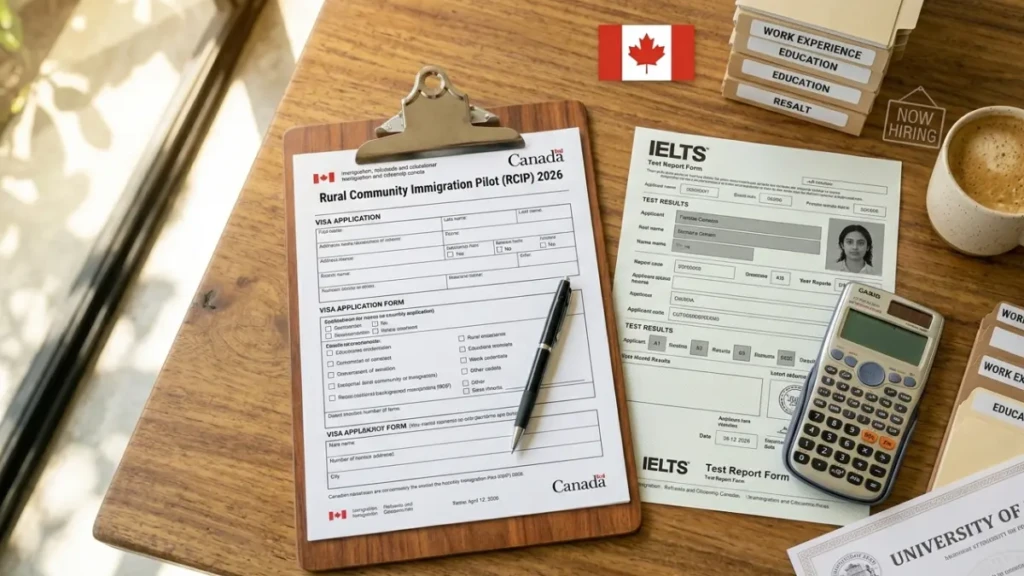
Rural Community Immigration Pilot (RCIP): Targeting workers to fill labor shortages in rural areas.
Francophone Community Immigration Pilot (FCIP): Designed to increase French-speaking immigration outside of Quebec.
Sector-specific Pathways: Accelerated PR routes for agriculture, construction, and U.S. H-1B visa holders in tech and healthcare.
How much money do I need to immigrate to Canada?
To immigrate through Express Entry as a single applicant in 2026, you generally need around $13,757 CAD in settlement funds (Proof of Funds). This amount increases with each additional family member. However, if you are applying under the Canadian Experience Class (CEC) or have a valid, LMIA-supported job offer, you are exempt from the proof of funds requirement.
How many CRS points are needed for Canada PR in 2026?
While there is no fixed minimum, competitive CRS scores for general Express Entry draws typically hover around 490 to 520 points. However, Canada conducts “Category-Based Draws” targeting specific profiles (like healthcare workers, STEM professionals, trades, and French speakers), which frequently have much lower CRS cut-offs, sometimes dropping into the 300s or low 400s.
How long does it take to process Canada PR in 2026?
Processing times vary by program, but Express Entry remains the fastest, typically taking 6 months from the time you submit your complete application after receiving an Invitation to Apply (ITA). Provincial Nominee Programs (PNPs) can take anywhere from 11 to 20 months, and family sponsorship generally takes around 12 months.
Also Read:

RCIP Canada 2026: Process, Requirements & Work Permits
12th Apr 2026[…] Best Canada PR Pathways in 2026 (Complete Guide for Immigrants) […]
FCIP Canada 2026: Requirements, Process & Communities
12th Apr 2026[…] Best Canada PR Pathways in 2026 (Complete Guide […]