

 English














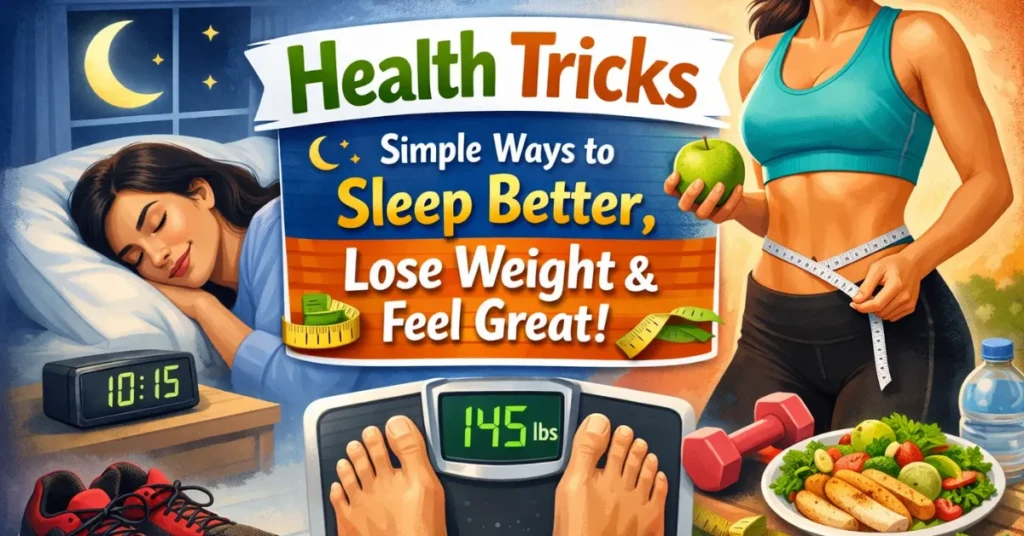









Health Tricks: Simple Ways to Sleep Better, Lose Weight and Feel Great

What if the secret to feeling your absolute best wasn’t a complicated diet, an expensive supplement stack, or a two-hour gym routine?
What if it was simpler than that — a handful of small, science-backed habits woven into your existing day?
That’s exactly what this guide is about.
Most health advice makes things unnecessarily complicated. Cut out entire food groups. Exercise for 90 minutes daily. Take 14 supplements before breakfast. It’s exhausting just reading it — let alone doing it.
Here’s the truth: the biggest health wins come from the basics, done consistently. Better sleep changes your hunger hormones, your mood, your metabolism, and your energy levels all at once. Small dietary shifts compound into real weight loss over months. Simple daily movement improves cardiovascular health, mental clarity, and longevity without a single gym visit.
In 2026, we have more science than ever confirming what the healthiest people in the world actually do. And almost none of it is complicated.
Here are the most powerful, research-backed health tricks to help you sleep better, lose weight, and genuinely feel great — starting today.
Sleep Better: Tricks That Actually Work
Poor sleep isn’t just an inconvenience. It’s a full-body health crisis hiding in plain sight.
A single night of poor sleep raises hunger hormones by up to 24%, impairs cognitive function equivalent to being legally drunk, and increases cortisol levels that trigger fat storage. Do that night after night and the effects compound in ways that no diet or exercise plan can fully overcome.
Fix your sleep first. Everything else gets easier when you do.
Stick to One Wake-Up Time — Even on Weekends
This is the single most impactful sleep habit you can build — and almost nobody does it.
Your body runs on a circadian rhythm, a 24-hour biological clock that regulates sleep, hunger, cortisol, and dozens of other functions. Waking up at wildly different times on different days — what sleep researchers call social jetlag — throws that clock into chaos.
A study published in the Journal of Clinical Endocrinology and Metabolism found that social jetlag was associated with higher BMI, increased inflammation, and worse mood scores — independent of total sleep duration.
Pick a wake-up time and stick to it, seven days a week. Even if you go to bed late. Even on Sunday. Your sleep quality will improve significantly within two weeks.
Keep Your Bedroom Cool
Most people sleep in rooms that are too warm. Your body needs to drop its core temperature by 1–3°F to initiate and maintain deep sleep.
Research from the National Sleep Foundation shows the optimal bedroom temperature for sleep is between 60–67°F (15–19°C). Sleeping in a room that’s too warm reduces slow-wave deep sleep — the most physically restorative stage — and increases nighttime waking.
Turn down the thermostat. Use lighter bedding. Open a window. It sounds minor. It makes a real difference.
Cut Off Caffeine by 2 PM
Caffeine has a half-life of roughly 5–7 hours. That afternoon coffee at 3 PM still has half its caffeine circulating in your bloodstream at 9 PM — quietly disrupting your ability to fall asleep and reach deep sleep stages.
A study published in the Journal of Clinical Sleep Medicine found that caffeine consumed even 6 hours before bedtime reduced total sleep time by more than one hour. Most people had no idea it was affecting them.
Move your caffeine cutoff to 2 PM and watch your sleep quality improve within days.
The 10-3-2-1-0 Sleep Rule
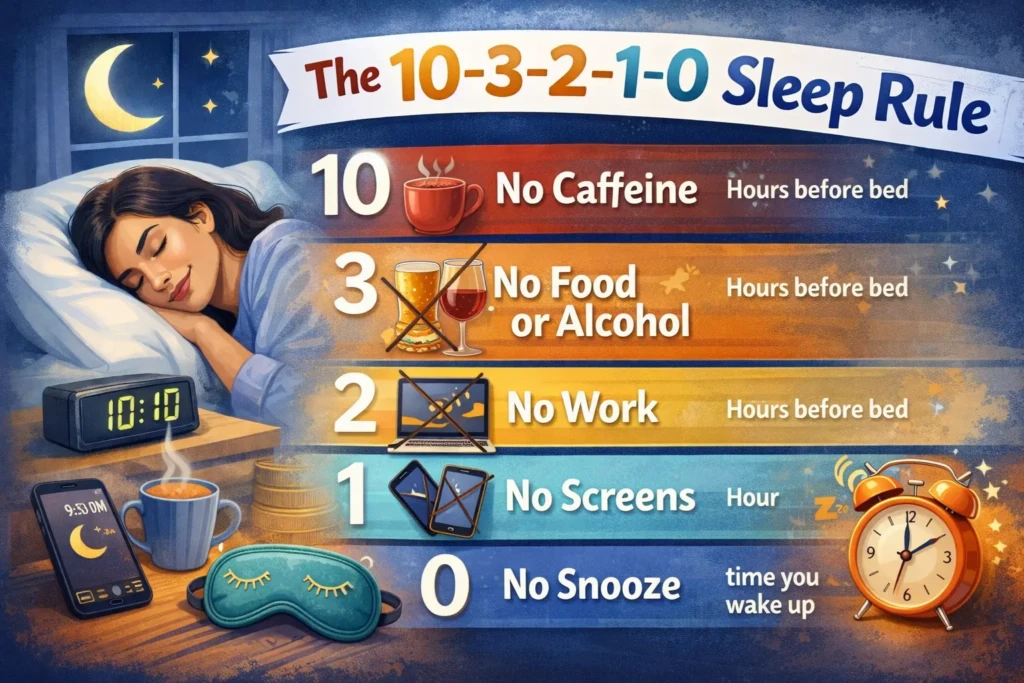
This framework has become one of the most popular sleep optimization tools for good reason — it works.
- 10 hours before bed: No more caffeine
- 3 hours before bed: No more food or alcohol
- 2 hours before bed: No more work
- 1 hour before bed: No more screens
- 0: The number of times you hit snooze
Follow this sequence consistently and you’re addressing the five most common sleep disruptors in a single system. Simple. Memorable. Effective.
Lose Weight: Small Shifts With Big Results
Weight loss doesn’t require suffering. It requires strategy.
The most sustainable weight loss comes from small, consistent behavioral changes that reduce calorie intake and improve metabolism without requiring heroic willpower. Here’s what the research actually supports.
Never Skip Breakfast — Make It High in Protein
Skipping breakfast feels like an easy calorie cut. In practice, it usually backfires.
Research from the University of Missouri shows that eating a high-protein breakfast dramatically reduces ghrelin — your hunger hormone — for hours afterward. People who eat protein-rich breakfasts consume up to 441 fewer calories throughout the day without consciously restricting themselves.
That’s almost half a pound of fat loss per week from one single meal change.
High-protein breakfast ideas:
- Two scrambled eggs with spinach and feta
- Greek yogurt with berries and a tablespoon of chia seeds
- Cottage cheese with sliced banana and walnuts
- A protein smoothie with whey or pea protein, almond milk, and frozen fruit
Aim for 25–30 grams of protein at breakfast. Your appetite will thank you.
Eat Slowly and Put Your Fork Down Between Bites
Your brain takes approximately 20 minutes to register fullness after your stomach starts receiving food. Eat fast enough and you’ll blow right past your body’s satiety signals every single meal.
A large Japanese study following over 59,000 participants found that fast eaters were 115% more likely to be obese than slow eaters. Same food. Dramatically different outcomes based purely on eating speed.
Put your fork down between bites. Chew thoroughly. Take at least 20 minutes for each meal. It costs nothing and reduces your calorie intake automatically.
Walk After Every Meal
A 10-minute walk after eating does something remarkable — it blunts the blood sugar spike that follows a meal.
A 2022 study in Sports Medicine found that a 2–5 minute walk after eating significantly reduced post-meal blood sugar compared to sitting. Lower blood sugar spikes mean less insulin released, which means less fat storage triggered.
Three post-meal walks per day adds up to 30 minutes of daily movement — the CDC’s minimum recommendation for weight management — without a single gym visit or workout outfit.
Drink Water Before Every Meal
A study published in Obesity journal found that drinking 500ml of water 30 minutes before each meal led to 44% more weight loss over 12 weeks compared to a control group.
Water fills space in your stomach, sends early satiety signals, and has zero calories. It’s the simplest appetite management tool available — and most people consistently forget to use it.
Keep a large glass of water on your kitchen counter as a visual reminder. If it’s out of sight, you won’t drink it. If it’s right there, you will.
Stop Eating After 8 PM
Late-night eating quietly adds hundreds of calories to your daily intake — mostly from low-quality, high-calorie foods.
Research from Northwestern University found that people who stopped eating earlier in the evening consumed nearly 250 fewer calories per day compared to late-night snackers. That single change, sustained over a month, can result in up to 2 pounds of fat loss without changing anything else.
Set a kitchen close time. After 8 PM, the kitchen is done. If genuine hunger hits, a small piece of fruit or a handful of nuts is fine. Mindless snacking in front of the TV is what you’re eliminating.
Feel Great: Daily Habits That Transform Your Energy and Mood
Feeling great isn’t about having perfect health. It’s about building a body and mind that have the resources to function well — with energy left over.
These habits target the biological foundations of how good you feel every single day.
Get Morning Sunlight Within 30 Minutes of Waking
Getting natural light in your eyes within 30 minutes of waking up is one of the highest-leverage daily habits you can build — and it’s completely free.
Neuroscientist Dr. Andrew Huberman of Stanford University explains that morning light exposure triggers a healthy early cortisol pulse, sets your circadian clock, and downstream improves mood, focus, energy, and sleep quality that same night.
Aim for 5–10 minutes outdoors without sunglasses. On cloudy days, stay out a little longer. The light doesn’t need to be intense — it needs to hit your eyes naturally.
Most people who add this single habit report noticeably better energy and mood within 1–2 weeks. No supplement comes close to this return for zero cost.
Move Every 30 Minutes During the Day
Sitting for extended periods — even if you exercise daily — increases cardiovascular risk, reduces metabolism, and triggers a cascade of negative metabolic effects.
A study published in the Annals of Internal Medicine found that prolonged sitting was associated with higher mortality risk independent of exercise habits. Meaning you can’t undo 8 hours of sitting with one workout.
Set a timer for every 30 minutes during your workday. When it goes off, stand up and move for 2–3 minutes. Walk to the kitchen. Do 10 squats. Pace while on a phone call. These micro-movement breaks maintain metabolic rate and reduce the health risks of sedentary behavior throughout the day.
Eat More Whole Foods — Especially These
Your body runs on the quality of what you put into it. Ultra-processed foods — which now make up over 60% of the average American diet according to a 2024 BMJ study — drive inflammation, disrupt gut health, impair sleep, and destabilize mood.
The shift toward whole foods doesn’t have to be dramatic.
Add more of these:
- Leafy greens (spinach, kale, arugula) — magnesium for stress and sleep
- Fatty fish (salmon, sardines) — omega-3s for brain health and inflammation
- Berries — antioxidants that reduce oxidative stress
- Legumes (lentils, chickpeas) — fiber for gut health and satiety
- Nuts and seeds — healthy fats and protein for sustained energy
- Fermented foods (yogurt, kimchi, kefir) — probiotics for gut-brain health
You don’t have to overhaul your entire diet overnight. Add one or two of these per week. Over a month, your nutrient intake transforms significantly.
Manage Stress Before It Manages You
Chronic stress is one of the most underrated drivers of poor health in modern life.
Elevated cortisol disrupts sleep, increases appetite for high-calorie foods, impairs immune function, and accelerates aging at the cellular level. Managing it isn’t optional — it’s foundational.
Simple daily stress management tools:
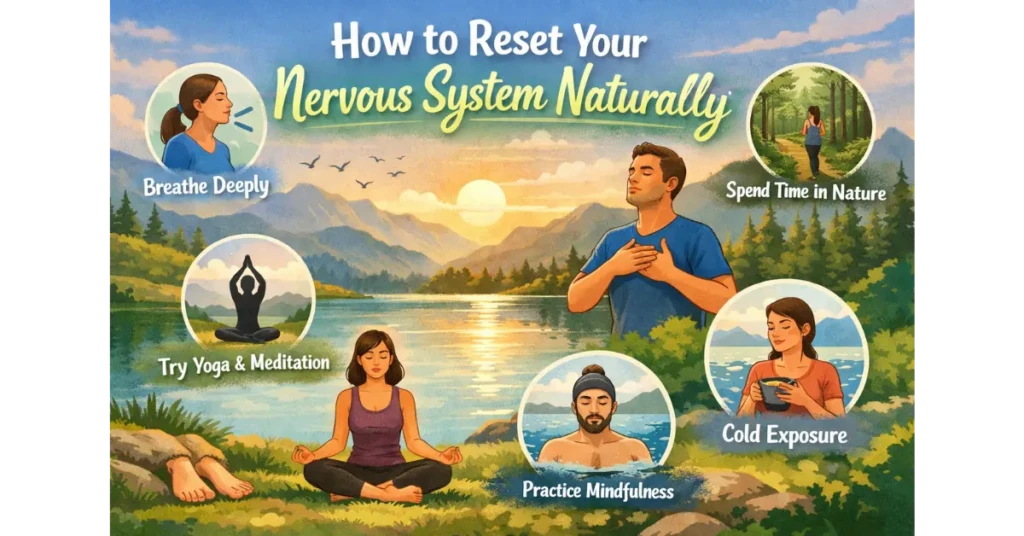
- Physiological sighing — double inhale through the nose, long exhale through the mouth. Reduces stress faster than any known breathing technique per a 2023 Stanford study.
- 5-minute journaling — write down what’s weighing on you. Externalizing stress removes it from your mental loop.
- Social connection — even a 10-minute conversation with someone you trust measurably shifts your nervous system toward calm.
- Nature exposure — 20 minutes in a natural setting reduces cortisol by up to 21%, per a study in Frontiers in Psychology.
Pick one. Do it daily. The cumulative effect on how you feel is significant.
Strength Train Twice a Week — Anywhere
You don’t need a gym to build the muscle mass that transforms your metabolism, posture, energy, and longevity.
Twice-weekly bodyweight resistance training — squats, pushups, lunges, planks, and glute bridges — builds lean muscle that raises your resting metabolic rate, improves insulin sensitivity, and protects bone density as you age.
A 2022 meta-analysis in the British Journal of Sports Medicine found that just 30–60 minutes of strength training per week was associated with a 10–17% reduction in all-cause mortality, cardiovascular disease, and cancer risk.
Twice a week. 20–30 minutes. No equipment. The returns are extraordinary.
Stay Connected — Loneliness Is a Health Risk
This one doesn’t get enough attention in mainstream health conversations.
The U.S. Surgeon General declared loneliness a public health epidemic in 2023. Research shows that chronic loneliness increases mortality risk by 26% — comparable to smoking 15 cigarettes a day.
Regular meaningful social connection — real conversations, shared meals, time with people you care about — directly supports your immune system, nervous system regulation, and mental health.
This isn’t soft advice. It’s biology. Make time for the people in your life. It’s as important as any other habit on this list.
Build Your Personal Health Stack
Here’s the thing about health habits: you don’t need to do all of them at once.
Pick one from each category — sleep, weight, and energy — and commit to those three for two weeks. Once they feel automatic, add one more. That’s how lasting change actually works.
Your starter stack:
- Wake up at the same time every day
- Eat a high-protein breakfast
- Get 10 minutes of morning sunlight
Three habits. Two weeks. Then build from there.
The people who feel the best aren’t doing anything extraordinary. They’re doing the basics — consistently, patiently, and without expecting overnight results.
That’s the whole trick.
FAQ
What is the single most important habit for better sleep?
Waking up at the same time every day — including weekends — is the most impactful sleep habit you can build. It anchors your circadian rhythm, which regulates sleep quality, hunger hormones, cortisol, and mood all at once.
How much protein do I need at breakfast to reduce hunger?
Research suggests 25–30 grams of protein at breakfast significantly reduces ghrelin (hunger hormone) and can decrease total daily calorie intake by up to 441 calories without conscious restriction.
Can walking really help with weight loss?
Yes — especially post-meal walking. Three 10-minute walks after meals adds up to 30 minutes of daily movement, reduces post-meal blood sugar spikes, lowers insulin response, and contributes to meaningful calorie burn over time.
What foods help you feel great every day?
Leafy greens, fatty fish, berries, legumes, nuts, seeds, and fermented foods collectively support brain health, gut health, energy regulation, and inflammation reduction — the biological foundations of feeling consistently great.
How does stress affect sleep and weight?
Chronic stress elevates cortisol, which disrupts sleep architecture, increases appetite for high-calorie foods, and promotes fat storage — particularly around the abdomen. Managing stress daily is essential for both sleep quality and weight management.
Is morning sunlight really that powerful?
Research and clinical experts including Dr. Andrew Huberman confirm that morning light exposure sets the circadian clock, triggers a healthy cortisol pulse, and improves energy, mood, focus, and sleep quality. It’s one of the highest-return free habits available.
How do I start building healthy habits without feeling overwhelmed?
Pick one habit from sleep, one from weight management, and one from energy — and focus only on those three for two weeks. Once they feel automatic, add one more. Small stacking beats dramatic overhauls every single time.
Read more:
11 Science-Backed Weight Loss Tricks You Can Do at Home 2026