
 English






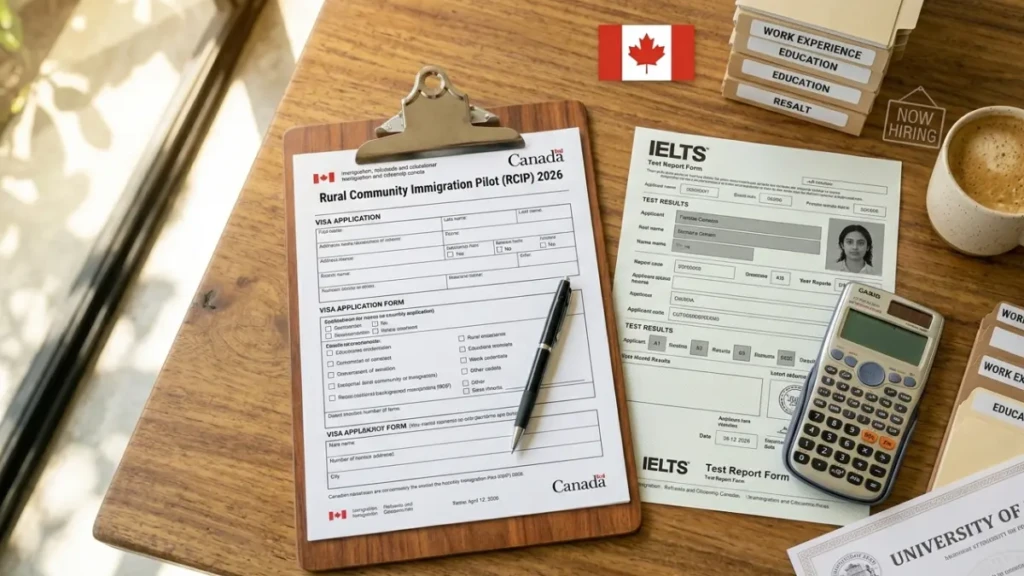


























How to Get a Job Offer for the RCIP in Canada (2026 Strategy)


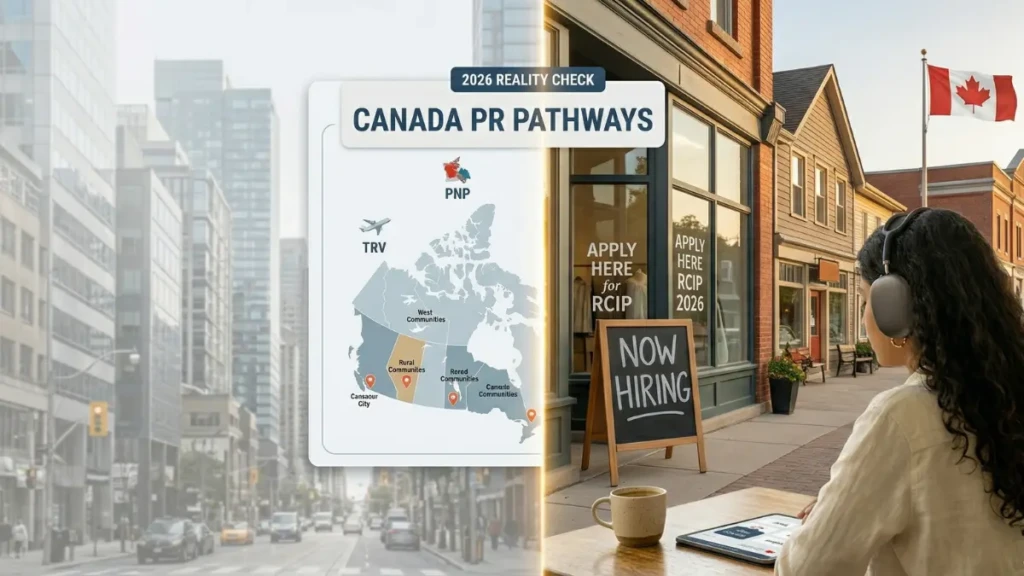
When Immigration, Refugees and Citizenship Canada (IRCC) officially launched the Rural Community Immigration Pilot (RCIP) to replace the old RNIP, it immediately became the most coveted pathway to Canadian permanent residency. It bypasses the impossibly high Comprehensive Ranking System (CRS) scores of Express Entry and offers a direct, community-backed route to PR.
But there is a catch that stops 90% of applicants in their tracks: You cannot just get a job offer from anyone. To qualify for the RCIP, you must secure a full-time, non-seasonal job offer from a strictly designated employer located within one of the participating rural communities.
If you are blindly applying for jobs in rural Canada on Indeed or LinkedIn, you are likely wasting your time. Standard job postings rarely mention if the business is RCIP-designated. If you want an RCIP job offer in Canada, you need to stop acting like a standard job seeker and start acting like an immigration strategist.
Here is the exact 2026 blueprint to find designated employers and secure your community recommendation.
Table of Contents
- Interactive Tool: The 2026 RCIP Job Strategy Matchmaker
- The “Designated Employer” Trap (And How to Bypass It)
- The Municipal Job Board Hack
- Crafting the “Retention-First” Pitch
- Networking the Rural Way: Cold Emailing Local Chambers
- Expert Insight: The Community Intent Factor
- Frequently Asked Questions (FAQ)
Interactive Tool: The 2026 RCIP Job Strategy Matchmaker
The strategy to find an RCIP employer changes drastically based on your profession. Use this diagnostic tool to find the highest-converting job hunt strategy for your specific National Occupational Classification (NOC).Show me the visualization
The “Designated Employer” Trap (And How to Bypass It)
The biggest secret of the RCIP is that the IRCC does not publish a master list of designated employers. The federal government delegates this responsibility entirely to the individual communities.
Therefore, searching “Jobs for RCIP Canada” on Google will only lead you to predatory agencies charging thousands of dollars for fake job placements.
To find designated employers, you must go to the source: the Economic Development Corporation (EDC) of the participating community. Every RCIP community has a local board that manages the pilot. They are the gatekeepers.
The Municipal Job Board Hack
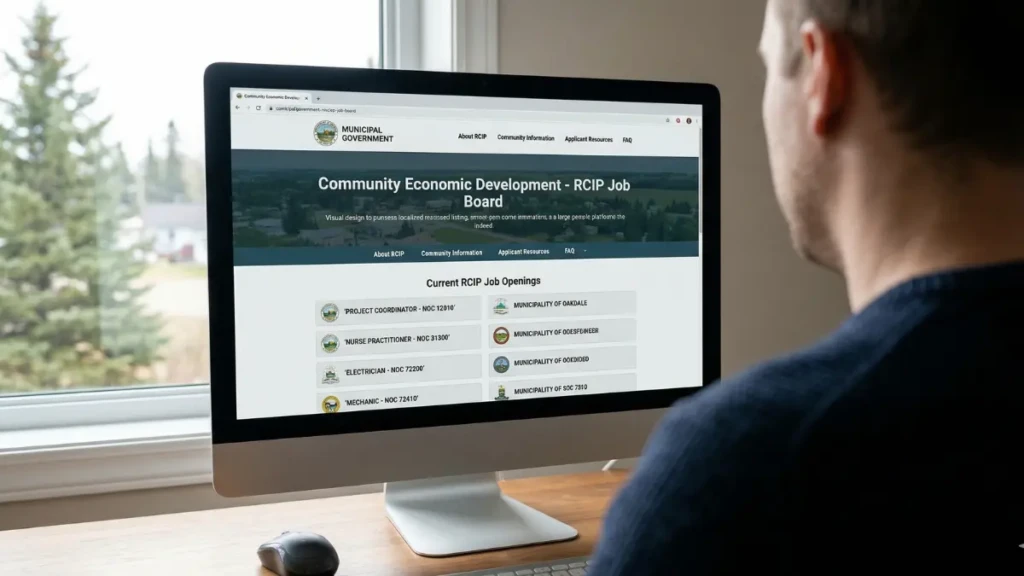
Instead of scrolling Indeed, follow this three-step municipal hack:
- Identify the Communities: Visit the official IRCC website and pull the current 2026 list of participating RCIP communities. Pick 2 or 3 that align with your lifestyle.
- Find the Local Portal: Search Google for “[Community Name] RCIP official website” or “[Community Name] Economic Development.” You are looking for the
.camunicipal government site. - The Hidden Job Banks: Almost every participating community hosts its own internal, localized job board specifically for RCIP-designated employers. Employers post here because it connects them directly with foreign talent seeking the pilot. This is the only job board you should be refreshing daily.
Crafting the “Retention-First” Pitch

When a rural employer interviews a foreign worker, their biggest fear is not your skill level. Their biggest fear is that you will work for them for 12 months, get your PR, and immediately move to Toronto or Vancouver.
Your resume and cover letter must scream long-term retention.
- Do Not: Send a generic cover letter highlighting your ambition to “experience Canadian city life.”
- Do: Explicitly mention why their specific rural town appeals to you. Mention the local schools if you have a family, the local parks, or the lower cost of living.
- The Action Step: In your email to the employer, include a sentence like: “I am specifically targeting [Town Name] through the RCIP because I am looking for a quiet, community-focused environment to raise my family and plant long-term roots, far away from the congestion of the major metro areas.”
Networking the Rural Way: Cold Emailing Local Chambers
If the local RCIP job boards are empty, you have to create your own pipeline. Rural Canadian business operates heavily on networking and word-of-mouth.
Find the Chamber of Commerce member directory for your target RCIP community. Identify 10 businesses in your field. Send a brief, highly professional cold email to the owner or HR manager.
The Pitch: “Hi [Name], I am a [Profession] with [X] years of experience planning to relocate to [Town Name]. I noticed your company’s excellent reputation in the community. Are you currently an RCIP-designated employer, or would you be open to applying for designation? I am looking to bring my skills to a local business long-term.”
Expert Insight: The Community Intent Factor
We spoke with Sarah Jenkins, an RCIC specializing in rural immigration pathways in Western Canada.
“Candidates obsess over the job offer, but they forget the ‘Community Recommendation’ step. Even if you secure an RCIP job offer, the town’s immigration committee must still approve you. In 2026, these committees rank candidates based on ‘intent to reside.’ If you apply for a job in a rural farming town in Manitoba, but your resume shows you’ve only ever lived in mega-cities like Dubai or Mumbai, the committee will flag you as a flight risk. You must tailor your application to prove you genuinely understand and desire the rural Canadian lifestyle.”
Frequently Asked Questions (FAQ)

Do RCIP employers need an LMIA?
No! This is the primary reason employers love the RCIP. A job offer under the Rural Community Immigration Pilot is LMIA-exempt. This saves the employer thousands of dollars and months of government processing time, making them far more likely to hire international talent.
Can I pay an agency to get an RCIP job offer for me?
Be incredibly cautious. It is highly illegal under Canadian law for an employer or recruiter to charge a candidate a fee in exchange for a job offer. If an agency guarantees you an RCIP job for a fee of $5,000 or $10,000, it is likely a scam, and participating in it can result in a lifetime ban from entering Canada.
Do I need settlement funds if I have an RCIP job offer?
Yes. Unlike the Canadian Experience Class (CEC), having a valid job offer under the RCIP does not completely exempt you from the proof of funds requirement. However, the settlement funds required for RCIP are generally much lower than standard Express Entry limits. You must prove you have enough cash to support your family’s transition to the rural community.
Ready to Plant Roots?
Securing an RCIP job offer in Canada is not about sending a thousand resumes; it is about sending ten perfectly tailored applications to the right municipal gatekeepers. By abandoning the major job boards, utilizing municipal economic portals, and explicitly selling your desire to stay in the community long-term, you position yourself as the exact type of immigrant these towns are desperate to hire.
If you are preparing for your rural employer interview, read our guide on [ The 5 Questions Every Canadian Hiring Manager Will Ask in 2026].
For the exact, updated list of participating communities, always refer directly to the [IRCC Rural Community Immigration Pilot Page].