

 English

























How to Reset Your Nervous System Naturally (2026 Guide)

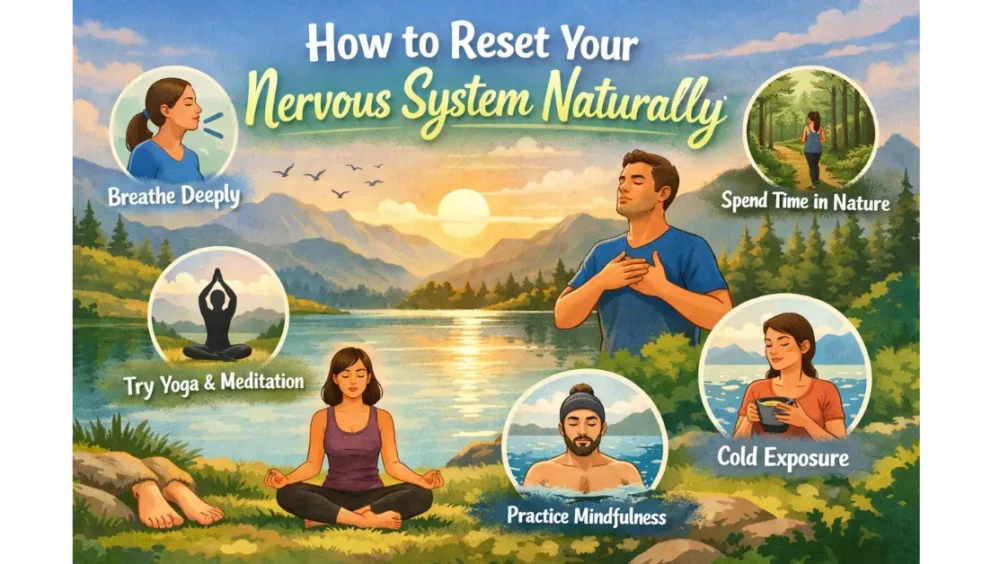
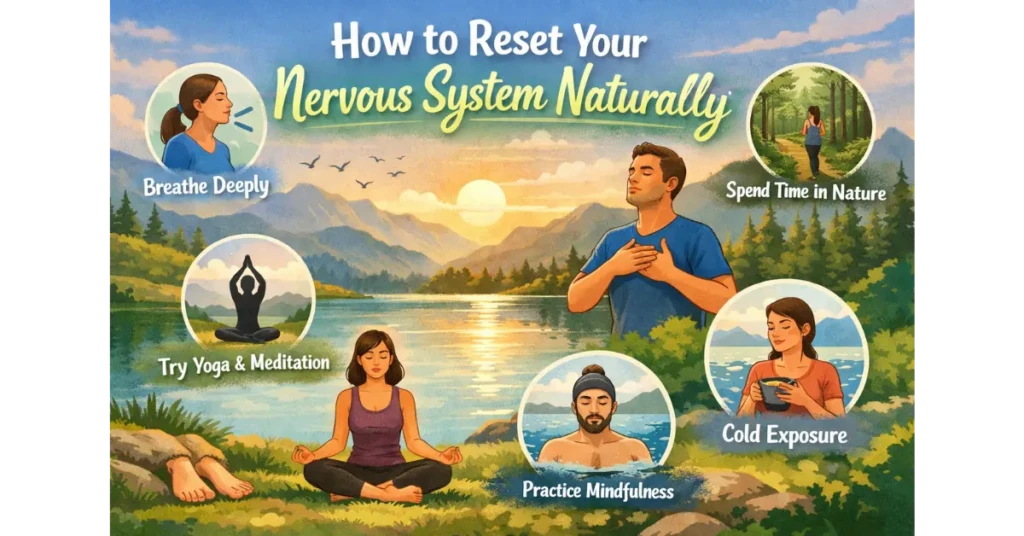
Ever feel wired but exhausted at the same time? Like your body is stuck in overdrive even when you’re trying to relax?
That’s your nervous system — and it’s trying to tell you something.
Most people assume stress is just a mental thing. But chronic stress is actually a full-body physiological event. Your nervous system controls everything from your heart rate and digestion to your sleep quality and immune response. When it gets stuck in “fight-or-flight” mode for too long, the effects ripple through every single system in your body.
The good news? You can reset it. Naturally, at home, without medication.
Research in 2026 has given us a clearer picture than ever of how the nervous system responds to specific interventions — from breathing techniques that activate your vagus nerve in under two minutes, to dietary changes that directly support your parasympathetic response, to movement patterns that signal safety to your brain.
Here’s everything you need to know — backed by science, explained simply.
What Does “Resetting Your Nervous System” Actually Mean?
Before diving into the how, it helps to understand the what.
Your autonomic nervous system has two main branches. The sympathetic nervous system is your gas pedal — it triggers fight-or-flight. The parasympathetic nervous system is your brake — it triggers rest-and-digest.
Modern life keeps most people’s foot jammed on the gas pedal. Deadlines, screens, poor sleep, processed food, and constant notifications all activate the sympathetic response. Over time, your nervous system loses its ability to shift back into parasympathetic mode easily.
Resetting your nervous system means deliberately activating the parasympathetic branch — signaling to your brain and body that the threat has passed and it’s safe to rest, recover, and repair.
The vagus nerve: your body’s reset button
The vagus nerve is the longest cranial nerve in your body, running from your brainstem all the way down to your abdomen. It’s the superhighway of your parasympathetic nervous system.
Research shows that stimulating the vagus nerve — through breathing, cold exposure, humming, and other techniques — directly activates the body’s relaxation response. High vagal tone (meaning a healthy, responsive vagus nerve) is associated with better stress resilience, lower inflammation, improved digestion, and better mental health outcomes.
The techniques in this guide all work, at least in part, by stimulating vagal activity
1. Try Physiological Sighing (The Fastest Reset Exists)
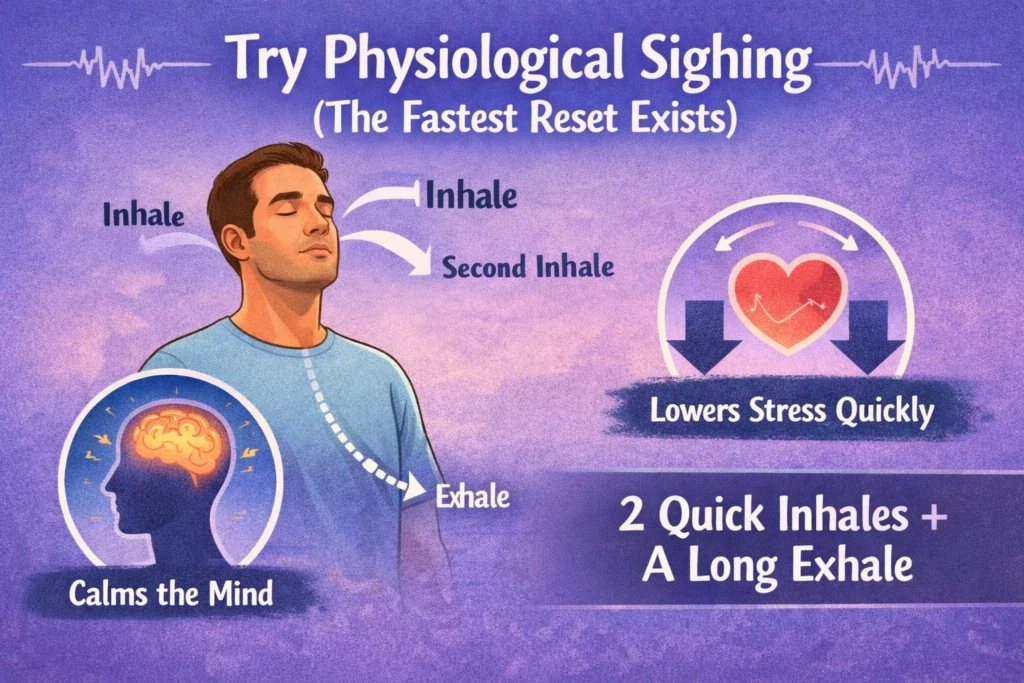
Here’s something remarkable. Researchers at Stanford University identified a specific breathing pattern — called the physiological sigh — that reduces stress faster than any other known breathing technique.
It works like this: take a normal inhale through your nose, then add a second sharp sniff on top of it to fully inflate your lungs. Then exhale slowly and completely through your mouth.
That double inhale pops collapsed air sacs in your lungs, allowing maximum CO2 to be released on the exhale. Dropping CO2 rapidly is the body’s fastest signal to shift out of fight-or-flight.
In a 2023 Stanford study published in Cell Reports Medicine, physiological sighing performed for just 5 minutes daily reduced anxiety, improved mood, and lowered physiological arousal more effectively than mindfulness meditation over the same period.
Do one right now. You’ll feel it immediately.
Box breathing: the Navy SEAL standard
If you want a slightly longer reset, box breathing is one of the most well-researched techniques available.
- Inhale for 4 counts
- Hold for 4 counts
- Exhale for 4 counts
- Hold for 4 counts
- Repeat 4–6 cycles
Studies show box breathing activates the parasympathetic nervous system within minutes, lowering heart rate, blood pressure, and cortisol levels. It’s used by Navy SEALs before high-stress operations — which tells you something about its effectiveness.
2. Splash Cold Water on Your Face
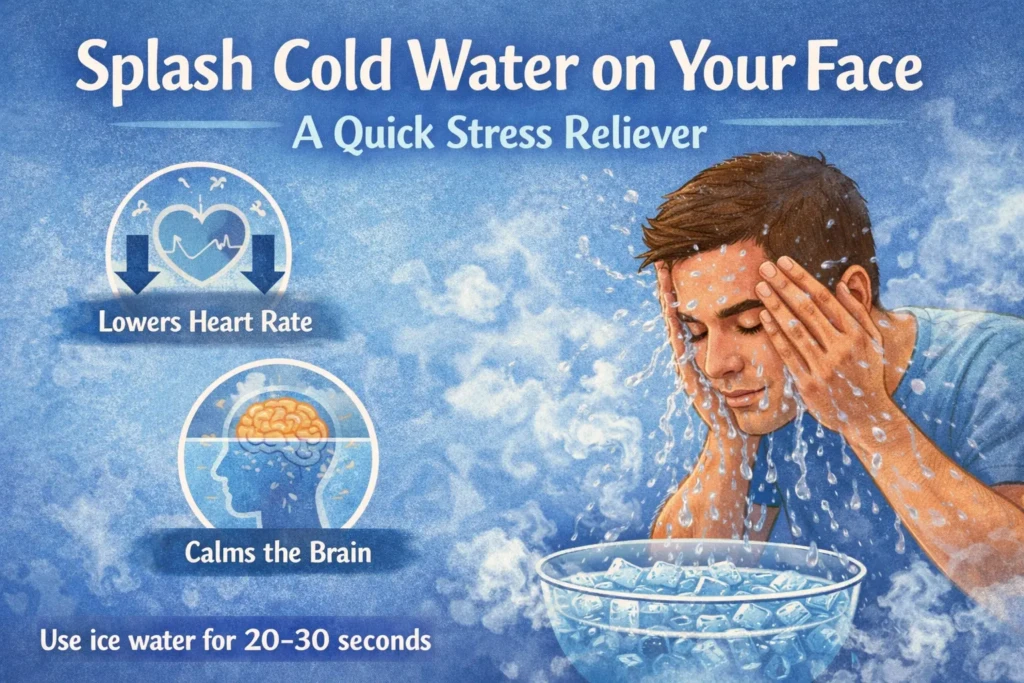
This one sounds almost too simple. But the science behind it is genuinely fascinating.
Your face contains specialized receptors connected directly to the vagus nerve. When cold water hits your face — especially around your eyes and forehead — it triggers something called the diving reflex, which immediately slows your heart rate and activates parasympathetic tone.
A 2021 review in Frontiers in Physiology confirmed that cold water facial immersion reliably reduces heart rate by 10–25% within seconds — a measurable, immediate shift toward calm.
You don’t need an ice bath. Just run cold water over your face and the back of your neck for 30 seconds the next time you feel overwhelmed. It works faster than almost anything else on this list.
3. Move Your Body — But Gently
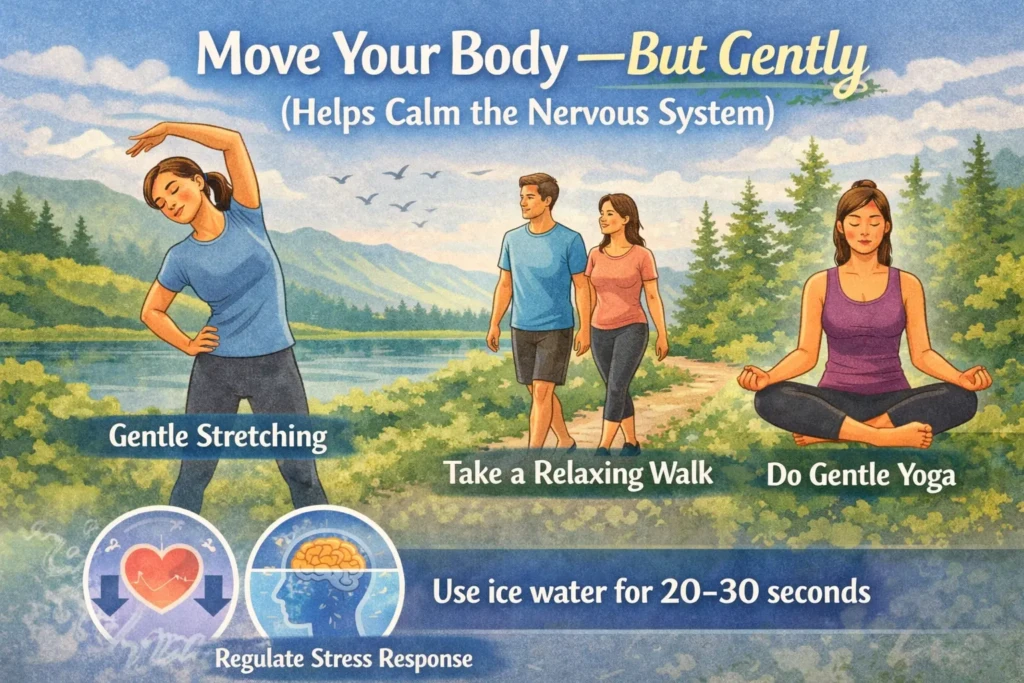
Intense exercise actually activates your sympathetic nervous system — great for fitness, not great for an already-stressed nervous system.
What works better for a nervous system reset is gentle, rhythmic movement. Think walking, yoga, tai chi, or light stretching.
Research from the Harvard Medical School shows that gentle movement — particularly yoga — increases GABA (gamma-aminobutyric acid) levels in the brain. GABA is your brain’s primary calming neurotransmitter. Low GABA is linked to anxiety, insomnia, and nervous system dysregulation.
A short 20-minute walk outdoors combines the benefits of rhythmic movement, nature exposure, and light — all of which independently support parasympathetic activation.
The grounding technique that actually works
Try this: take your shoes off and stand on grass, soil, or sand for 10–15 minutes. This practice — called earthing or grounding — has some genuinely interesting science behind it.
A review published in the Journal of Environmental and Public Health found that direct skin contact with the earth’s surface reduces cortisol levels, improves sleep, and lowers markers of inflammation. The proposed mechanism involves free electrons from the earth’s surface neutralizing oxidative stress in the body.
Unusual? Yes. Backed by research? Also yes.
4. Eat to Support Your Nervous System
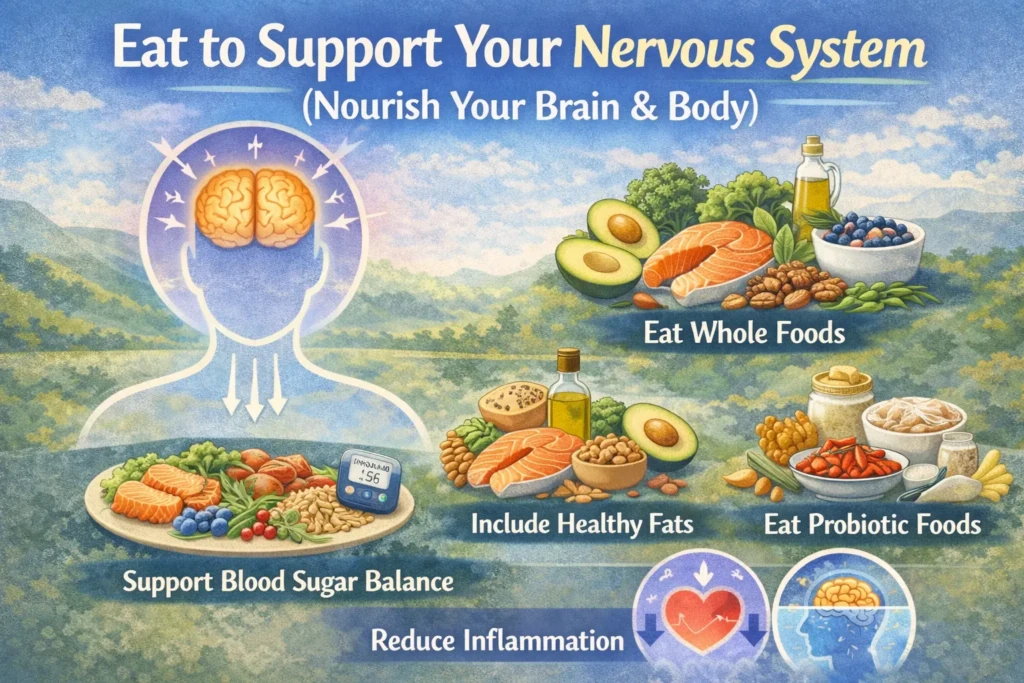
What you eat has a direct impact on your nervous system’s ability to regulate itself. This connection runs deeper than most people realize.
Your gut produces approximately 90% of your body’s serotonin — the neurotransmitter most associated with calm, mood stability, and wellbeing. A disrupted gut microbiome means disrupted serotonin production, which means a nervous system that struggles to regulate itself.
Foods that support nervous system health:
- Magnesium-rich foods — dark chocolate, spinach, pumpkin seeds, almonds. Magnesium is often called “nature’s relaxant” — it regulates the HPA (hypothalamic-pituitary-adrenal) axis, which controls your stress response.
- Omega-3 fatty acids — salmon, sardines, walnuts, flaxseeds. A 2011 study in Brain, Behavior, and Immunity found that omega-3 supplementation reduced anxiety by 20%.
- Fermented foods — yogurt, kefir, kimchi, sauerkraut. These feed beneficial gut bacteria, which communicate with your brain via the gut-brain axis.
- Complex carbohydrates — oats, sweet potatoes, whole grains. These support steady serotonin production by providing a consistent supply of tryptophan to the brain.
What to limit or avoid
Caffeine, alcohol, ultra-processed foods, and high sugar intake all dysregulate the nervous system — increasing cortisol, disrupting sleep, and depleting key nutrients your nervous system needs to function properly.
That afternoon coffee might feel like a lifeline. But if you’re already in a stress response, caffeine is essentially pouring fuel on a fire.
5. Hum, Sing, or Gargle
This one raises eyebrows every time. But stay with it.
The vagus nerve passes through your throat and larynx. Vibrating these structures — through humming, singing, chanting, or even gargling — directly stimulates vagal activity and activates the parasympathetic response.
Research by Dr. Stephen Porges, the neuroscientist behind Polyvagal Theory, confirms that vocal activities that engage the larynx are among the most accessible vagus nerve stimulation techniques available to everyday people.
Even humming your favorite song in the shower counts. Gargling vigorously with water for 30 seconds after brushing your teeth is another simple daily habit that stimulates vagal tone over time.
It sounds strange. It works anyway.
6. Get Morning Sunlight Within 30 Minutes of Waking
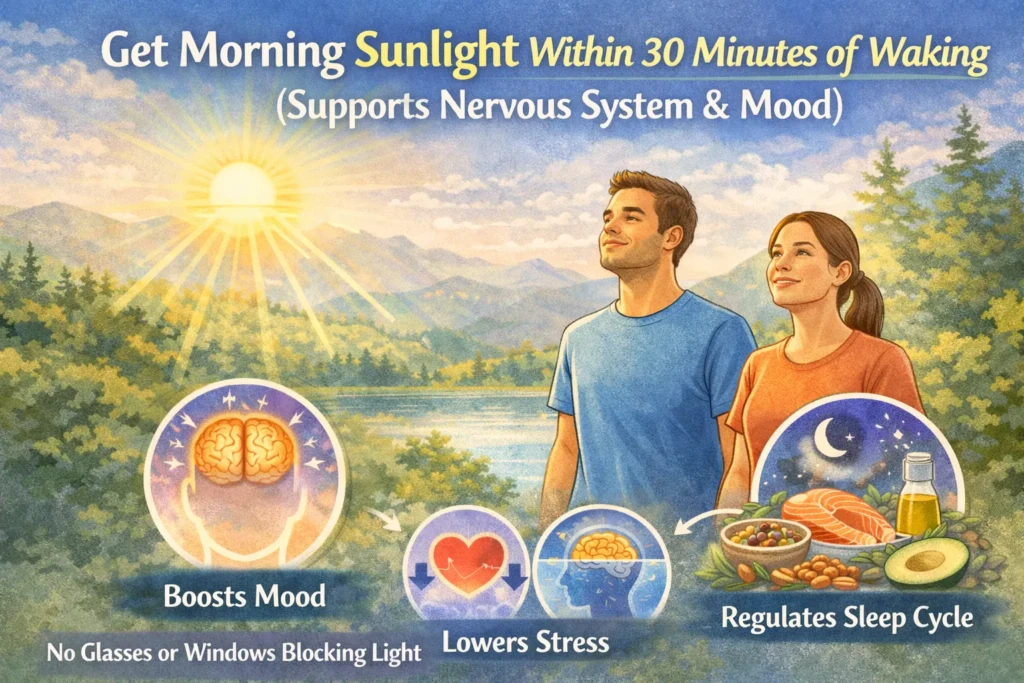
Your nervous system runs on a biological clock — the circadian rhythm. When that clock gets disrupted, your stress response becomes dysregulated, cortisol patterns shift, and sleep quality deteriorates. It’s a cascading effect.
One of the most powerful ways to anchor your circadian rhythm is getting natural sunlight in your eyes within 30 minutes of waking up.
Neuroscientist Dr. Andrew Huberman of Stanford University has extensively researched this. Morning light exposure triggers a healthy cortisol pulse early in the day — which sounds counterintuitive, but this early cortisol peak is actually essential for setting up low cortisol and calm nervous system activity later in the evening.
Aim for 5–10 minutes outside in the morning. No sunglasses. Just natural light hitting your eyes. On cloudy days, stay out a little longer — cloud cover reduces light intensity but doesn’t eliminate it.
This single habit, done consistently, can meaningfully improve sleep quality, reduce baseline anxiety, and help regulate your nervous system within 2–3 weeks.
7. Try Progressive Muscle Relaxation at Night
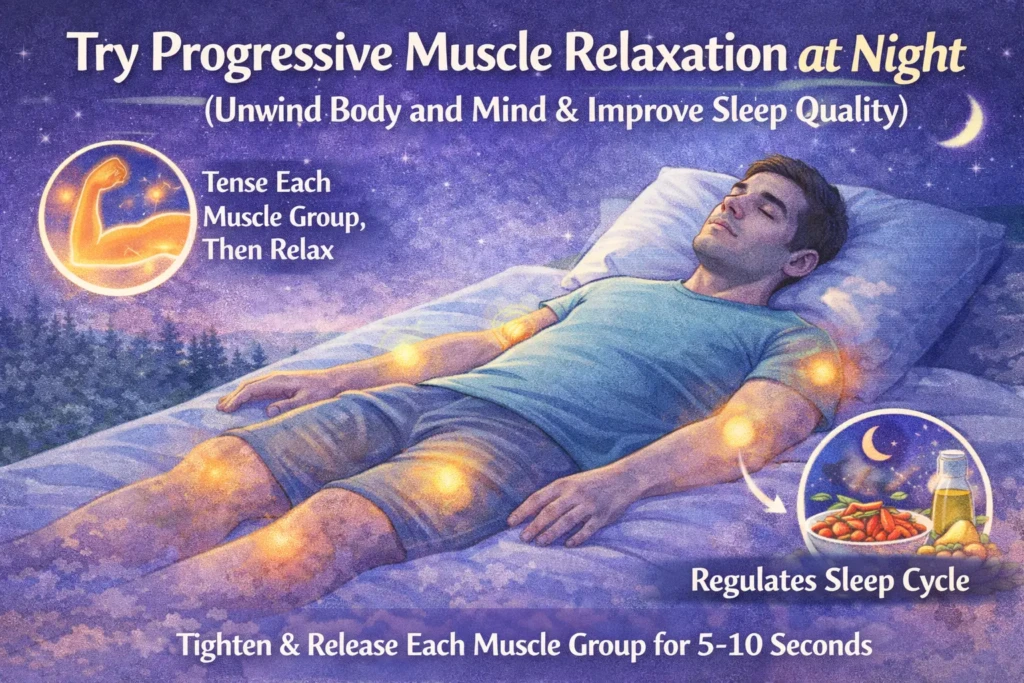
Your body holds tension in muscle tissue as a physical manifestation of stress. Progressive muscle relaxation (PMR) systematically releases that stored tension — and research consistently shows it works.
A meta-analysis published in Applied Psychophysiology and Biofeedback found that PMR significantly reduces both psychological anxiety and physiological stress markers, including cortisol and heart rate.
How to do it:
- Lie down comfortably
- Starting at your feet, tense each muscle group tightly for 5 seconds
- Release completely and notice the relaxation for 10 seconds
- Move upward — calves, thighs, stomach, chest, hands, arms, shoulders, face
- Complete the full sequence in about 15–20 minutes
Do this nightly for two weeks. Most people report dramatically improved sleep quality and reduced baseline tension within that timeframe.
8. Limit Screen Time in the Evening
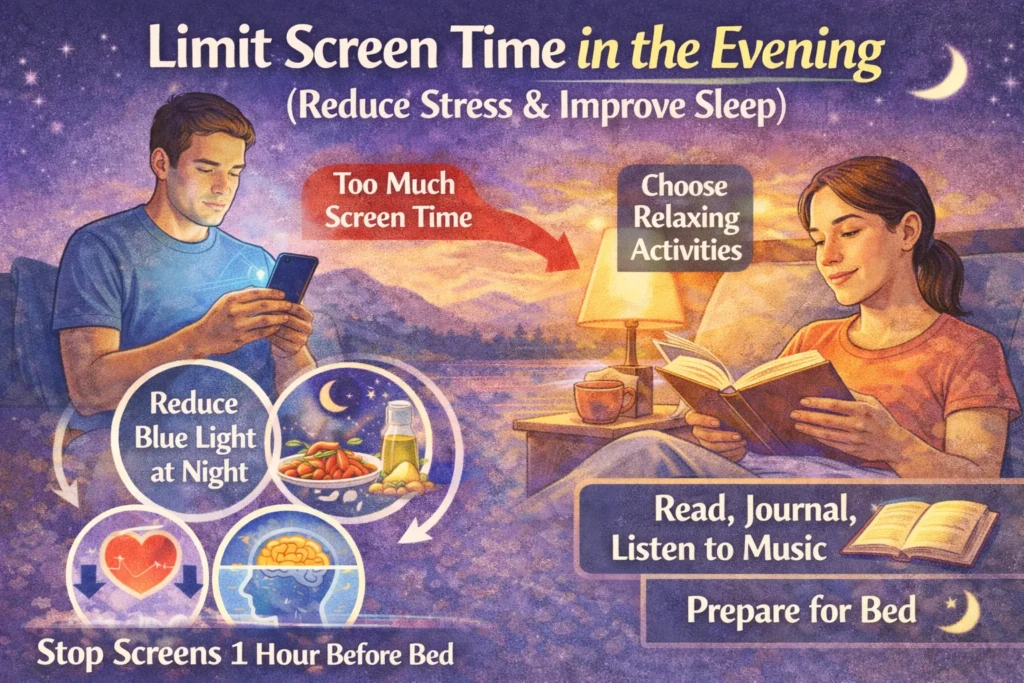
Your nervous system wasn’t designed for blue light exposure at 11 PM.
Screens emit blue wavelength light that suppresses melatonin production and keeps your sympathetic nervous system active long after you should be winding down. The content on those screens — news, social media, emotionally charged videos — activates stress responses even when you’re physically still.
A 2019 study in JAMA Pediatrics found that every additional hour of screen time before bed was associated with significantly worse sleep quality and higher stress markers the following day.
Set a screen cutoff 60 minutes before bed. Use that time for something that activates your parasympathetic system instead — reading, light stretching, PMR, or simply sitting quietly.
Your nervous system will thank you by morning.
9. Practice Social Connection — It’s Biological
Human beings are wired for connection. This isn’t just a feel-good statement — it’s neuroscience.
Dr. Stephen Porges’ Polyvagal Theory identifies co-regulation — the process of two nervous systems calming each other through safe social interaction — as one of the most powerful nervous system reset mechanisms available to humans.
Being in the presence of a safe, trusted person — making eye contact, having a real conversation, laughing together — directly activates the ventral vagal complex, the most evolved branch of the parasympathetic nervous system.
Even a 10-minute phone call with someone you trust can measurably shift your nervous system state. This is biology, not just comfort.
Loneliness and social isolation, by contrast, keep the sympathetic nervous system chronically activated — and research links chronic loneliness to elevated cortisol, inflammation, and poor health outcomes.
10. Try Yoga Nidra (The Sleep-Based Reset)
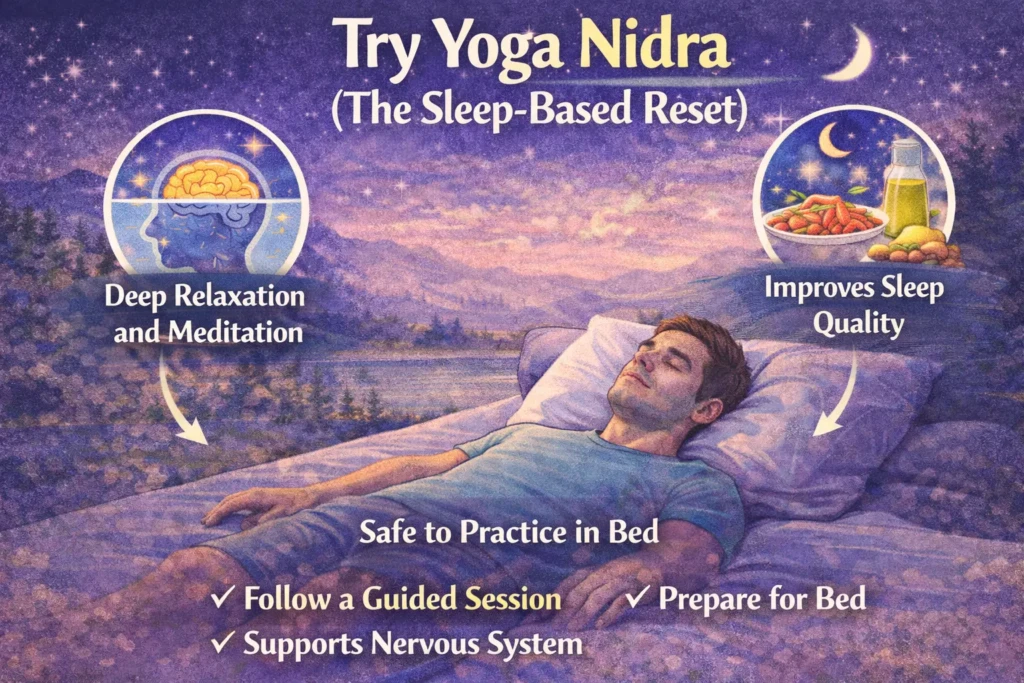
Yoga Nidra — sometimes called non-sleep deep rest (NSDR) — is a guided relaxation practice that brings your nervous system into a deeply restorative state between waking and sleep.
It’s not the same as taking a nap. Research shows that 20 minutes of Yoga Nidra can restore dopamine levels, reduce cortisol, and provide rest equivalent to several hours of sleep in terms of nervous system recovery.
Dr. Huberman has called NSDR one of the most underutilized recovery tools available — and free guided sessions are widely available on YouTube and Spotify.
Simply lie down, press play, and follow the guidance. No experience needed. No special equipment. Just 20 minutes.
11. Journaling: Empty Your Mental Buffer
Your nervous system processes unresolved experiences as ongoing threats. When you have a backlog of unprocessed thoughts, emotions, and worries sitting in your mental buffer, your stress response stays quietly activated — even when nothing acute is happening.
Journaling helps empty that buffer.
Research from the University of Texas by Dr. James Pennebaker found that expressive writing — spending 15–20 minutes writing about stressful experiences and emotions — significantly reduced anxiety, improved immune function, and lowered health center visits over time.
You don’t need to be a writer. You don’t need structure. Just write whatever is in your head, uncensored, for 15 minutes before bed.
Three prompts to get you started:
- What’s weighing on me right now?
- What do I have control over, and what don’t I?
- What went well today, even something small?
The act of externalizing internal stress — putting it on paper — removes it from your mental loop and signals to your nervous system that it has been processed and can be released.
The Bottom Line
Your nervous system is not broken. It’s doing exactly what it was designed to do — protecting you from perceived threats.
The problem is that modern life keeps throwing false alarms at it, all day, every day. Poor sleep, processed food, screens, isolation, and chronic stress keep the gas pedal pressed down until your body forgets what calm actually feels like.
These 11 techniques work because they speak your nervous system’s own language. Breathing, movement, cold water, sunlight, connection, food — these aren’t trends. They’re biological signals your body already knows how to respond to.
Pick two or three to start. Be consistent for two weeks. Then add more.
The reset isn’t dramatic. It’s quiet, steady, and deeply real.
FAQ
How long does it take to reset your nervous system naturally?
Most people notice meaningful changes within 2–4 weeks of consistent practice. Acute techniques like physiological sighing or cold water facial immersion work within minutes. Longer-term regulation through sleep, diet, and movement typically shows significant improvement within 4–8 weeks.
What is the vagus nerve and why does it matter for stress?
The vagus nerve is the main highway of your parasympathetic nervous system. Stimulating it — through breathing, cold exposure, humming, or social connection — directly activates your body’s rest-and-digest response, counteracting the fight-or-flight state caused by chronic stress.
Can diet really affect your nervous system?
Absolutely. Your gut produces 90% of your body’s serotonin, and the gut-brain axis directly influences nervous system regulation. Magnesium-rich foods, omega-3s, fermented foods, and complex carbohydrates all support healthy nervous system function.
What is physiological sighing and does it really work?
Yes — a 2023 Stanford study found physiological sighing (double inhale through the nose, long exhale through the mouth) reduces anxiety and stress arousal faster than any other known breathing technique, including meditation.
Is cold water exposure safe for nervous system reset?
Cold water facial immersion — splashing cold water on your face — is safe for most people and reliably triggers the diving reflex, reducing heart rate by 10–25% within seconds. Full cold plunges should be approached more carefully, especially for people with cardiovascular conditions.
What is Yoga Nidra and how often should I do it?
Yoga Nidra (non-sleep deep rest) is a guided relaxation practice that restores dopamine levels and reduces cortisol. Even 20 minutes provides significant nervous system recovery. Doing it 3–5 times per week — or daily during high-stress periods — is beneficial.
Does exercise help or hurt a dysregulated nervous system?
Gentle, rhythmic movement — walking, yoga, tai chi — supports nervous system reset by increasing GABA and activating parasympathetic tone. Intense exercise can temporarily increase sympathetic activation, so if your nervous system is already overstimulated, opt for gentler movement first.
Read More:
11 Science-Backed Weight Loss Tricks You Can Do at Home 2026