
 English
































What Causes Hair Loss & How to Get Rid of Dandruff (2026 Guide)

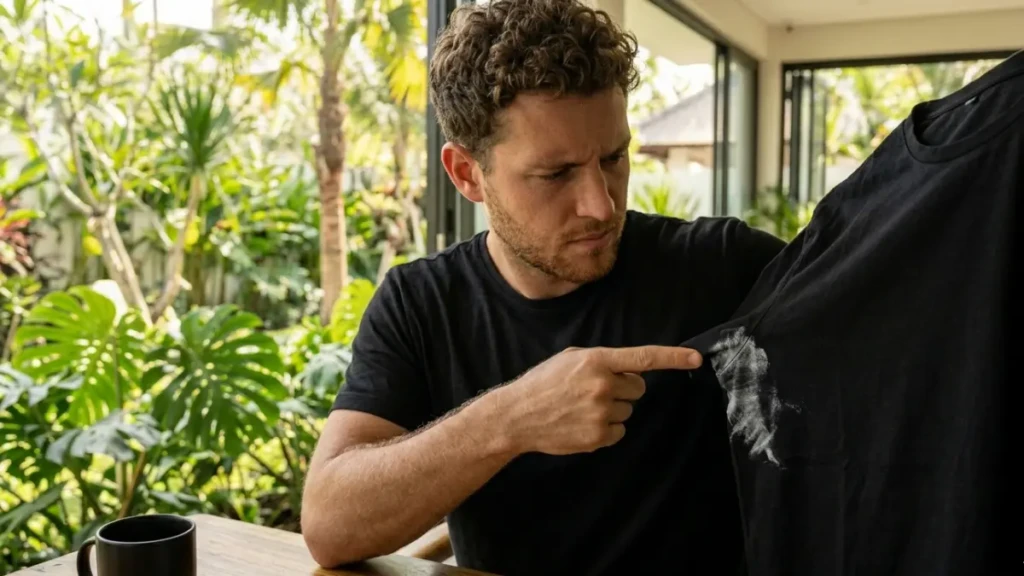
There are few things more universally panic-inducing than running your hands through your hair in the shower and pulling away with a clump of strands, or wearing a dark shirt only to find your shoulders covered in white flakes by noon.
When you type “what causes hair loss” or “how to get rid of dandruff” into a search engine, you are usually bombarded with terrifying medical diagnoses or expensive, snake-oil supplements.
The reality is that your scalp is a highly sensitive ecosystem. In 2026, dermatologists are focusing less on treating the hair strand and entirely on the “scalp microbiome.” Whether you are dealing with genetic thinning, stress-induced shedding, or a stubborn yeast overgrowth causing flakes, the solution requires a targeted, root-cause approach.
Here is your comprehensive, science-backed guide to understanding your hair loss, banishing dandruff, and restoring your scalp health.
Table of Contents
- Interactive Tool: The Scalp Diagnostic
- What Causes Hair Loss? (The Big Three)
- The Dandruff Dilemma: Why You Are Flaking
- The Connection: Can Dandruff Cause Hair Loss?
- The 2026 Scalp Healing Protocol
- Expert Insight: The Oil Myth
- Frequently Asked Questions (FAQ)
Interactive Tool: The Scalp Diagnostic
Not sure if you are dealing with a fungal issue, a genetic issue, or a stress response? Use this diagnostic tool to pinpoint the likely culprit behind your scalp woes.Show me the visualization
1. What Causes Hair Loss? (The Big Three)
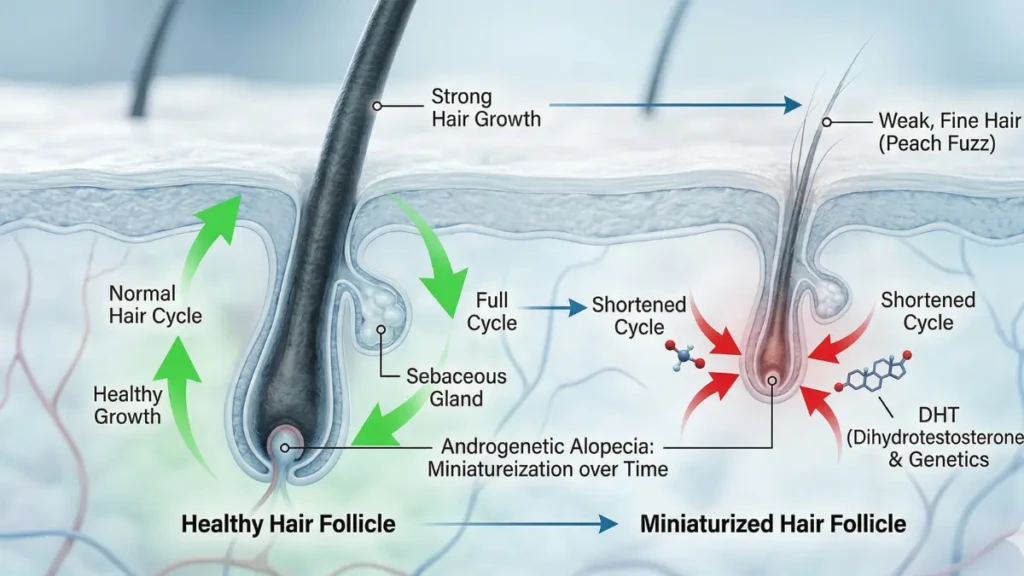
Before you can treat the shedding, you have to identify the trigger. Hair loss generally falls into three main categories:
- Androgenetic Alopecia (Genetics): This is standard male or female pattern baldness. It is caused by a genetic sensitivity to DHT (a byproduct of testosterone) that shrinks your hair follicles over time.
- Telogen Effluvium (Stress): If you are pulling 14-hour days trying to scale a performance marketing agency, running a high-volume news blog, or chasing an ambitious monthly revenue goal, the resulting cortisol spike pushes your hair follicles prematurely into the “resting” (telogen) phase. About three months after the stressful period, the hair falls out en masse.
- Nutritional Deficiencies: Low iron (ferritin), Vitamin D deficiency, and severe caloric deficits starve the hair follicles of the energy needed to produce hair shafts.
2. The Dandruff Dilemma: Why You Are Flaking
Dandruff is not caused by a “dry scalp,” which is the most common misconception. It is actually caused by too much oil.
Your scalp is home to a naturally occurring yeast called Malassezia. This yeast feeds on the sebum (oil) your scalp produces. For some people, the immune system overreacts to the byproducts of this yeast feeding frenzy. This inflammatory response causes your skin cells to multiply and shed at an accelerated rate, clumping together with the excess oil to form visible white or yellowish flakes.
3. The Connection: Can Dandruff Cause Hair Loss?
Directly? No. Dandruff itself does not attack the hair follicle. Indirectly? Absolutely.
Severe dandruff causes intense itching. When you aggressively scratch your scalp, you physically traumatize the hair follicles and break the hair shafts. Furthermore, the underlying inflammation caused by the yeast overgrowth creates a hostile, oxidative environment for your hair follicles. If your scalp is highly inflamed, your hair simply cannot anchor itself properly or grow at its optimal thickness.
4. The 2026 Scalp Healing Protocol
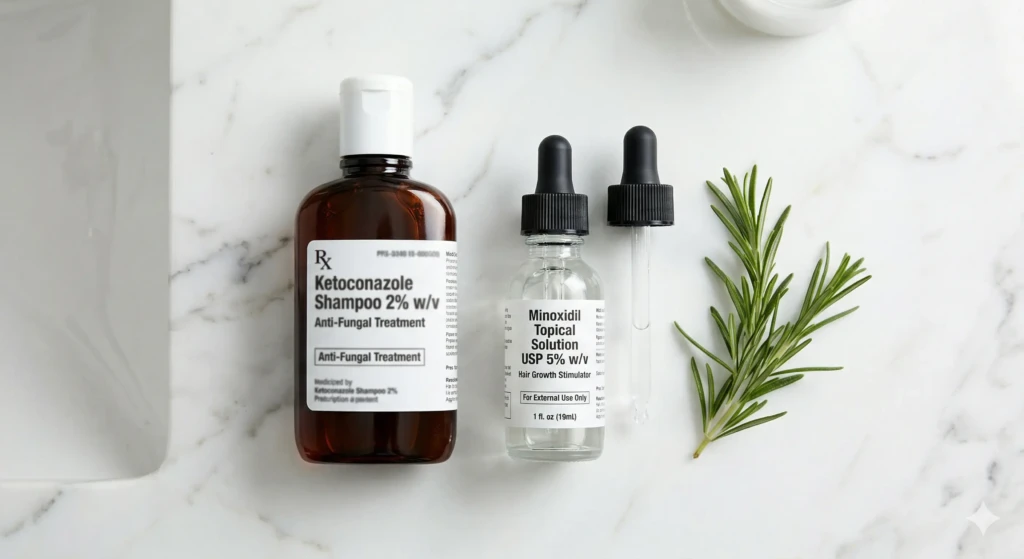
If you want to stop the shedding and clear the flakes, you must implement a two-pronged approach that treats both the yeast and the inflammation.
- Step 1: The Active Antifungal (Ketoconazole) Ditch the gentle, essential-oil shampoos for now. You need a medicated intervention. Buy an over-the-counter shampoo containing 1% to 2% Ketoconazole (like Nizoral). Use it twice a week. Crucial: You must massage it in and let it sit on your scalp for a full 5 minutes before rinsing so the active ingredient can kill the yeast.
- Step 2: The Exfoliator (Salicylic Acid) On the days you don’t use Ketoconazole, use a shampoo containing Salicylic Acid. This acts as a chemical exfoliant to dissolve the existing flakes and unclog the hair follicles without the need for aggressive scratching.
- Step 3: The Growth Stimulator (Minoxidil / Rosemary) Once the dandruff is cleared and the inflammation is gone, you can address the thinning. If your hair loss is genetic, 5% topical Minoxidil is the gold standard. If you prefer a botanical route, clinical studies show that 2% Rosemary Oil can be an effective alternative for stimulating local blood flow to the follicles.
Expert Insight: The Oil Myth
We spoke with Dr. Elena Rostova, a board-certified trichologist specializing in inflammatory scalp conditions.
“The absolute worst thing you can do for dandruff is apply olive oil, coconut oil, or heavy pomades to your scalp. Because patients assume their flaking scalp is ‘dry,’ they try to moisturize it with raw oils. Since Malassezia yeast feeds on lipids (oils), you are literally pouring gasoline on a fire. You will trigger a massive flare-up of Seborrheic Dermatitis and accelerate your hair shedding. Keep oils on the ends of your hair, never on the scalp.”
Frequently Asked Questions (FAQ)

How often should I wash my hair if I have dandruff?
If you have an active dandruff flare-up, you should wash your hair daily or every other day. Allowing sebum (oil) to build up on your scalp for days at a time simply provides more food for the yeast, worsening the condition.
Does wearing a hat cause hair loss?
No. Wearing a standard baseball cap or beanie does not cause hair loss. However, if you wear a filthy, sweat-soaked hat every day, you can introduce bacteria and yeast to the scalp, triggering folliculitis or dandruff, which can indirectly lead to shedding.
Will my hair grow back after Telogen Effluvium?
Yes. Telogen Effluvium (stress-induced hair loss) is entirely reversible. Once the underlying stressor—whether it was an illness, extreme workload, or dietary crash—is resolved, your hair cycle will reset. However, it requires patience; it typically takes 6 to 9 months to see visible regrowth.
Ready to Reclaim Your Confidence?
You do not have to live with a chronically itchy scalp or a thinning hairline. By treating dandruff as a fungal and inflammatory issue rather than a “dry skin” problem, you can rapidly reset your scalp’s microbiome. Clear the inflammation first, treat the shedding second, and protect your long-term confidence.
If you are looking to optimize your diet to support hair growth, read our guide on [Health Tricks: Simple Ways to Sleep Better, Lose Weight and Feel Great].
Disclaimer: This article is for informational purposes only and does not constitute medical advice. Always consult a dermatologist for severe hair loss or persistent scalp conditions.