

 English






































Why Do I Have a Headache? Decoding Pain by Location (2026 Guide)

Disclaimer: This article is for informational purposes only and does not constitute medical advice. If you are experiencing a “thunderclap” headache, confusion, or vision loss, seek emergency medical care immediately.
“Why do I have a headache?” It is one of the most searched health queries in the world, yet the answer is rarely simple. Headaches are not a single condition; they are the body’s alarm system, and the location of the pain acts as a specific code.
In 2026, the causes of headaches have shifted. While dehydration and stress remain top culprits, the rise of immersive digital environments and “tech neck” has created a new landscape of pain. Whether it is a dull ache behind your eyes or a throbbing sensation at the base of your skull, your body is trying to tell you something specific.
To find relief, you first need to identify the “type” of pain you are experiencing. Here is an analytical breakdown of why you have a headache, based on where it hurts and the 2026 lifestyle factors contributing to it.
Table of Contents
- Headache Behind the Eyes (Digital & Sinus)
- Pain at the Base of the Skull (Tech Neck)
- The “Vice” Grip: Tension Headaches
- One-Sided Throbbing: Migraines
- Cluster Headaches: The “Suicide” Headache
- Expert Insight: The 2026 Digital Fatigue Factor
- Frequently Asked Questions (FAQ)
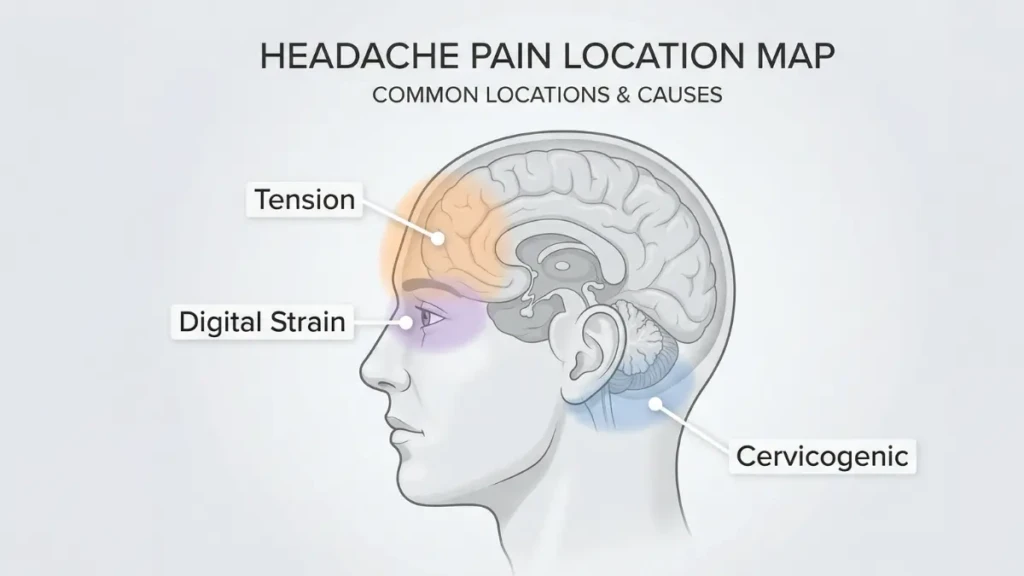
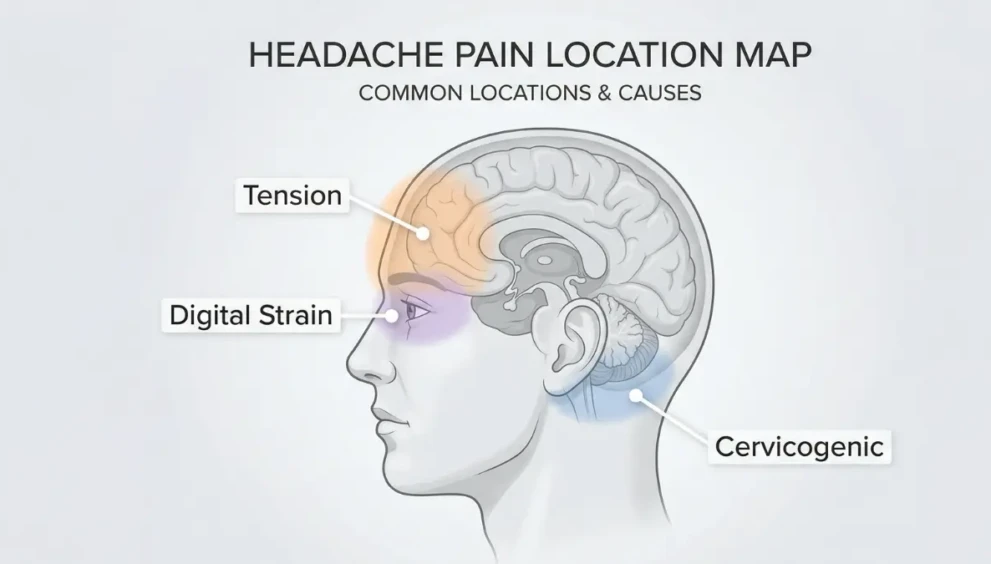
1. Headache Behind the Eyes (Digital & Sinus)
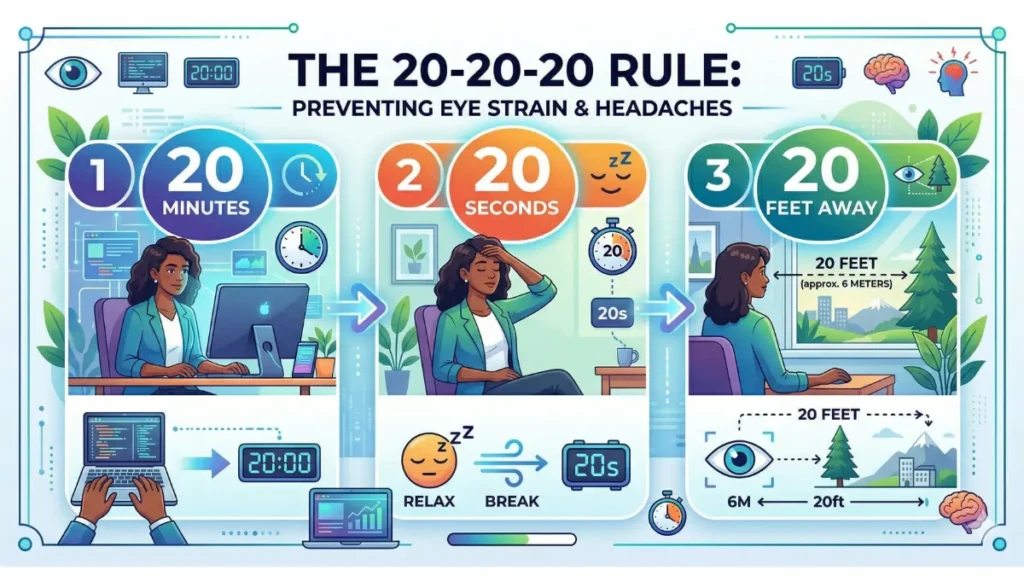
If you feel a sharp or pressurized pain directly behind one or both eyes, you are dealing with the most common “modern” headache.
- Digital Eye Strain (DES): In 2026, this is the leading cause. The muscles in your eyes become fatigued from focusing on screens or within AR/VR headsets for prolonged periods. This often leads to a dull ache that radiates from behind the eyes to the temples.
- Sinus Pressure: If the pain is accompanied by a stuffy nose or pain in your cheekbones, it is likely a sinus headache caused by inflammation or infection.
- The Fix: Use the “20-20-20” rule—every 20 minutes, look at something 20 feet away for 20 seconds to reset your eye muscles.
2. Pain at the Base of the Skull (Tech Neck)

Pain that starts where your neck meets your head is often “Cervicogenic.”
- The Cause: This is typically caused by poor posture, specifically “Tech Neck”—the forward-tilting of the head to look at smartphones. This puts immense strain on the upper vertebrae and the suboccipital muscles.
- The Sensation: A steady, non-throbbing ache that can sometimes travel up toward the top of the head.
- The Fix: Ergonomic adjustments are key. Ensure your screens are at eye level and incorporate daily chin-tuck exercises to strengthen the deep neck flexors.
3. The “Vice” Grip: Tension Headaches
The most common primary headache, the tension headache, feels like a tight band is being squeezed around your forehead.
- The Cause: These are primarily triggered by stress, anxiety, or jaw clenching (TMJ).
- The Sensation: Dull, aching pain that affects both sides of the head. Unlike migraines, these are usually not accompanied by nausea or sensitivity to light.
- The Fix: Stress management and hydration. Even a 2% drop in hydration can trigger a tension headache.
4. One-Sided Throbbing: Migraines
Migraines are more than just a headache; they are a neurological event.
- The Sensation: Intense, throbbing pain usually limited to one side of the head.
- The Hallmarks: Sensitivity to light and sound, nausea, and sometimes “auras” (visual disturbances like flashing lights).
- The 2026 Perspective: We now know that migraines have strong genetic components and can be triggered by specific food additives, hormonal shifts, and even changes in barometric pressure.
5. Cluster Headaches: The “Suicide” Headache
Though rare, cluster headaches are known as the most painful type of headache.
- The Sensation: Excruciating, piercing pain, usually centered around one eye. They occur in “clusters” (several times a day for weeks).
- The Hallmarks: Redness in the eye, tearing, and a drooping eyelid on the affected side.
- The Fix: These require professional medical diagnosis and often involve oxygen therapy or specialized prescription treatments.
Expert Insight: The 2026 Digital Fatigue Factor
We spoke with Dr. Elena Vance, a neurologist specializing in occupational health, about the rise of “Behind the Eye” headaches.
“In 2026, the lines between our digital and physical lives have blurred. We are seeing a 40% increase in patients reporting ‘behind-the-eye’ pain. This isn’t just blue light; it’s the lack of ‘convergence’—our eyes are losing the ability to focus naturally on varying depths. If you wake up with a headache, the first thing you should check isn’t your medicine cabinet; it’s your screen-time settings.”
Frequently Asked Questions (FAQ)
Why do I have a headache behind my eyes every morning?
Morning headaches behind the eyes are often caused by either sleep apnea (lack of oxygen during sleep) or bruxism (clenching your teeth at night). If you also wake up with a sore jaw, a night guard may resolve the issue.
Can dehydration cause a headache behind the eyes?
Yes. When you are dehydrated, your brain tissue loses water and shrinks, pulling away from the skull. This triggers pain receptors surrounding the brain, often manifesting as a dull ache behind the eyes or across the forehead.
When should I worry about a headache?
You should seek immediate medical attention if a headache is “the worst of your life,” follows a head injury, or is accompanied by a stiff neck, fever, confusion, fainting, or difficulty speaking.
What is the difference between a sinus headache and a migraine?
A sinus headache is usually associated with fever and thick nasal mucus. Many people who think they have chronic sinus headaches are actually experiencing migraines, as migraines can also cause nasal congestion and facial pressure.
Why does my head hurt when I look at my phone?
This is likely “Digital Eye Strain” combined with “Tech Neck.” Your eye muscles are straining to focus on the backlight and small text, while your neck muscles are straining to support your head in a forward-leaning position.
Step Toward Relief
Stop guessing “Why do I have a headache?” and start tracking your triggers. Keep a simple log for one week: What did you eat? How much did you sleep? How many hours did you spend in front of a screen? Most headaches are lifestyle-driven and can be resolved with hydration, posture correction, and digital boundaries.
Trying to lower your stress-induced headaches? Read our guide on [COVID vs. Flu vs. Cold Symptoms: How to Tell the Difference in 2026].