

 English




















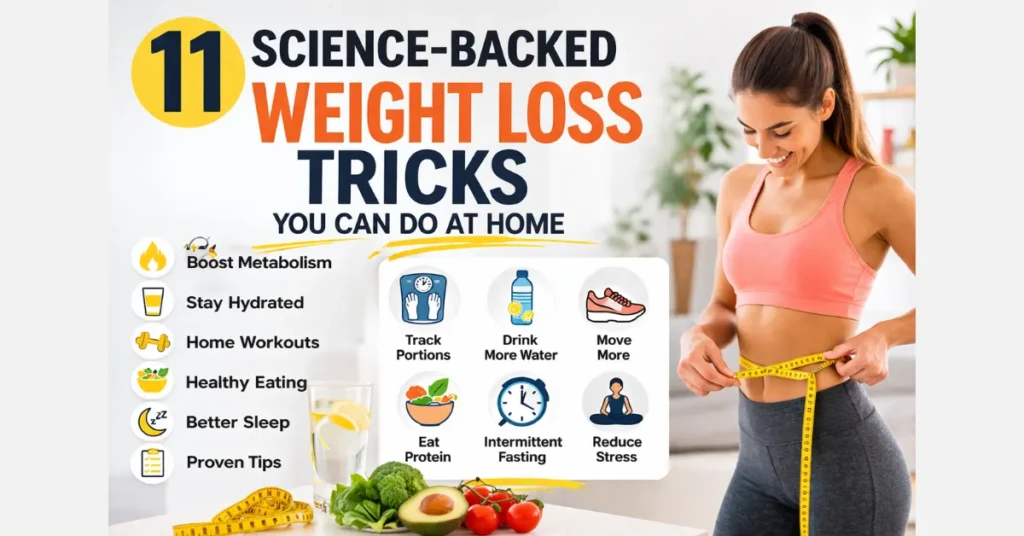







11 Science-Backed Weight Loss Tricks You Can Do at Home 2026

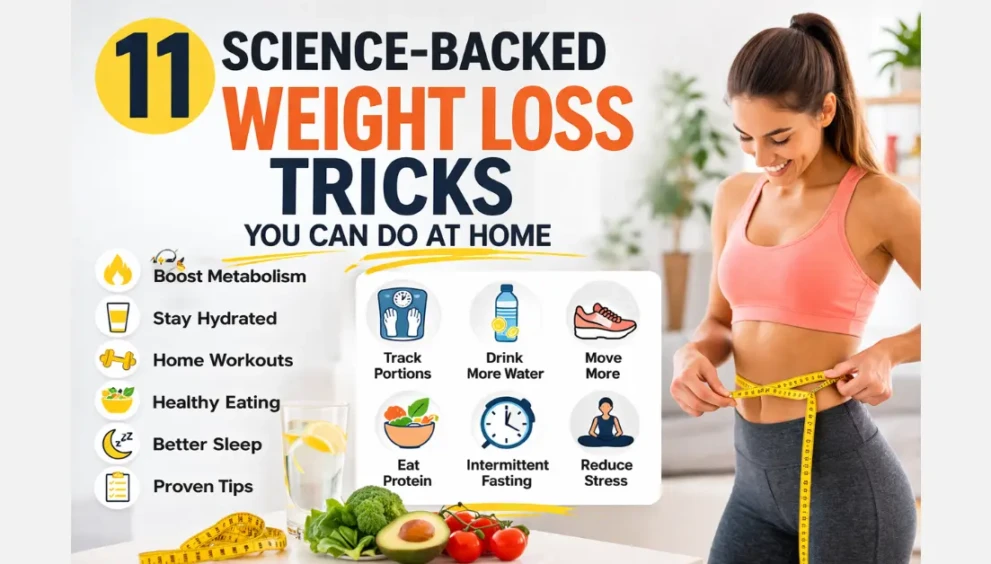
Losing weight doesn’t require a gym membership, a personal trainer, or a refrigerator full of food you can’t pronounce.
Some of the most powerful weight loss strategies in existence can be done right from your living room, kitchen, or backyard — and research actually backs them up.
The tricky part? Most people are still following outdated advice. Cut calories, do more cardio, drink more water. Sound familiar? While those things help, science has uncovered a whole new layer of strategies — including how your gut hormones like GLP-1 actually control your hunger, how a simple walk after dinner can change your metabolism, and why your dinner plate size matters more than your dinner itself.
Here are 11 tricks that are genuinely science-backed, surprisingly simple, and completely doable at home. No equipment required.
1. Eat Foods That Trigger Your GLP-1 Hormone Naturally
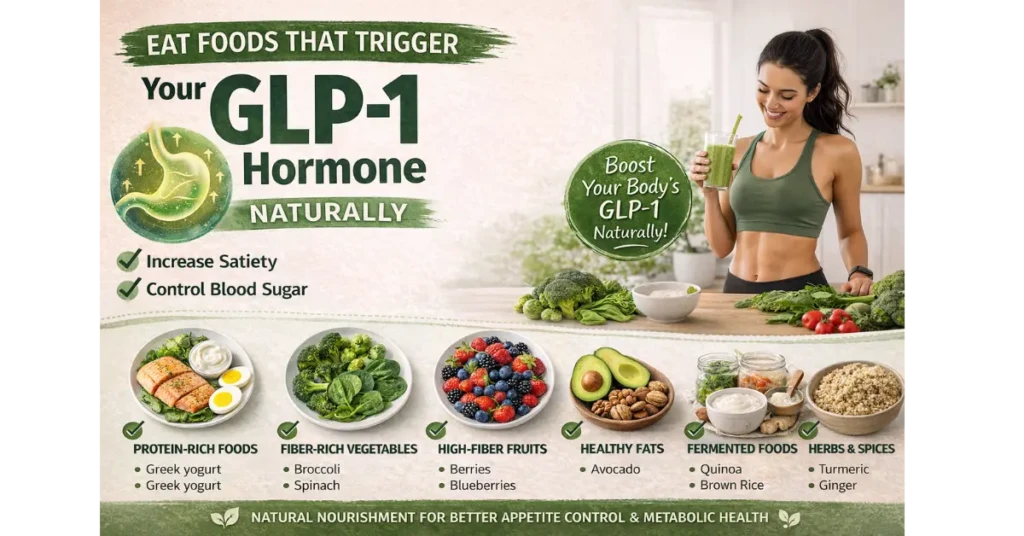
You’ve probably heard of Ozempic or Wegovy by now. Those medications work by mimicking a hormone called GLP-1 (glucagon-like peptide-1) — a natural signal your gut releases to tell your brain you’re full.
Here’s what most people don’t know: certain foods actually trigger your body to release more GLP-1 naturally.
Research published in the British Journal of Nutrition shows that high-fiber foods, protein-rich meals, and healthy fats all stimulate GLP-1 release — slowing digestion, reducing appetite, and helping you eat less without feeling deprived.
Foods that boost GLP-1 naturally:
- Eggs and lean protein (chicken, fish, legumes)
- Avocados and olive oil
- Oats, barley, and whole grains
- Leafy greens and cruciferous vegetables
- Nuts and seeds
You don’t need a prescription. You need the right plate.
Why this matters in 2026
GLP-1 receptor agonist drugs have exploded in popularity — but they come with side effects, high costs, and long waiting lists. Eating to naturally support your GLP-1 response is free, safe, and something you can start today.
2. Take a 10-Minute Walk After Every Meal
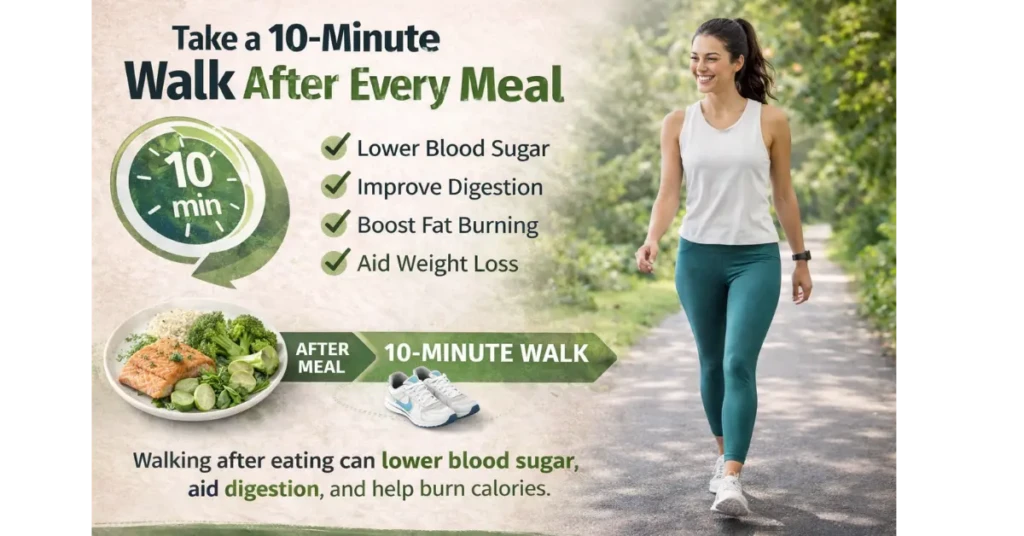
Don’t head straight for the couch after dinner. A short walk — even just 10 minutes — does something remarkable to your blood sugar and metabolism.
A 2022 study published in Sports Medicine found that a 2–5 minute walk after eating significantly lowered blood sugar spikes compared to sitting. Better blood sugar control means less insulin released, which means less fat storage. That’s a big deal.
And it gets better. Walking after meals also improves digestion, reduces bloating, and over time, contributes to meaningful calorie burn without ever feeling like “exercise.”
Three 10-minute walks per day adds up to 150 minutes of weekly activity — exactly what the CDC recommends for weight management.
You don’t need a treadmill. Walk around the block. Pace your hallway. It counts.
The compounding effect of daily walking
A study from the University of Warwick found that people who walked for 30 minutes daily lost an average of 7.7 pounds over 6 months — without changing their diet at all. Pair walking with even a few of the other tricks on this list and the results multiply fast.
3. Eat Protein at Breakfast — Every Single Morning
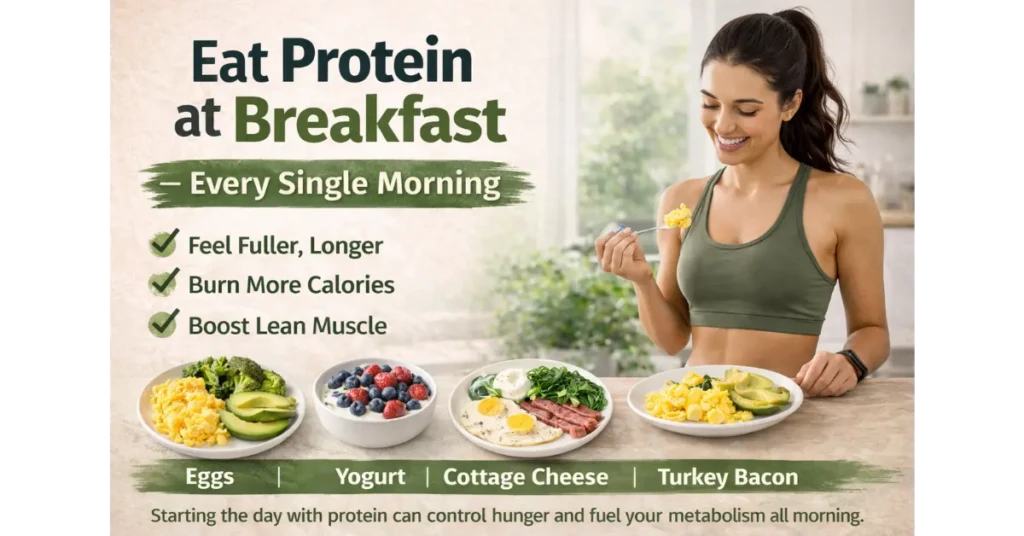
If there’s one meal where protein matters most, it’s breakfast.
Research from the University of Missouri shows that a high-protein breakfast reduces hunger hormones (specifically ghrelin) for hours afterward — meaning you eat less at lunch without even trying.
People who skip breakfast or eat carb-heavy meals in the morning tend to experience stronger cravings by mid-afternoon. Sound familiar?
Easy high-protein breakfast ideas at home:
- Scrambled eggs with spinach (2 eggs = 12g protein)
- Greek yogurt with berries and chia seeds
- Cottage cheese with sliced fruit
- A protein smoothie with whey or plant-based protein
Aim for 25–30 grams of protein at breakfast. Studies show this single change can reduce daily calorie intake by up to 441 calories — without counting a single one.
4. Drink Water Before Every Meal
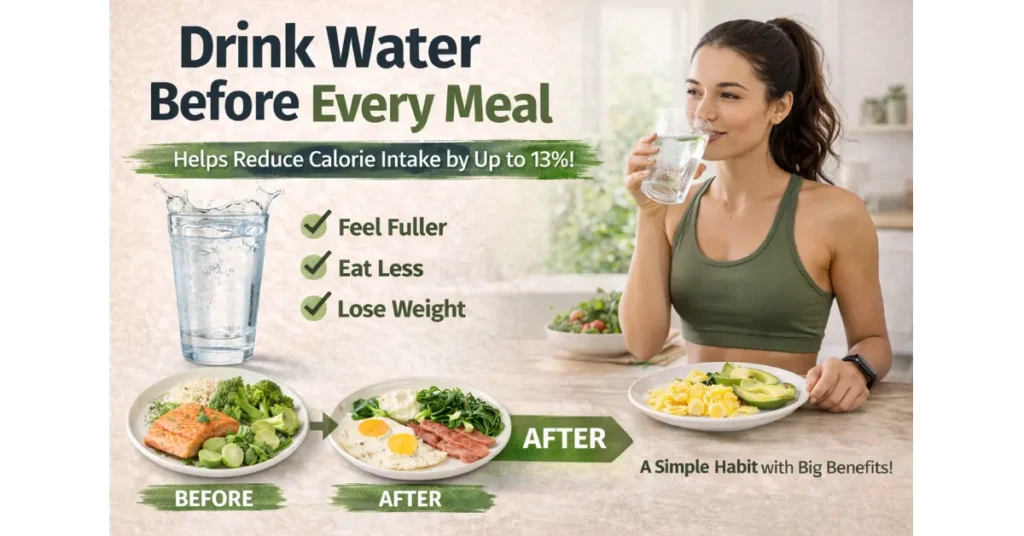
This one sounds almost too simple. But the research is surprisingly solid.
A study published in Obesity journal found that people who drank 500ml (about 2 cups) of water 30 minutes before each meal lost 44% more weight over 12 weeks than those who didn’t.
Water takes up space in your stomach, sends early fullness signals, and has zero calories. It’s the cheapest appetite suppressant on the planet.
Cold water burns a few extra calories too
Your body burns roughly 8 calories warming cold water to body temperature. Not life-changing on its own — but over the course of a year, drinking cold water consistently adds up to a modest extra burn. Every little bit compounds.
Keep a glass of water on your kitchen counter as a visual reminder. If it’s out of sight, you won’t drink it.
5. Shrink Your Plates and Bowls
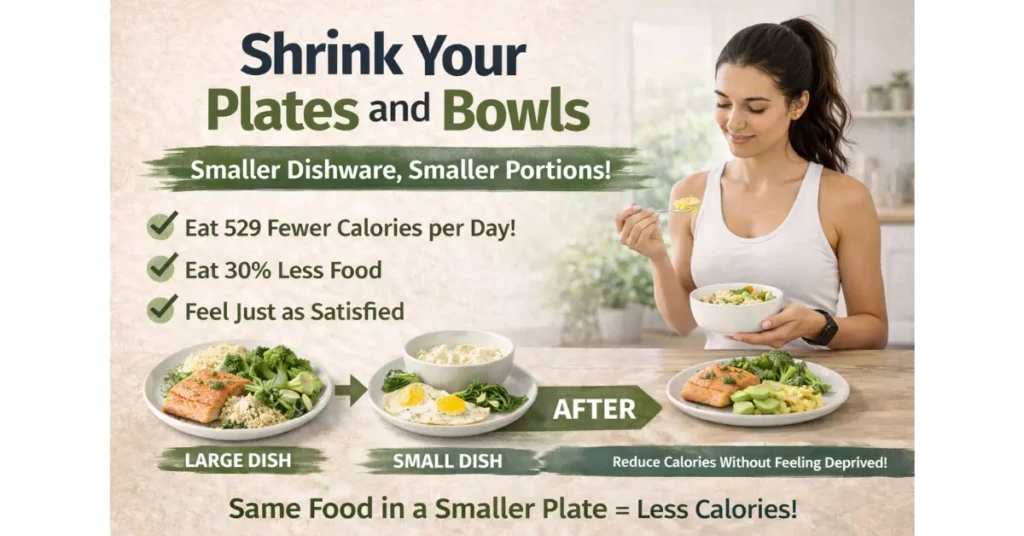
Your brain is surprisingly easy to fool — and you can use that to your advantage.
Research from Cornell University’s Food and Brand Lab found that people who ate from larger cereal bowls consumed 16% more than those using smaller bowls — and believed they ate 7% less. That’s a double illusion working against you.
Swap your dinner plates for ones around 9 inches wide instead of the standard 12-inch plates most American homes use. You’ll serve yourself less, eat less, and feel just as satisfied — because your brain registers a full plate as a full meal, regardless of the plate’s actual size.
This trick costs nothing and requires zero willpower. Just smaller dishes.
6. Stop Eating After 8 PM
Late-night snacking is quietly one of the biggest drivers of weight gain — and most people have no idea how much it adds up.
A study from Northwestern University found that people who stopped eating earlier in the evening consumed nearly 250 fewer calories per day on average compared to late-night eaters. That can translate to up to 2 pounds of fat gained per month just from nighttime nibbling.
Late-night eaters also tend to reach for higher-calorie foods — chips, crackers, ice cream — rather than fruits or vegetables.
Set a simple kitchen cutoff time. After 8 PM, the kitchen is closed. If genuine hunger strikes, a small handful of nuts or a piece of fruit is fine. But mindless late-night eating? That ends now.
7. Add Resistance Moves to Your Daily Routine
You don’t need a gym or a single piece of equipment to build metabolism-boosting muscle at home.
Bodyweight exercises — squats, pushups, lunges, planks — build lean muscle mass, which raises your resting metabolic rate. In plain English: more muscle means your body burns more calories even while you’re sitting on the couch.
A 2017 review in Current Sports Medicine Reports confirmed that resistance training increases resting metabolic rate by up to 7% — which for an average person translates to burning an extra 100–150 calories daily without additional effort.
A simple 10-minute home routine:
- 15 squats
- 10 pushups
- 20-second plank
- 15 reverse lunges (each leg)
- Repeat twice
Do this three times a week. Within 8 weeks, you’ll notice a real difference in how your clothes fit — even if the scale moves slowly.
8. Sleep 7 to 8 Hours — Without Negotiation
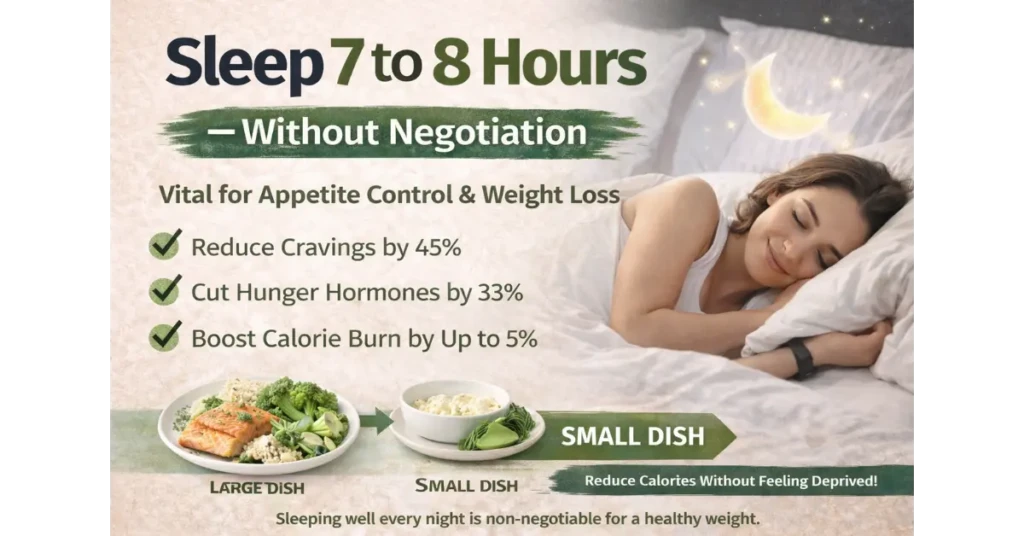
This one surprises people every time. But sleep might be the most underrated weight loss tool in existence.
When you don’t get enough sleep, your body produces more ghrelin (the hunger hormone) and less leptin (the fullness hormone). The result? You wake up hungrier, crave high-carb and fatty foods all day, and have almost no willpower to resist them.
A landmark study from the University of Chicago found that sleep-deprived dieters lost 55% less fat than those who slept adequately — even on the same calorie-restricted diet. Same food. Dramatically different results.
Aim for 7 to 8 hours every night. If you struggle with sleep quality, try keeping your bedroom cool (around 65°F), avoiding screens an hour before bed, and going to sleep at the same time every night.
Good sleep isn’t laziness. It’s literally part of your weight loss plan.
9. Choose Whole Grains Over Refined Carbs
You don’t have to give up carbohydrates entirely. That’s not sustainable and honestly, not necessary.
The key is choosing quality carbs over refined ones. Whole grains — oats, barley, brown rice, whole-wheat bread — digest slower, keep blood sugar stable, and trigger more satiety hormones (including GLP-1) than their white, refined counterparts.
A large Harvard study following over 100,000 people found that increasing whole grain intake was associated with less long-term weight gain — while refined grain consumption was linked to gradual weight creep year after year.
Simple swaps to make at home:
- White bread → whole-wheat bread
- White rice → brown rice or quinoa
- Regular pasta → whole-wheat pasta
- Sugary breakfast cereals → steel-cut oats
These aren’t dramatic sacrifices. They’re small daily decisions that compound into real results over months and years.
10. Practice Mindful Eating — No Zen Required
Mindful eating sounds like something that requires a meditation cushion and a gong. It doesn’t.
It simply means paying attention to what you’re eating while you’re eating it — and research shows it works remarkably well for weight loss.
A review of 19 studies published in Obesity Reviews found that mindful eating interventions led to significant reductions in binge eating, emotional eating, and overall calorie intake.
How to do it at home:
- Turn off the TV during meals
- Put your fork down between bites
- Notice the actual taste, texture, and smell of your food
- Eat slowly — it takes 20 minutes for your brain to register fullness
- Try eating with your non-dominant hand to naturally slow down
You’ll eat less — not because you’re restricting yourself, but because you’re actually paying attention.
11. Keep Healthy Food Visible — Hide Everything Else
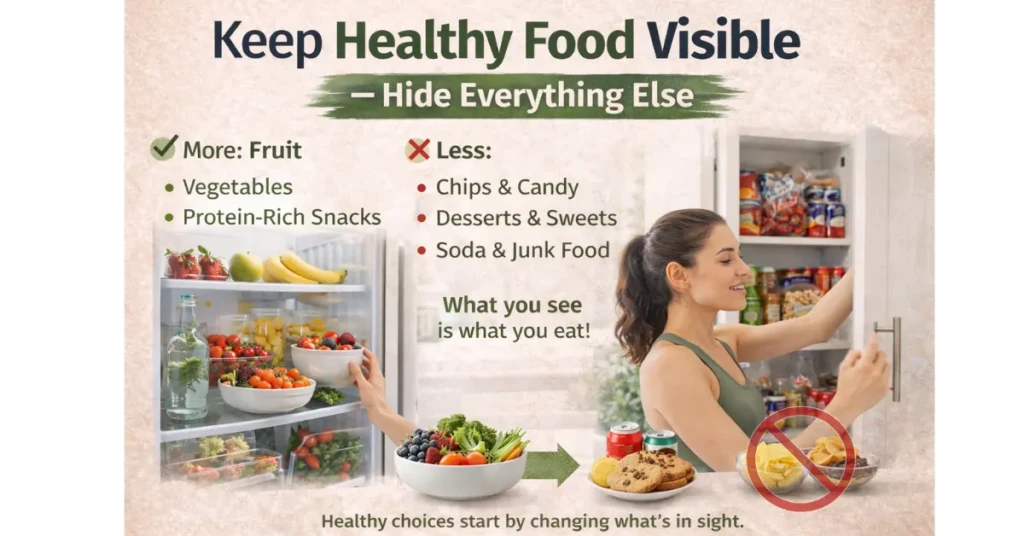
Your environment shapes your eating habits more than your willpower does. This is one of the most important lessons from behavioral nutrition research.
A study from Cornell University found that women who kept a fruit bowl on their kitchen counter weighed an average of 13 pounds less than those who didn’t. On the flip side, women with cereal boxes or soft drinks visible on their counters consistently weighed more.
The food you see is the food you eat. Full stop.
Rearrange your kitchen this week:
- Place a fruit bowl on the counter
- Move healthy snacks to eye level in the fridge
- Put chips, cookies, and candy in opaque containers or out of sight entirely
- Pre-cut vegetables and store them in clear containers at the front of your fridge
You’re not fighting temptation — you’re engineering your environment so temptation barely shows up.
The Bottom Line
None of these tricks require a gym, a strict meal plan, or a $300 supplement stack.
They require small, consistent changes — ones that work with your biology instead of against it. Trigger your GLP-1 naturally with the right foods. Walk after meals. Eat protein at breakfast. Sleep properly. Shrink your plates. Stop eating at 8 PM.
Pick two or three of these and start today. Once those become habits, layer in a few more. That’s how lasting weight loss actually happens — not through dramatic overhauls, but through small wins that stack up over time.
Your home is already the best weight loss gym you’ve got. You just have to use it.
FAQ
What is GLP-1 and how does it help with weight loss?
GLP-1 (glucagon-like peptide-1) is a gut hormone that signals fullness to your brain and slows digestion. Medications like Ozempic mimic this hormone, but certain foods — high-fiber foods, protein, and healthy fats — naturally stimulate GLP-1 release, helping control appetite without medication.
How much walking do I need to lose weight at home?
Even 10 minutes of walking after each meal adds up to 30+ minutes daily — enough to improve blood sugar control, boost metabolism, and contribute to meaningful weight loss over time. Studies show 30 minutes of daily walking alone can lead to significant fat loss within months.
Can I lose weight without going to the gym?
Absolutely. Bodyweight resistance exercises, daily walking, sleep optimization, mindful eating, and dietary adjustments can all drive significant weight loss without a gym membership.
What foods naturally boost GLP-1 levels?
Eggs, lean proteins, avocados, olive oil, oats, leafy greens, nuts, and high-fiber vegetables all stimulate natural GLP-1 release. These foods slow digestion, reduce appetite, and support healthy blood sugar levels.
Does eating late at night really cause weight gain?
Yes — research shows late-night eaters consume nearly 250 extra calories daily and tend to choose higher-calorie foods. Setting a consistent kitchen cutoff time (like 8 PM) is one of the simplest changes you can make for weight management.
How does sleep affect weight loss?
Sleep deprivation raises hunger hormones and reduces fullness hormones, causing stronger cravings and greater calorie intake. Research shows sleep-deprived dieters lose 55% less fat than those who sleep adequately — even on the same diet.
Do smaller plates actually help you eat less?
Yes. Cornell University research found that people consistently eat more from larger plates and bowls without realizing it. Switching to 9-inch plates is a simple, zero-willpower trick that reduces portion sizes automatically.
Read More:
Best Travel Credit Cards 2026 USA: Top Picks for Every Traveler
How to Improve Credit Score Fast in 2026 (Step-by-Step Guide)


How to Reset Your Nervous System Naturally (2026 Guide)
06th Apr 2026[…] 11 Science-Backed Weight Loss Tricks You Can Do at Home […]
Health Tricks: Simple Ways to Sleep Better, Lose Weight
07th Apr 2026[…] 11 Science-Backed Weight Loss Tricks You Can Do at Home […]
Eliza Q. Duncan
29th Jul 2026I admire how this blog promotes kindness and compassion towards ourselves and others We could all use a little more of that in our lives