

 English




































































Tax Strategies for US Digital Nomads and Freelancers in 2026

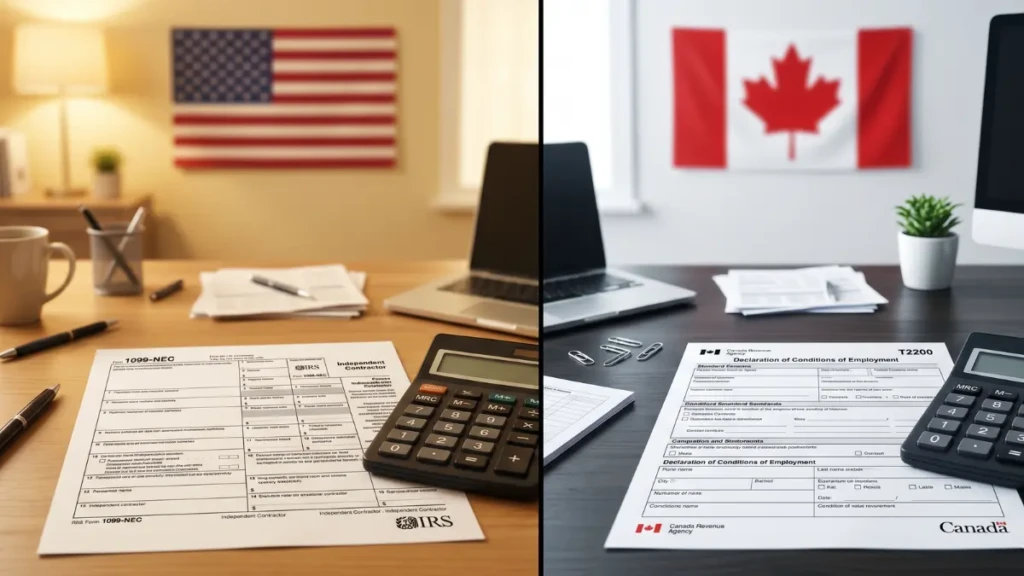
Earning a six-figure income while working from a beach in Portugal or a café in Thailand is the ultimate dream. But that dream can quickly turn into a financial nightmare when you realize that the United States is one of the only countries on earth that taxes its citizens based on citizenship, not geographic residency.
Whether you are sipping coconuts in Bali or snowboarding in the Alps, the IRS expects their cut.
However, the tax code is written to reward those who understand it. If you are looking for the most effective US digital nomad tax strategies in 2026, you cannot rely on outdated advice from pre-pandemic travel blogs. You need a structural approach to legally shield your revenue, restructure your agency, and establish strategic state residency.
Here is your comprehensive, data-backed guide to navigating the 2026 US tax code as a remote entrepreneur.
Table of Contents
- The $132,900 Shield: Mastering the FEIE
- Interactive Dashboard: 2026 Nomad Tax Calculator
- The 15.3% Agency Trap (And How an S-Corp Fixes It)
- Active Retainers vs. Passive Website Revenue
- Breaking State Residency: The SD/TX/FL Playbook
- Expert Insight: The Foreign Tax Credit Pivot
- Frequently Asked Questions (FAQ)
The $132,900 Shield: Mastering the FEIE
The crown jewel of expat taxation is the Foreign Earned Income Exclusion (FEIE). For the 2026 tax year, the IRS has increased this limit to an unprecedented $132,900 per qualifying individual (up from $130,000 in 2025). If you are married and both spouses work abroad, you can collectively exclude up to $265,800 from federal income tax.
To claim it legally, you must pass one of two tests:
- The Bona Fide Residence Test: You have established permanent legal residency in a foreign country (e.g., a long-term visa, a local lease, paying local utility bills) for an entire calendar year.
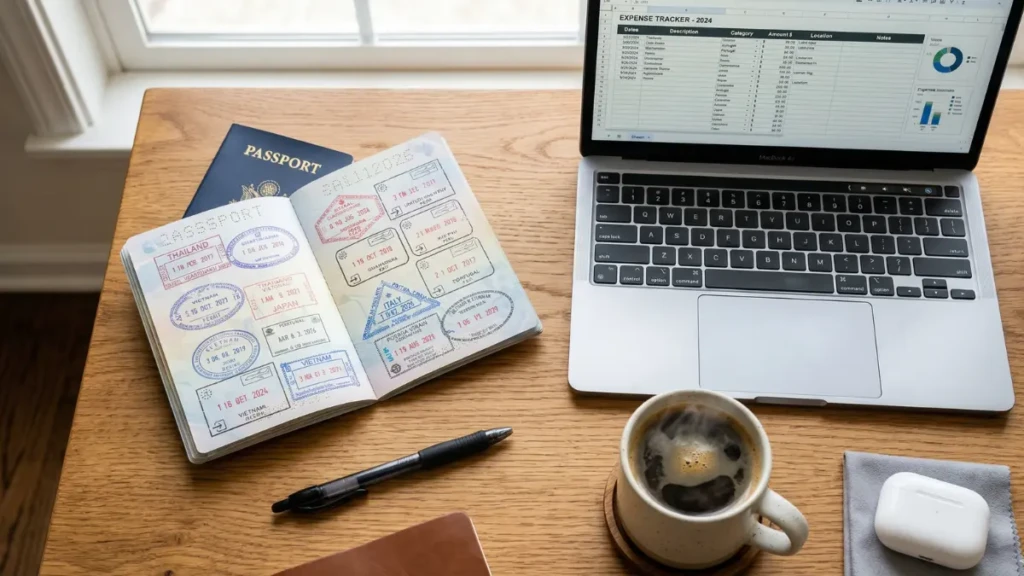
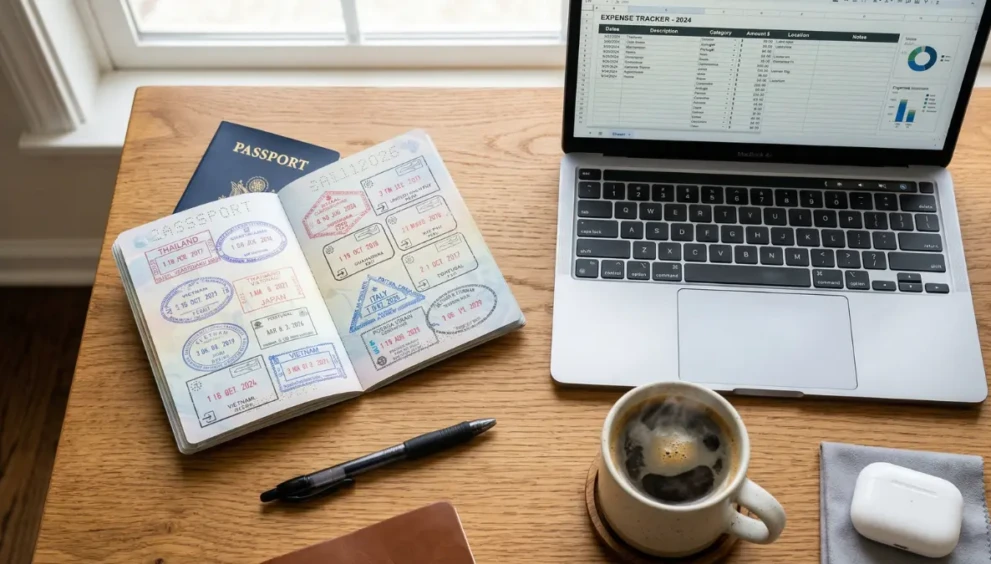
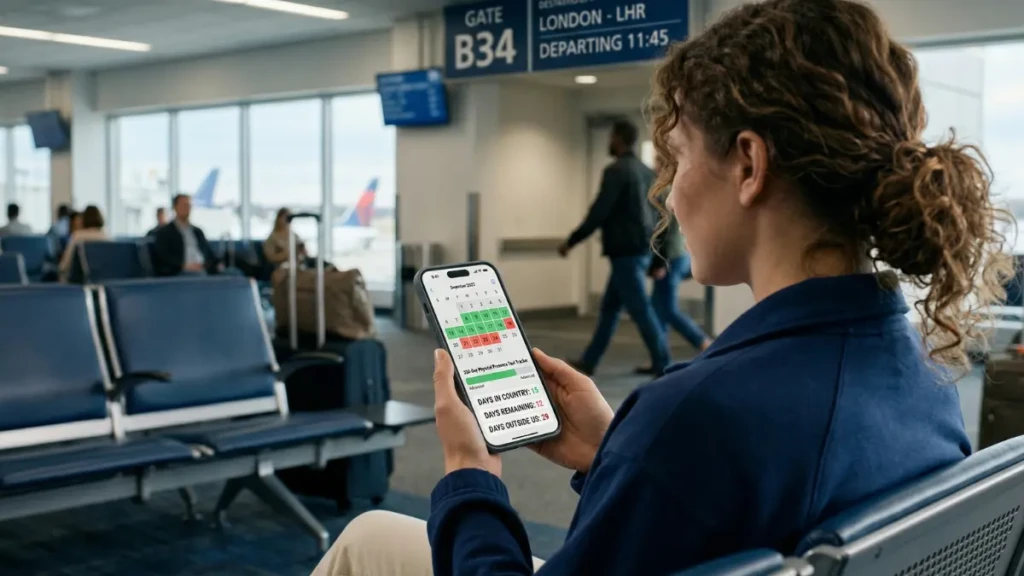
- The Physical Presence Test: You are physically outside of the US for 330 full days in any consecutive 12-month period. For most nomads who hop between Airbnbs, tracking your flights and border stamps to hit this 330-day mark is the most reliable strategy.
Note: The FEIE eliminates your Federal Income Tax on that amount, but it does NOT eliminate your Self-Employment tax.
Interactive Dashboard: 2026 Nomad Tax Calculator
Understanding how the FEIE interacts with the Physical Presence Test and Self-Employment tax is critical. Use the tool below to input your projected 2026 earned income and your planned days outside the US. The calculator will immediately show you how the 330-day rule dictates your federal tax exposure, and expose the reality of the 15.3% SE tax that the FEIE leaves behind.Show me the visualization
The 15.3% Agency Trap (And How an S-Corp Fixes It)

Here is the biggest mistake remote workers make: assuming the FEIE makes them tax-free. If you operate as a Sole Proprietor or a single-member LLC, you are still liable for the 15.3% Self-Employment tax (Social Security and Medicare) on all net earnings, regardless of where you live. If you earn $100,000, you owe $15,300, even if you pass the Physical Presence test.
The Fix: If your net profit consistently exceeds $80,000, consult a CPA about electing S-Corp taxation. As an S-Corp, you can pay yourself a “reasonable salary” (which is subject to the 15.3% SE tax) and take the rest of your profits as owner distributions (which are exempt from the 15.3% SE tax). You can still apply the FEIE to the salary portion, drastically lowering your overall burden.
Active Retainers vs. Passive Website Revenue
The IRS draws a hard line between how you make your money, and this is highly relevant if you operate multiple online business models.
The FEIE only applies to Foreign Earned Income (active income). If you run a digital marketing agency, manage Meta Ads, or write technical SEO content for monthly retainers, the IRS views this as active compensation for services performed. It qualifies for the exclusion.
However, if you are scaling automated news blogs or managing travel niche websites, the revenue generated from display ads, affiliate marketing, or automated digital product sales is generally classified as passive income. Passive income does not qualify for the FEIE. You will pay standard US taxes on those ad revenues, making it crucial to structure your business expenses aggressively against that specific income stream.
Breaking State Residency: The SD/TX/FL Playbook
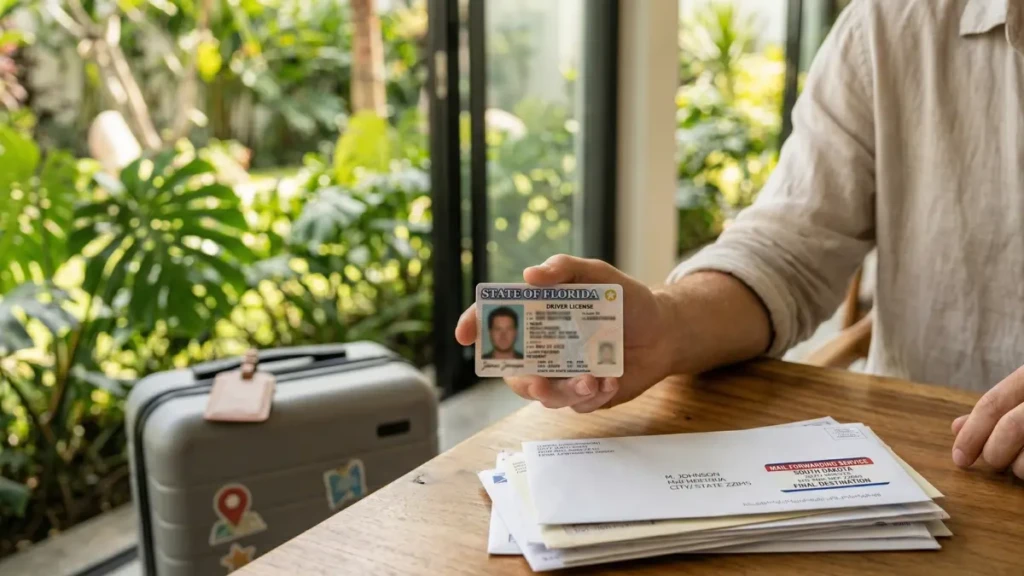
While the FEIE protects you from the Federal government, your home state might still demand a cut. States like California, New York, and Virginia are notoriously aggressive; if you keep a driver’s license, voter registration, or bank account there, they will claim you are a resident “temporarily” abroad and tax your worldwide income.
Before you leave the country, you must break your state residency and establish a domicile in one of the seven states with zero state income tax (South Dakota, Florida, Texas, Nevada, Washington, Wyoming, or Alaska).
Nomads typically use mail-forwarding services in South Dakota or Florida, fly in for 24 hours to get a physical driver’s license, and register to vote, cleanly severing ties with their former, high-tax home states.
Expert Insight: The Foreign Tax Credit Pivot
We spoke with Michael Chen, an EA specializing in international tax law, about when to abandon the FEIE entirely.
“Nomads obsess over the FEIE, but if you relocate to a high-tax country like Germany, Canada, or Japan, the FEIE is often the wrong move. Instead, use the Foreign Tax Credit (FTC) via Form 1116. The FTC gives you a dollar-for-dollar credit against your US tax bill for taxes paid to your host country. Since European taxes are usually higher than US taxes, the FTC entirely wipes out your US federal tax liability while allowing you to contribute to a Roth IRA—something the FEIE heavily restricts.”
Frequently Asked Questions (FAQ)
Do I have to file Form 2555 every year?
Yes. The Foreign Earned Income Exclusion is an election, not an automatic right. If you fail to file Form 2555 with your tax return, the IRS will assume your income is fully taxable in the US.
Can I deduct my Airbnb and Coworking space?
You cannot deduct your primary living expenses (like a standard Airbnb) as a business expense. However, if you rent a dedicated desk at a coworking space, or if your Airbnb has a strictly dedicated office room used exclusively for your business, you can deduct a prorated portion of the rent and utilities just as you would a home office in the US.
What happens if I miss the 330-day requirement by one day?
You lose the entire FEIE for that 12-month period. Travel days (time spent over international waters or in the air) do not count as days in a foreign country. Always build a 10-day buffer into your travel plans; aim for 340 days out of the country to account for delayed flights or emergency layovers in US territories.
Ready to Pack Your Bags?
The digital nomad lifestyle offers unparalleled freedom, but it requires treating your taxes like a strict business operation. By tracking your days meticulously, structuring your agency efficiently, and understanding the difference between your active retainers and passive ad revenues, you can legally keep the vast majority of what you earn in 2026.
Always consult with a qualified expat CPA before making international moves, and keep every boarding pass.
For the most up-to-date filing deadlines and exact Form 2555 instructions, refer directly to the [ IRS International Taxpayers Guide].
Related Post:
Building Credit from Scratch: A Step-by-Step Guide for New Immigrants in Canada and the USA

How to Claim Home Office Tax Deductions in the US &
11th Apr 2026[…] Tax Strategies for US Digital Nomads and Freelancers in 2026 […]