

 English



































Dropshipping vs. Print-on-Demand: Which is Actually Profitable for Beginners?

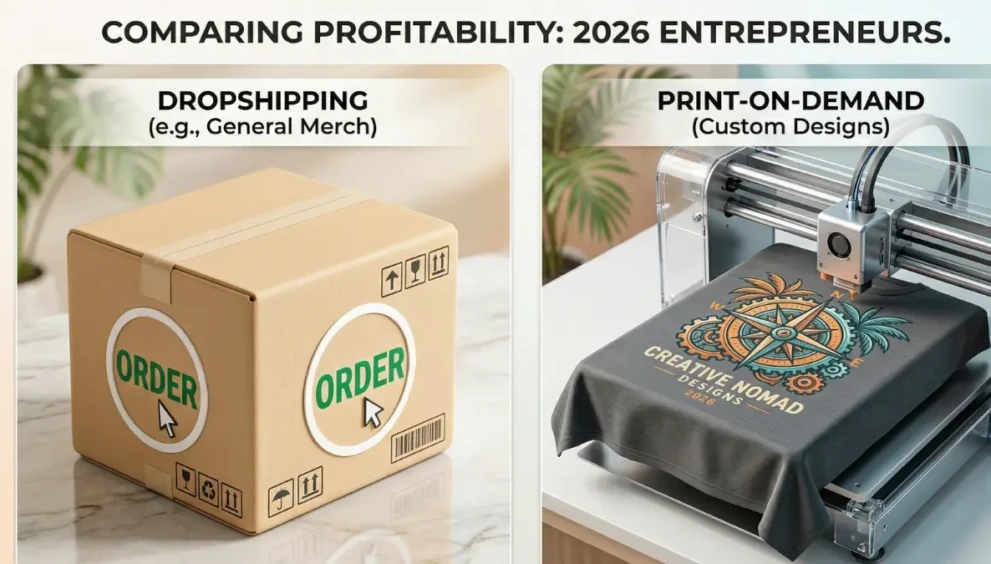
If you’ve spent more than five minutes on YouTube or TikTok lately, you’ve seen the “lifestyle.” An influencer sits in a luxury rental, opens a laptop, and shows you a Shopify dashboard with $50,000 in daily sales. The message is always the same: It’s easy. Just pick a product and run ads.
In 2026, that narrative is not just misleading—it’s a recipe for financial disaster.
E-commerce has matured. Customers in the USA and Canada are savvier than ever; they expect 3-day shipping, high-quality packaging, and instant customer service. When comparing Dropshipping vs. Print-on-Demand (POD), the question isn’t which one can make you a millionaire overnight. The question is: Which business model has a sustainable profit margin after you pay for ads, returns, and platform fees?
Whether you are looking for a performance-based side hustle or a full-time career move into digital brand building, you need to understand the mechanics of these two models. Let’s strip away the fluff and look at the real numbers.
Table of Contents
- What’s the Real Difference? (At a Glance)
- Startup Costs: How Much Skin in the Game?
- The Profit Margin Reality Check
- Shipping Logistics: The US and Canada Challenge
- Comparison: Which One Should You Choose?
- Expert Insight: The Hybrid Model
- Frequently Asked Questions (FAQ)
1. What’s the Real Difference? (At a Glance)
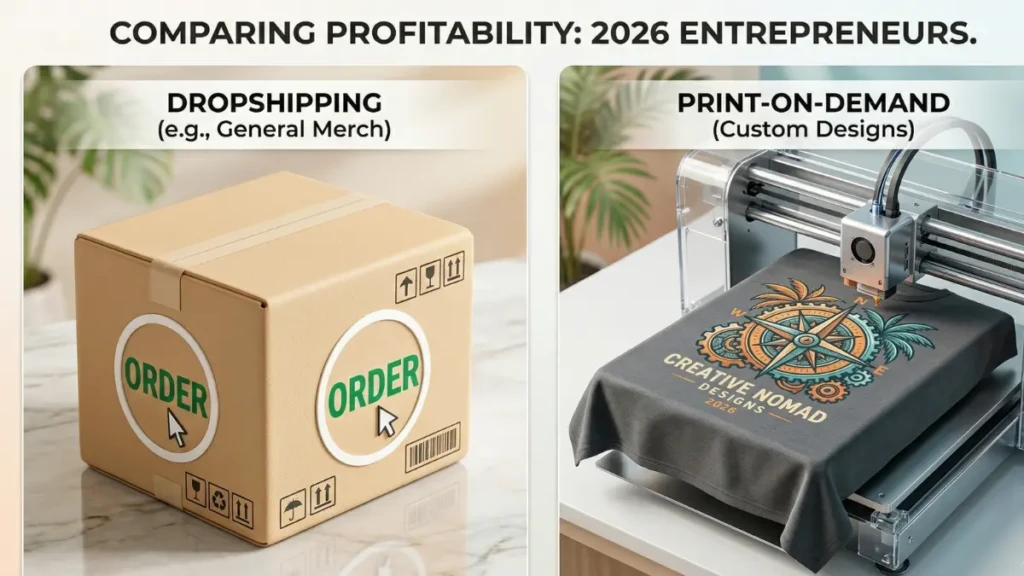
Both models are “inventory-less,” meaning you don’t keep boxes of products in your garage. But the way they create value is fundamentally different.
- Dropshipping: You act as a middleman for existing products. A customer buys a $30 “Self-Cleaning Pet Brush” from your store; you buy it for $10 from a supplier (usually in China) and have them ship it directly to the customer. Your “value” is marketing and curation.
- Print-on-Demand: You act as a creator. You design a unique graphic, upload it to a platform like Printful or Printify, and apply it to a “blank” product (like a t-shirt, mug, or poster). The product is only manufactured once a customer orders it. Your “value” is intellectual property and branding.
2. Startup Costs: How Much Skin in the Game?
While people call these “zero-dollar” businesses, that is a myth. To launch a professional-grade store in 2026 that actually converts US and Canadian traffic, you need a baseline investment.
The “Bare Bones” Launch Budget:
- Shopify Subscription: ~$39/month.
- Domain Name: ~$15/year.
- Sample Products (Mandatory): ~$50–$100. (Never sell what you haven’t touched).
- Initial Ad Spend: ~$300–$500.
The Total: You need roughly $500–$700 to give either model a fair shake.
Pro Tip: If you have zero budget, POD has a slight edge. You can launch on marketplaces like Redbubble or Etsy for almost no upfront cost, though your margins will be lower because the platform takes a bigger cut. Dropshipping almost always requires a standalone store and a paid traffic budget (Facebook/TikTok ads).
3. The Profit Margin Reality Check
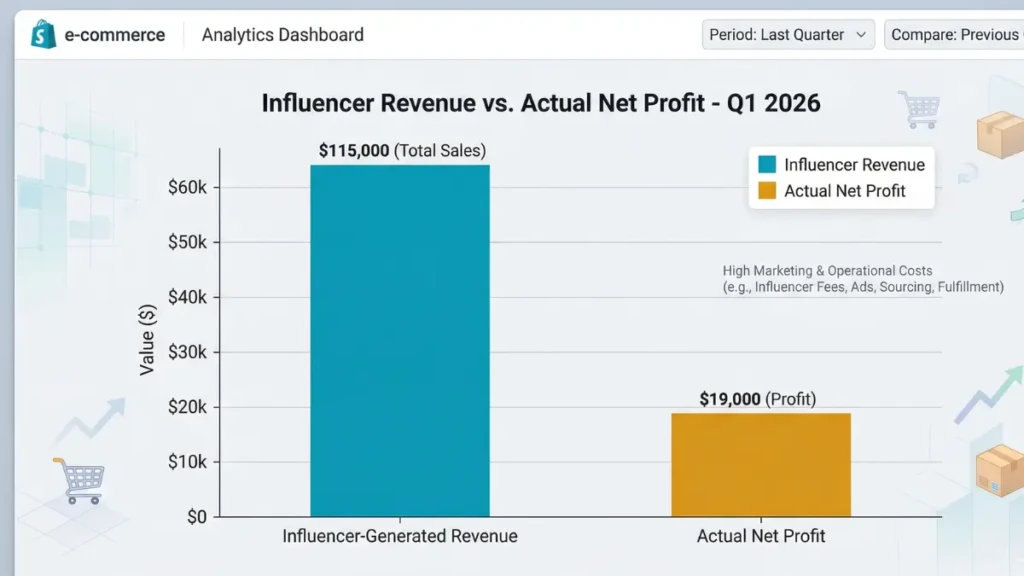
This is where the influencers lie. They show you “Revenue,” but they don’t show you “Net Profit.”
Dropshipping Margins (The “Volume” Game)
- Average Gross Margin: 15% – 25%.
- The Reality: If you sell a product for $40, it might cost $15 to buy and ship. That leaves $25. Now subtract $15–$20 in “Customer Acquisition Cost” (what you paid Mark Zuckerberg for the click). Your actual profit might only be $5 per sale. One single return or a lost package nukes the profit of your next four sales.
Print-on-Demand Margins (The “Brand” Game)
- Average Gross Margin: 30% – 50%.
- The Reality: Because you are selling a “unique” design, you have more pricing power. A basic white t-shirt costs $12 to print and ship via Printful. You can easily sell a high-quality, uniquely branded shirt for $30–$35. Even with a $15 ad cost, you’re often walking away with $8–$12 per unit.
4. Shipping Logistics: The US and Canada Challenge
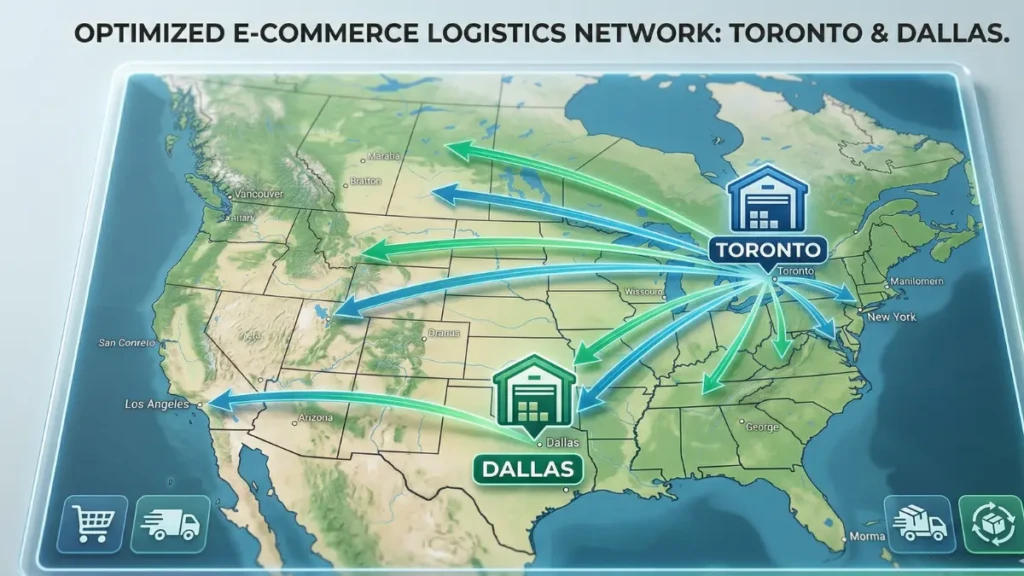
In 2026, 20-day shipping from AliExpress is a death sentence for your brand. North American customers are spoiled by Amazon Prime.
- Dropshipping Logistics: To survive, you must use US/Canada-based suppliers via platforms like Spocket or hire a private shipping agent. This increases your product cost but keeps shipping under 7 days. If you ship from China to Toronto or Chicago in 2026, expect a 10%–15% “chargeback” rate from angry customers.
- Print-on-Demand Logistics: This is where POD shines. Companies like Printful have fulfillment centers inside the USA (Charlotte, Dallas) and Canada (Toronto, BC). This means “local” shipping, no customs delays, and a return address that doesn’t require an international flight.
Expert Insight: “If you are targeting the Canadian market, always check if your POD provider has a facility in Canada. Cross-border duties can turn a happy customer into a one-star reviewer instantly.” — Performance Marketing Strategist
5. Comparison: Which One Should You Choose?
Choose Dropshipping if:
- You are a data-driven marketer who loves “testing” products.
- You want to follow trends (e.g., the latest viral gadget).
- You are comfortable with higher customer service demands and thinner margins in exchange for easier scaling.
Choose Print-on-Demand if:
- You have a creative streak or can hire a designer.
- You want to build a “long-term” brand or community.
- You prefer higher margins and lower return rates (since apparel is harder to “break” than electronics).
6. Common Mistakes Beginners Make
- Ignoring Returns: Beginners calculate profit as Price – Cost. Professionals calculate it as Price – Cost – Ads – Returns – Payment Processing Fees.
- Using Poor Quality Images: In 2026, AI-generated lifestyle photos are standard. If your site has blurry images from a Chinese factory, you will not get the sale.
- Broad Niche Focus: Selling “everything for everyone” is a fast way to go broke. Whether it’s POD or Dropshipping, you must own a niche (e.g., “Gifts for Canadian Nurse Practitioners” or “Ergonomic Tools for Remote Writers”).
FAQ SECTION (FOR FEATURED SNIPPETS)
Is dropshipping still profitable in 2026?
Yes, but the “AliExpress to Shopify” model is largely dead. To be profitable, you must use local suppliers, build a real brand identity, and focus on high-ticket items (over $50) to offset rising ad costs.
Which is better for beginners, POD or Dropshipping?
Print-on-Demand is generally better for beginners because it allows for higher margins and provides a more stable customer experience through local US/Canada fulfillment. It also carries less “brand risk” than dropshipping generic electronics.
How much does it cost to start a Print-on-Demand business?
You can start for as little as $50 (domain and a few samples) if you use a marketplace like Etsy. If you build a standalone Shopify store, expect to invest $500 to cover the subscription and initial marketing.
Can I do both at the same time?
Absolutely. Many successful stores use a “Hybrid Model.” They build a brand around a POD niche (like fitness apparel) and then “dropship” complementary items (like high-quality gym equipment) to the same audience.
CTA (SOFT, TRUST-BASED)
Building a profitable e-commerce business isn’t about finding a “secret” product; it’s about building a system that moves traffic to revenue efficiently. If you’re ready to start, pick one model and commit to 90 days of testing. The data you gather in those three months will be more valuable than any “guru” course you could ever buy.
Related Post:

The Perfect 3-Step Client Onboarding Questionnaire for Digital Marketers
11th Apr 2026[…] Dropshipping vs. Print-on-Demand: Which is Actually Profitable for Beginners? […]