

 English




































































RCIP Requirements 2026: The Complete Eligibility Breakdown

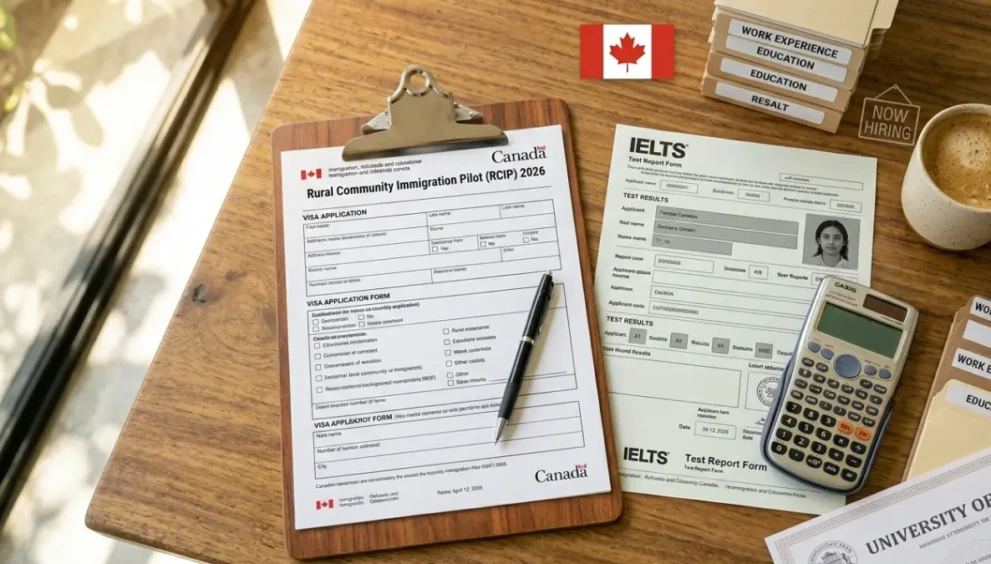
If you are pursuing permanent residency in Canada, the traditional Express Entry system has likely become a source of profound frustration. With CRS scores remaining historically high, skilled workers are increasingly looking toward regional pathways.
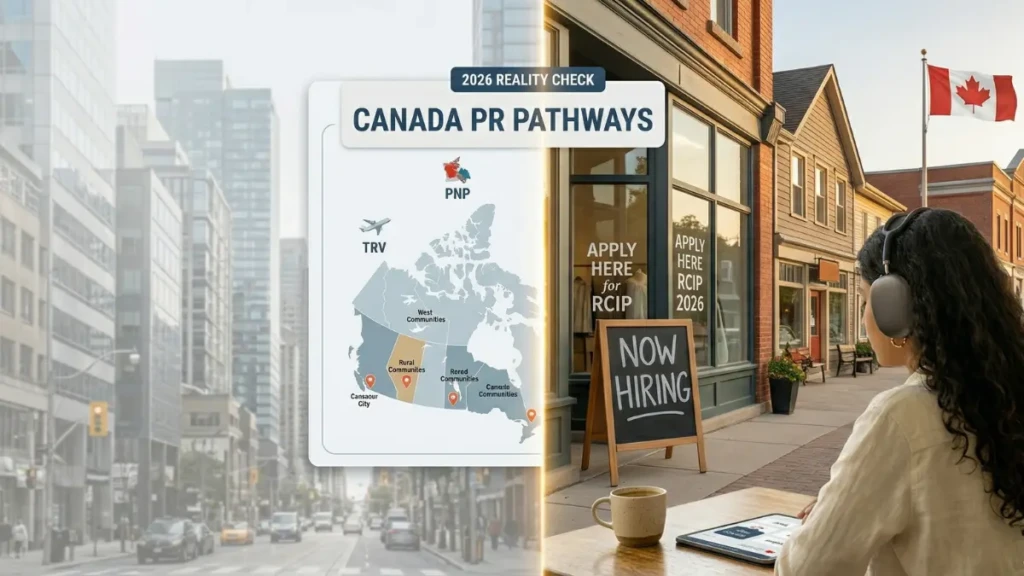
Enter the Rural Community Immigration Pilot (RCIP). Designed to replace the former RNIP, this employer-driven program allows you to bypass the massive federal points pool entirely. If a participating rural community wants you, IRCC (Immigration, Refugees and Citizenship Canada) will fast-track your permanent residency.
However, a community recommendation alone is not a magic wand. You still have to clear the strict federal baselines. If you are preparing your application, here is the absolute, black-and-white breakdown of the RCIP requirements 2026, covering everything from work experience to language thresholds.
Table of Contents
- The Core Job Offer Requirement
- The RCIP Work Experience Requirement (TEER Rules)
- The International Student Exemption
- The RCIP Language Requirement (CLB Scores)
- Educational and Financial Baselines
- Expert Insight: The Local Community Wage Traps
- Frequently Asked Questions (FAQ)
1. The Core Job Offer Requirement
The RCIP is an employer-driven program. You cannot submit a profile “just to see what happens.” Before you even look at the federal requirements, you must secure a genuine job offer from a designated employer within one of the 14 participating communities.
To meet the baseline RCIP eligibility criteria, your job offer must explicitly be:
- Full-time: You must be guaranteed at least 30 paid hours per week.
- Non-seasonal: You must be employed year-round with consistent hours.
- Indeterminate: The contract cannot have an end date.
- Within Boundaries: The physical location of the job must fall within the specific geographic boundaries of the community.
2. The RCIP Work Experience Requirement (TEER Rules)
IRCC is incredibly strict regarding your past employment. The RCIP work experience requirement dictates that you must have accumulated at least 1 year (1,560 hours) of continuous or non-continuous related work experience within the past 3 years.
You can accumulate these 1,560 hours inside or outside of Canada, across multiple employers, or through part-time work (e.g., 15 hours a week for 24 months). However, unpaid internships, volunteer work, and self-employment generally do not count.
The TEER Bridging Matrix
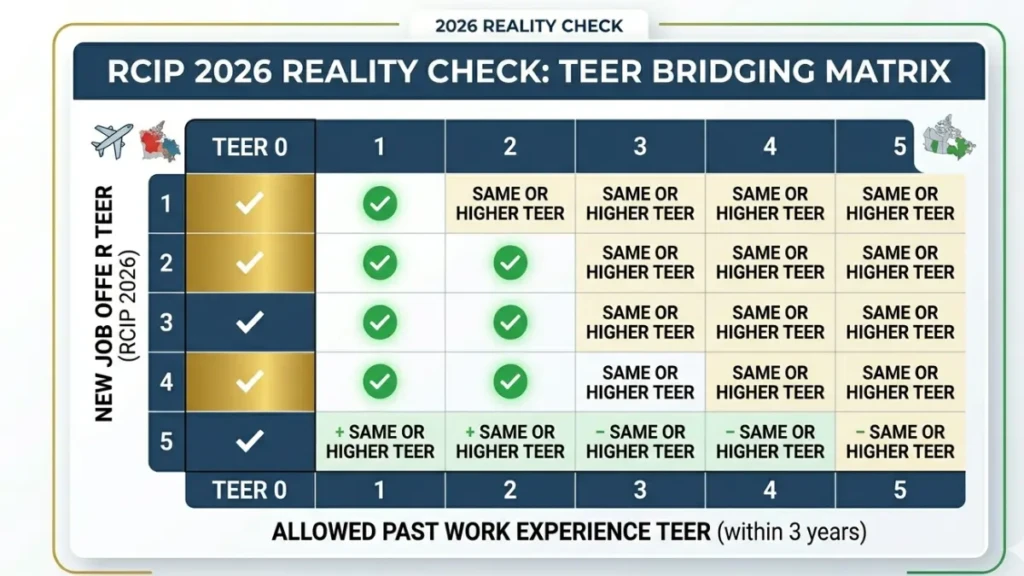
Your past work experience must align with the skill level of your new job offer in Canada. IRCC uses the National Occupational Classification (NOC) TEER system to determine eligibility. You cannot use 1,560 hours of experience as a cashier (TEER 5) to qualify for a job offer as a restaurant manager (TEER 2).
Here is exactly how your past experience must match your new job offer:
| Your New Job Offer in Canada | Allowed Past Work Experience (Last 3 Years) |
| TEER 0 or 1 (Management / Professionals) | Experience must be in TEER 0, 1, 2, or 3. |
| TEER 2 (Supervisors / Specialized Trades) | Experience must be in TEER 1, 2, 3, or 4. |
| TEER 3 or 4 (Frontline Workers / Assistants) | Experience must be in TEER 2, 3, or 4. |
| TEER 5 (Labourers / Cleaners) | Experience must be in the exact same 5-digit NOC code. |
The Healthcare Exception: If your past work experience is as a highly trained Registered Nurse (NOC 31301 – TEER 1), you are allowed to accept a lower-tier job offer as a Nurse Aide (TEER 3) or a Home Support Worker (TEER 4) to get your foot in the door of the community.
3. The International Student Exemption

If the 1,560-hour work requirement feels like an impossible hurdle, there is a massive legal loophole for international students.
You are completely exempt from the work experience requirement if you graduated from a public, post-secondary institution physically located inside the participating community. To trigger this exemption, you must meet one of two conditions:
Condition A (Standard Diplomas/Degrees):
- Your program lasted 2+ years.
- You studied full-time for the entire duration.
- You lived in the community for at least 16 of the last 24 months of your studies.
- You apply for PR within 18 months of graduating.
Condition B (Master’s Degrees or Higher):
- Your program was completed in 2 years or less.
- You studied full-time.
- You lived in the community for the entirety of your studies.
- You apply for PR within 18 months of graduating.
Note: Distance learning (online classes) cannot make up more than 50% of your curriculum if you want to use this exemption.
4. The RCIP Language Requirement (CLB Scores)
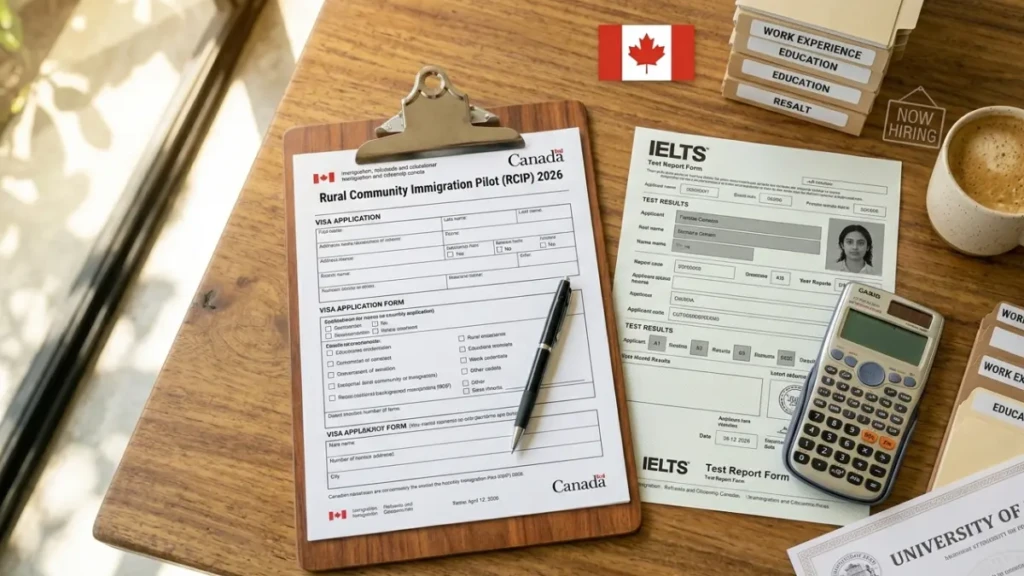
You must prove your ability to communicate in English or French by taking an IRCC-approved test (CELPIP, IELTS General, PTE Core, or TEF Canada).
Unlike Express Entry, which demands near-perfect language scores to stay competitive, the RCIP language requirement is highly accessible and based entirely on the TEER level of your job offer.
- For TEER 0 or 1 Jobs: You need a minimum of CLB 6 across all four abilities (Reading, Writing, Listening, Speaking).
- For TEER 2 or 3 Jobs: You need a minimum of CLB 5.
- For TEER 4 or 5 Jobs: You only need a minimum of CLB 4.
5. Educational and Financial Baselines
To round out your application, you must meet the final two federal baselines:
Educational Credentials
You must have a Canadian secondary school (high school) diploma or a foreign equivalent. If you were educated outside of Canada, you are required to submit an Educational Credential Assessment (ECA) report. The ECA must be less than 5 years old on the day you submit your permanent residency application.
Proof of Funds (Settlement Funds)
If you are applying from outside of Canada—or if you are inside Canada but not currently authorized to work—you must prove you have enough liquid cash to support yourself while you settle in the community. As of 2026, a single applicant requires approximately $14,000 CAD, with the amount increasing for each dependent family member accompanying you.
If you are already legally working in Canada, you are exempt from the proof of funds requirement.
Expert Insight: The Local Community Wage Traps
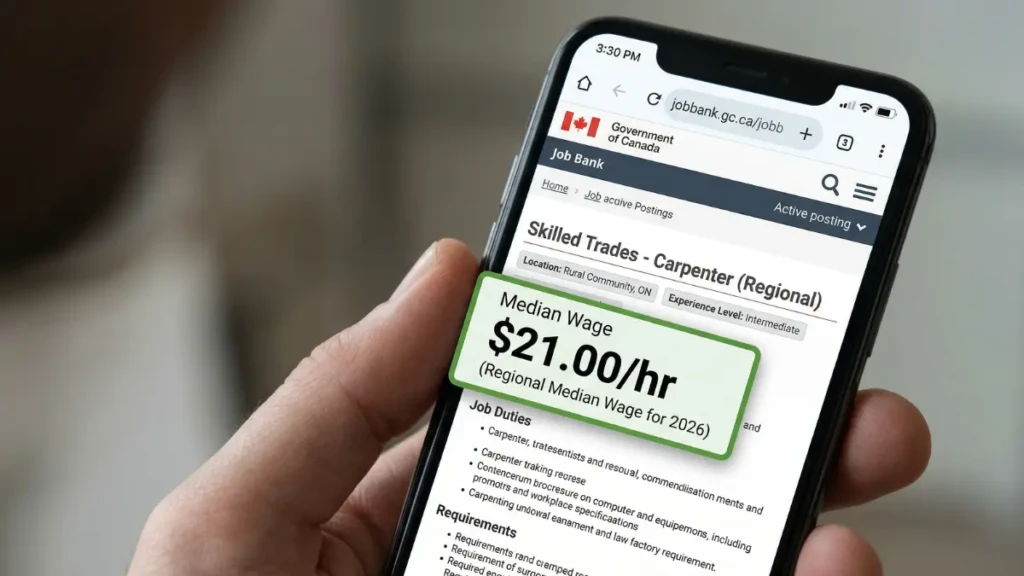
We consulted with an RCIP coordinator in British Columbia to identify the biggest trap applicants fall into when negotiating their job offers.
“Candidates focus entirely on the federal rules and forget that the 14 communities have their own, stricter bylaws. For instance, in 2026, communities like West Kootenay explicitly state that a job offer must pay a minimum of $21.00 per hour OR the Job Bank median wage for that specific occupation—whichever is higher. We see dozens of applicants secure a job, pass their language tests, and get rejected at the community level because their employer offered them $19.00 an hour. You must verify the local wage thresholds before signing your employment contract.”
Frequently Asked Questions (FAQ)
Can I use volunteer work to fulfill the RCIP work experience requirement?
No. IRCC strictly mandates that your 1,560 hours of work experience must be paid. Unpaid internships, volunteer positions, and most forms of self-employment do not qualify for the RCIP.
How long are my IELTS or CELPIP results valid for the RCIP?
Your language test results must be less than two years old on the date you officially submit your permanent residency application to IRCC. If they expire while you are waiting for a community recommendation, you will need to retake the test.
Are fast food jobs eligible for the RCIP in 2026?
This depends entirely on the participating community. The federal government allows it, but many specific communities have banned fast food businesses, gas stations, and recruitment agencies from becoming “designated employers” to prevent exploitation. You must check the specific community’s economic development website.
Can I get an open work permit through the RCIP?
The primary applicant receives a closed work permit, meaning you can only work for the specific employer who offered you the job. However, your spouse or common-law partner is eligible to apply for an open work permit, allowing them to work for any employer within the boundaries of that same rural community.
Do I need an LMIA for my RCIP job offer?
No. The job offers and subsequent work permits processed under the Rural Community Immigration Pilot are strictly LMIA-exempt. Your employer will use the IRCC Employer Portal to submit an offer of employment and pay a compliance fee, completely bypassing the lengthy Labour Market Impact Assessment process.
Audit Your Profile Today
The RCIP is currently one of the most powerful and reliable pathways to Canadian permanent residency, provided you strictly adhere to the rulebook. Download your NOC code duties, calculate your 1,560 hours meticulously, and ensure your job offer aligns with local community wage laws. If your paperwork is flawless, that rural job offer will quickly become your Canadian passport.
Looking to upgrade your language scores just in case? Review our guide on [Boosting Your CRS Score with French Language Testing in 2026] to maximize your options.