

 English




















































FCIP Canada 2026: Requirements, Process and Francophone Communities

If you speak French and are looking to immigrate to Canada, you have a massive strategic advantage in 2026. The Canadian government has made it abundantly clear: they want to drastically increase the Francophone population outside of Quebec.
While thousands of applicants are exhausting themselves trying to hit an NCLC 7 in French just to compete in the overcrowded Express Entry system, the government quietly rolled out a dedicated, five-year regional pathway that lowers the barrier to entry significantly.
This is the Francophone Community Immigration Pilot (FCIP).
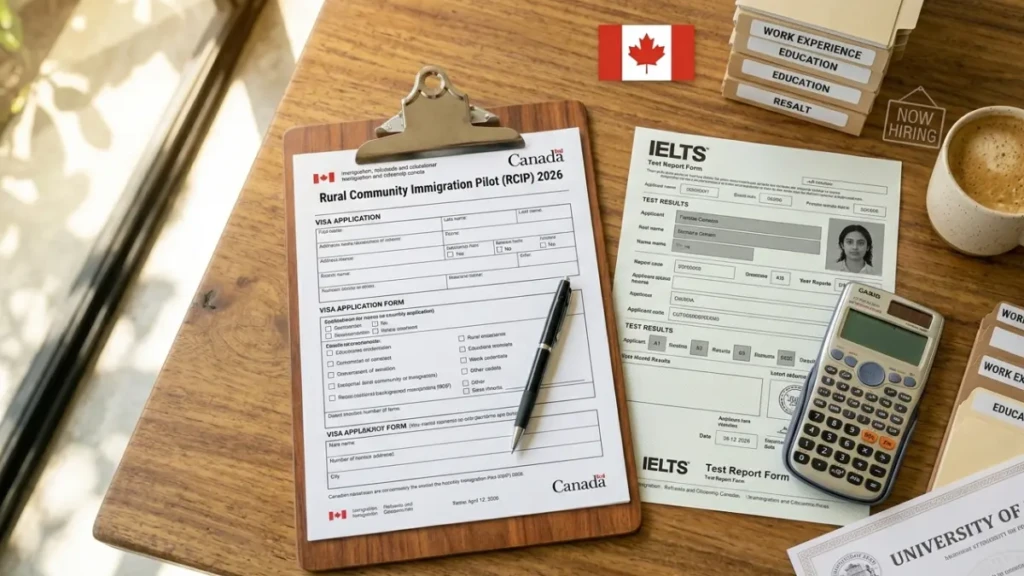
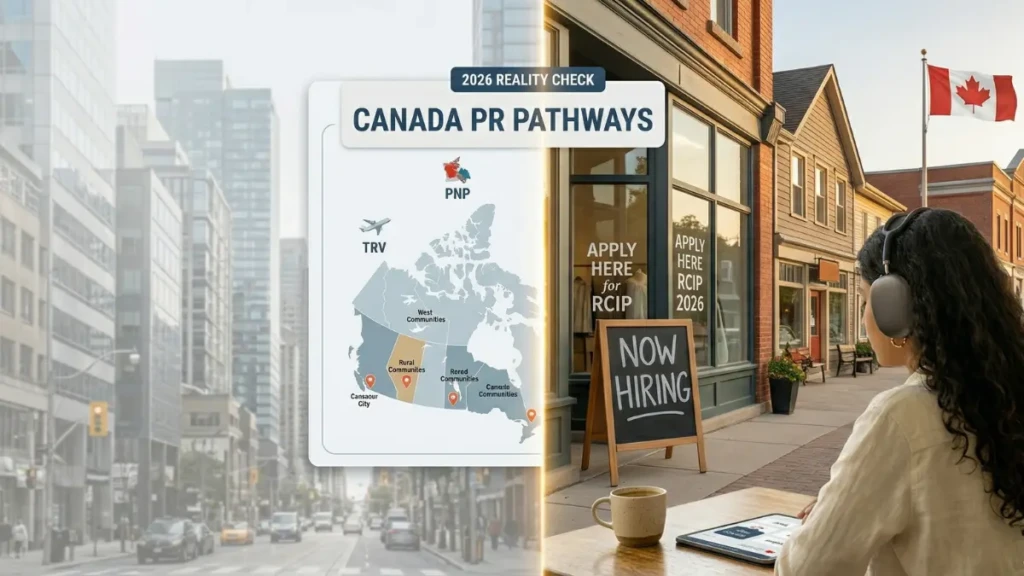
Launched alongside the Rural Community Immigration Pilot (RCIP), the FCIP is an employer-driven program designed to funnel skilled, French-speaking talent directly into six specific communities across Canada. If you can secure a job in one of these targeted towns, you bypass the brutal Express Entry point system entirely.
Here is the complete blueprint for mastering FCIP Canada 2026, from the exact eligibility requirements to the specific communities that can grant you permanent residency.
Table of Contents
- What is the Francophone Community Immigration Pilot?
- The 6 Participating FCIP Communities for 2026
- FCIP Canada 2026 Requirements (Eligibility Checklist)
- The Step-by-Step FCIP Process
- The C15 Work Permit (How to Move Immediately)
- Expert Insight: The NCLC 5 Advantage
- Frequently Asked Questions (FAQ)
What is the Francophone Community Immigration Pilot?
The FCIP is a new, five-year regional immigration pilot introduced by Immigration, Refugees and Citizenship Canada (IRCC). It replaces older, localized pilot models with a streamlined, community-driven approach.
The premise is simple: Canada recognizes that smaller regions need tailored pathways to compete for global talent and maintain their Francophone heritage. The program delegates selection power to local economic development boards. If an approved local employer wants to hire you, and the community board issues a “Recommendation,” IRCC will fast-track your permanent residence (PR) application.
The 6 Participating FCIP Communities for 2026
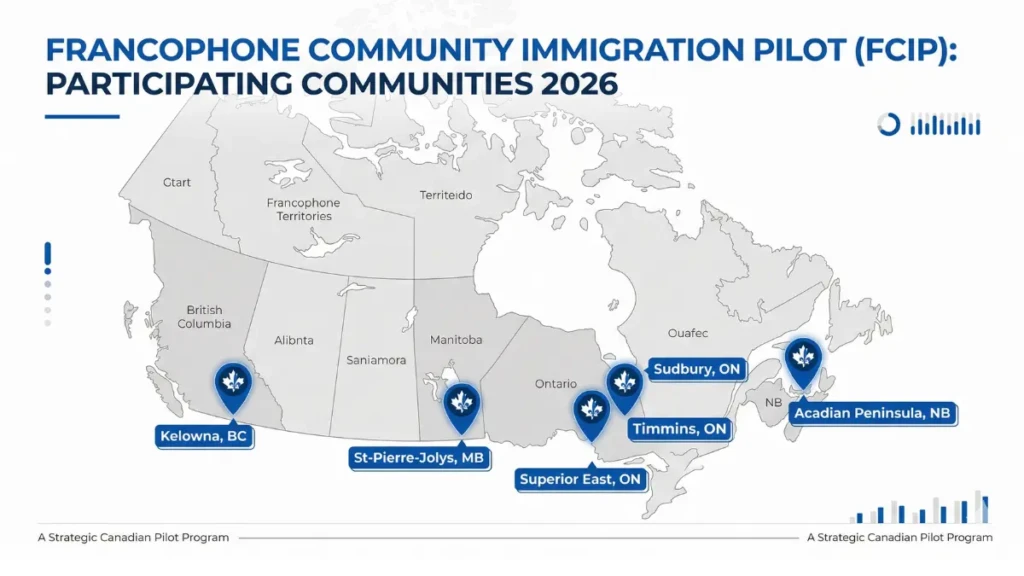
You cannot move to Toronto, Vancouver, or anywhere in Quebec under this program. IRCC has designated exactly six Francophone minority communities outside of Quebec to participate.
Each of these communities has its own intake caps, priority occupation lists, and local requirements. You must secure a job within their specific geographic boundaries:
- Acadian Peninsula, New Brunswick
- Sudbury, Ontario
- Timmins, Ontario
- Superior East Region, Ontario
- St-Pierre-Jolys, Manitoba
- Kelowna, British Columbia
Strategic Insight: You must study the specific needs of the community. For example, in 2026, Kelowna has identified 25 specific in-demand occupations across sectors like Healthcare, Education, Trades, and Sales/Service, but limits employers to submitting just 5 recommendations per intake. St-Pierre-Jolys is heavily prioritizing Registered Nurses, Early Childhood Educators, and Automotive Technicians. You must target the community that actively needs your NOC code.
FCIP Canada 2026 Requirements (Eligibility Checklist)
To successfully apply, you must satisfy the community’s local needs and clear the baseline federal requirements set by IRCC.
1. The Language Requirement (French)
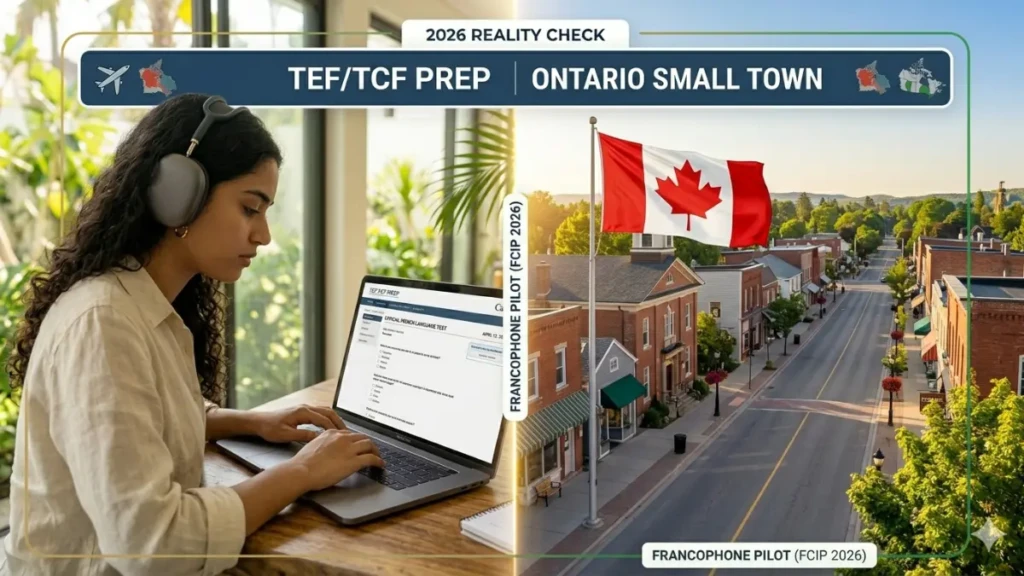
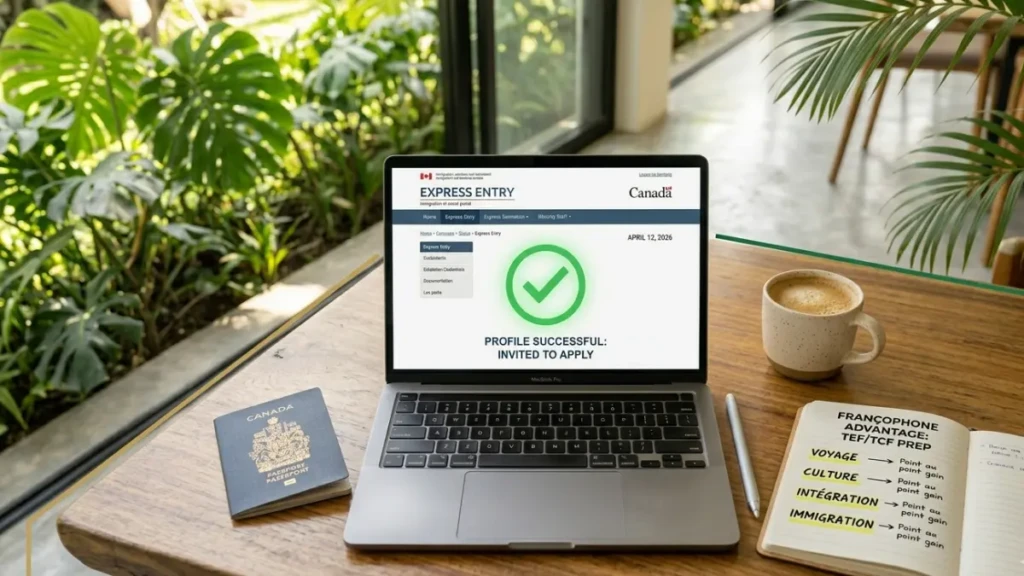
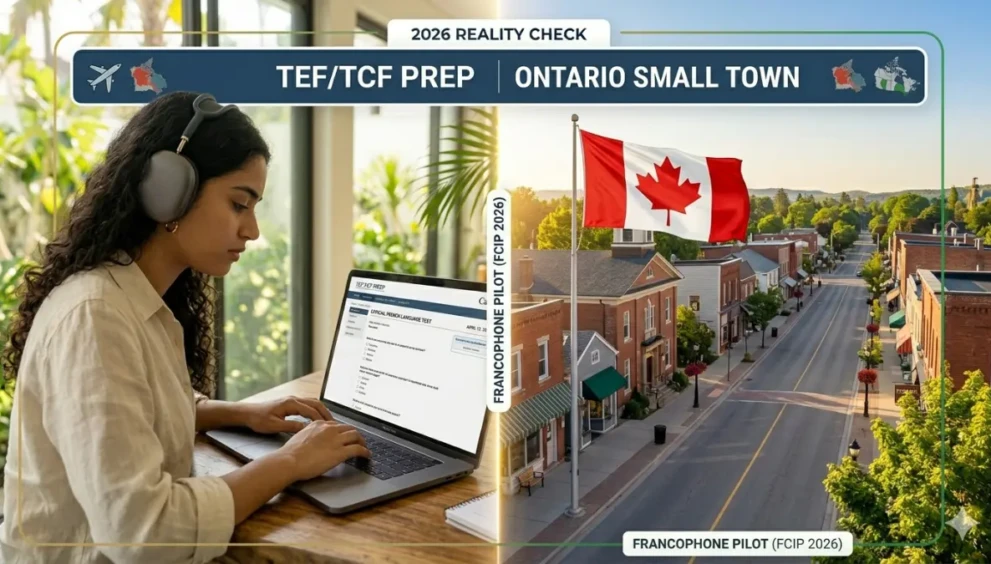
This is the cornerstone of the pilot. You must prove your French language proficiency by taking an approved test (TEF Canada or TCF Canada).
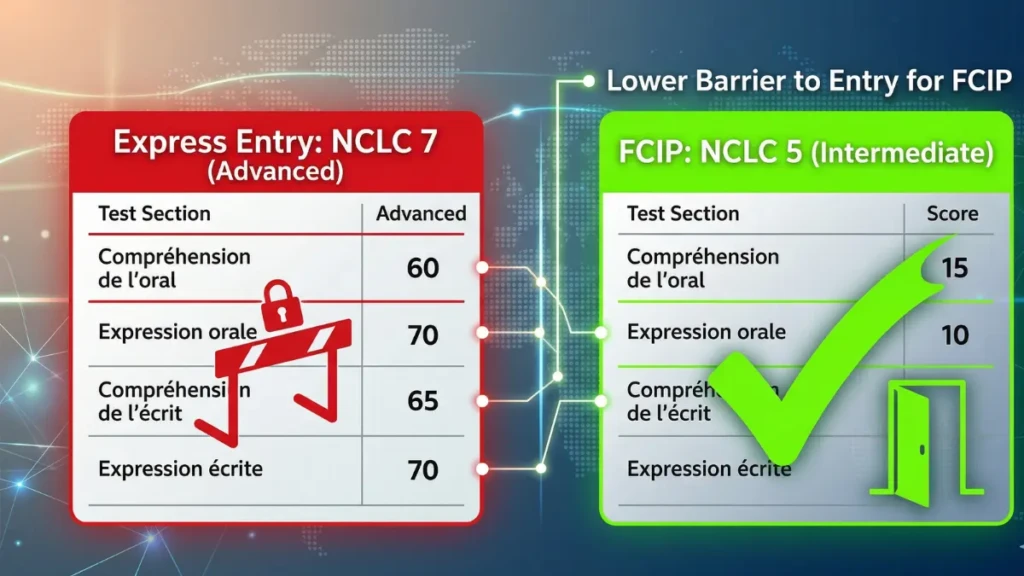
- You need a minimum score of NCLC 5 across all four abilities (Reading, Writing, Listening, and Speaking).
2. The Job Offer
You must obtain a genuine job offer from an officially designated employer within one of the six communities. The offer must be:
- Full-time (at least 30 paid hours per week).
- Non-seasonal (year-round).
- Indeterminate (permanent, with no end date).
- The wage must meet or exceed the Job Bank’s prevailing median wage for that occupation in that specific region.
3. Work Experience
You must have at least 1 year (1,560 hours) of continuous or non-continuous relevant work experience in the past 3 years. This experience can be gained inside or outside of Canada, but it must align with the NOC TEER category of your job offer.
4. Educational Credentials
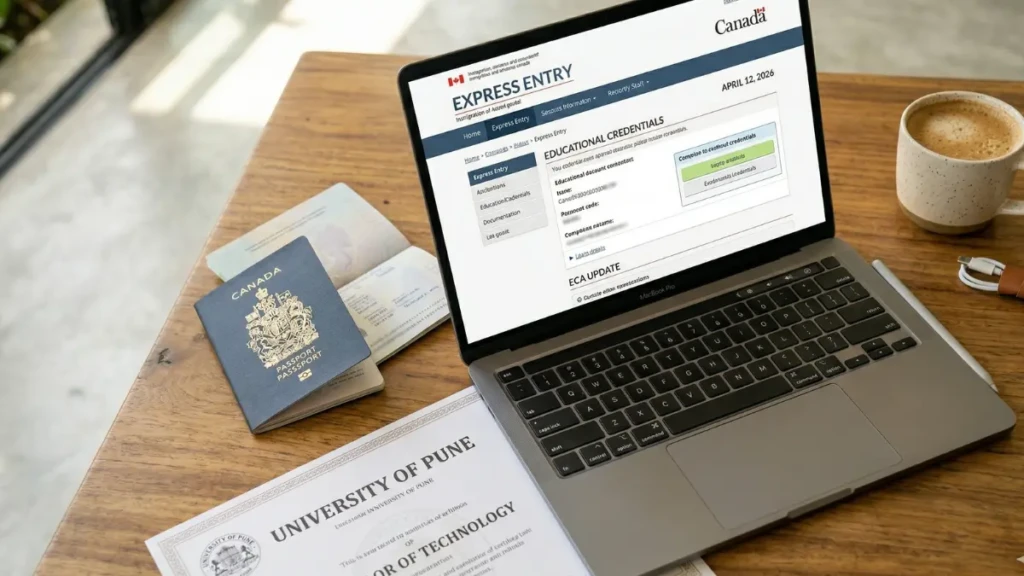
You need a high school diploma (Canadian or foreign equivalent). If your education was completed outside Canada, you must provide an Educational Credential Assessment (ECA) that is less than 5 years old.
5. Proof of Funds
If you are applying from outside of Canada (and are not already legally working in Canada), you must prove you have sufficient liquid settlement funds to support yourself and your family upon arrival.
The Step-by-Step FCIP Process
Because this is a community-driven program, the application process requires coordinating with a local employer before you ever speak to IRCC.
- Step 1: Verify Designation. Ensure the company you are applying to is officially designated by the local community board (e.g., the SDÉCB in Kelowna).
- Step 2: Get the Job Offer. Pass the employer’s interview and receive a formal Offer of Employment.
- Step 3: Apply for Community Recommendation. Your employer submits your job offer and qualifications to the community’s local economic committee. They evaluate if you meet local labour needs.
- Step 4: Receive the Recommendation. If approved, the community issues an official Recommendation Certificate (valid for 6 months).
- Step 5: Apply for PR with IRCC. You submit your complete Permanent Residence application online to the federal government using your Community Recommendation.
The C15 Work Permit (How to Move Immediately)
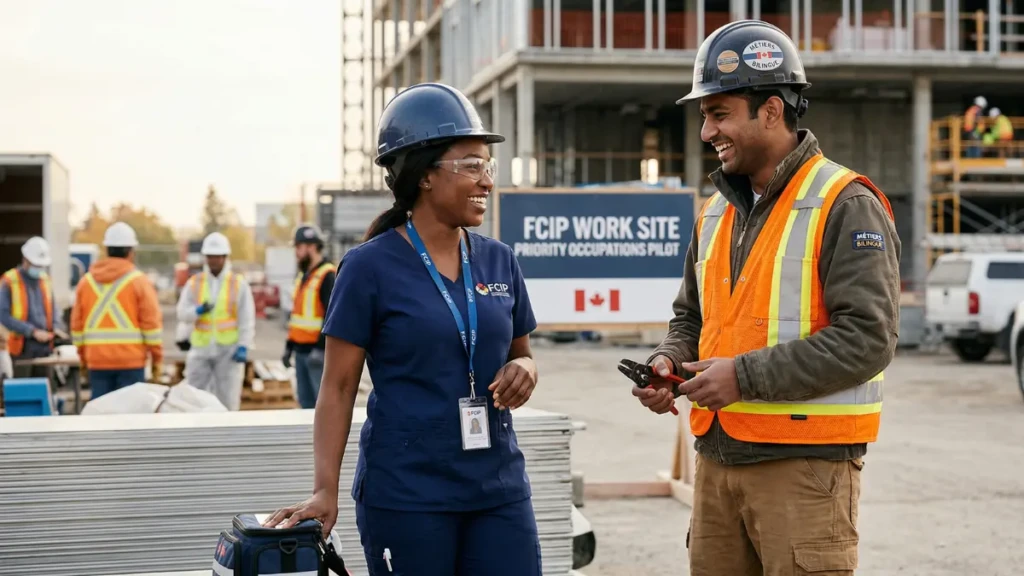
IRCC estimates that FCIP permanent residence applications take roughly 6 to 12 months to process. Fortunately, you do not have to wait in your home country while the paperwork grinds through the system.
Under the 2026 framework, candidates with a valid Community Recommendation and a submitted PR application can apply for a specific work permit (Administrative Code C15).
- Start Working Fast: This is a closed, employer-specific work permit valid for up to two years. It allows you to move to the community and start earning a Canadian salary while IRCC finalizes your permanent residency.
- Family Support: The program is designed for long-term retention. Because of this, your spouse or common-law partner can apply for an Open Work Permit, and your dependent children may also gain work or study authorization.
Expert Insight: The NCLC 5 Advantage
We consulted with an immigration strategist specializing in Francophone mobility to explain why the FCIP is superior to Express Entry for many candidates.
“The mathematical advantage of the FCIP is the language threshold. To get picked in a Francophone Express Entry draw in 2026, you almost universally need an NCLC 7 in French, which requires advanced, fluent communication. The FCIP only requires an NCLC 5, which is considered ‘intermediate’ proficiency. If your French is a bit rusty, or you are a strong English speaker who studied French in high school, achieving an NCLC 5 with a few months of intense tutoring is highly realistic. It is the easiest language baseline for PR in the entire country.”
Frequently Asked Questions (FAQ)
Can I move out of the community after I get my PR?
When you apply for the FCIP, you sign a declaration of intent to reside in that specific Francophone community. While permanent residents have constitutional mobility rights in Canada, abandoning the community immediately after receiving your PR card can be investigated by IRCC as misrepresentation. You are expected to make a genuine, good-faith effort to settle there.
Do I need an LMIA for the FCIP Work Permit?
No. The job offers and the associated C15 temporary work permits under the Francophone Community Immigration Pilot are LMIA-exempt. This saves the employer significant time and administrative fees, making you a much more attractive hire.
Do I need an Express Entry profile to apply for FCIP?
No. The FCIP is a completely separate, standalone economic immigration pilot. It operates outside of the Express Entry pool, meaning you do not need to worry about your Comprehensive Ranking System (CRS) score or competing against hundreds of thousands of other applicants.
What happens if the employer loses their designation?
If a business is stripped of its designated status by the community board before your PR is finalized, you will need to secure a new job offer from a different designated employer within the same community, and a new assessment will be required.
Are there application caps for the FCIP?
Yes. To manage processing times and ensure communities are not overwhelmed, both the individual communities and IRCC impose annual caps. For example, in 2026, Timmins restricts each designated FCIP employer to a maximum of 5 recommendations per year. You must apply as early in the year as possible.
Capitalize on the Francophone Push
Canada’s dedication to bilingualism outside of Quebec has created an unprecedented backdoor to permanent residency. If you have intermediate French skills and a willingness to build a life in a smaller, tight-knit community, the FCIP Canada 2026 pathway is your golden ticket. Start researching the six communities, polish your French, and begin networking with designated employers today.
Looking for insights into the rural English-speaking equivalent? Read our complete breakdown of the [RCIP Canada 2026: Process, Requirements, and Work Permits].
Related Post:
Best Canada PR Pathways in 2026 (Complete Guide for Immigrants)