

 English














































































COVID vs. Flu vs. Cold Symptoms: How to Tell the Difference in 2026

Disclaimer: The information provided in this article is for educational purposes only and does not substitute for professional medical advice, diagnosis, or treatment. Always consult a healthcare provider if you are experiencing severe symptoms.
You wake up, and your throat feels like you swallowed sandpaper. A few hours later, a dry cough starts, followed by a wave of exhaustion.
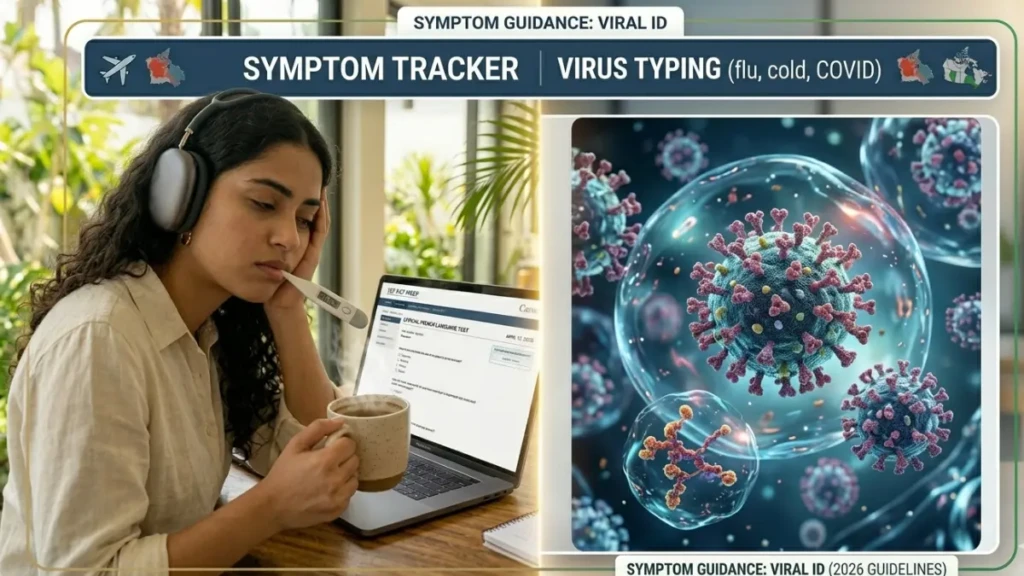
Before 2020, you would have brushed it off, grabbed some over-the-counter medicine, and gone about your day. But today, the immediate panic sets in: Is this just a winter cold, the flu, or COVID-19? Distinguishing between COVID vs flu vs cold symptoms remains one of the most frustrating puzzles of cold and flu season. Because they are all respiratory illnesses, they share a massive overlap in how they make you feel. However, the way these viruses attack your body—and the speed at which they hit you—often tells a distinct story.
To help you figure out what is brewing in your immune system, let’s break down the classic hallmarks of each virus in 2026 and look at how to tell them apart.
Table of Contents
- The Common Cold: The Gradual Nuisance
- The Flu (Influenza): The Sudden Strike
- COVID-19: The 2026 Shapeshifter
- Interactive Tool: Compare Your Symptoms
- The Incubation Period “Tell”
- Expert Insight: When You MUST Get Tested
- Frequently Asked Questions (FAQ)
1. The Common Cold: The Gradual Nuisance
Of the three major viruses, the common cold is generally the mildest and the most localized. Colds typically stay “above the neck.”
- The Onset: Slow and gradual. You might have a mild tickle in your throat on Monday, a runny nose by Tuesday, and a mild cough by Wednesday.
- Hallmark Symptoms: Sneezing, stuffy or runny nose, watery eyes, and a mild sore throat.
- What is missing: Severe body aches and high fevers are extremely rare with a common cold. If you are shivering with a 102°F fever, it is almost certainly not a cold.
2. The Flu (Influenza): The Sudden Strike
The flu does not creep up on you; it hits you like a freight train. People often remember the exact hour they came down with the flu.
- The Onset: Abrupt. You can feel perfectly fine at breakfast and be bedridden with chills by dinner.
- Hallmark Symptoms: High fever (often 100°F to 102°F or higher), severe muscle and body aches, extreme fatigue, chills, and a dry cough.
- What is missing: While sneezing and a runny nose can happen with the flu, they are far less common than the severe systemic symptoms (fever and body aches).
3. COVID-19: The 2026 Shapeshifter
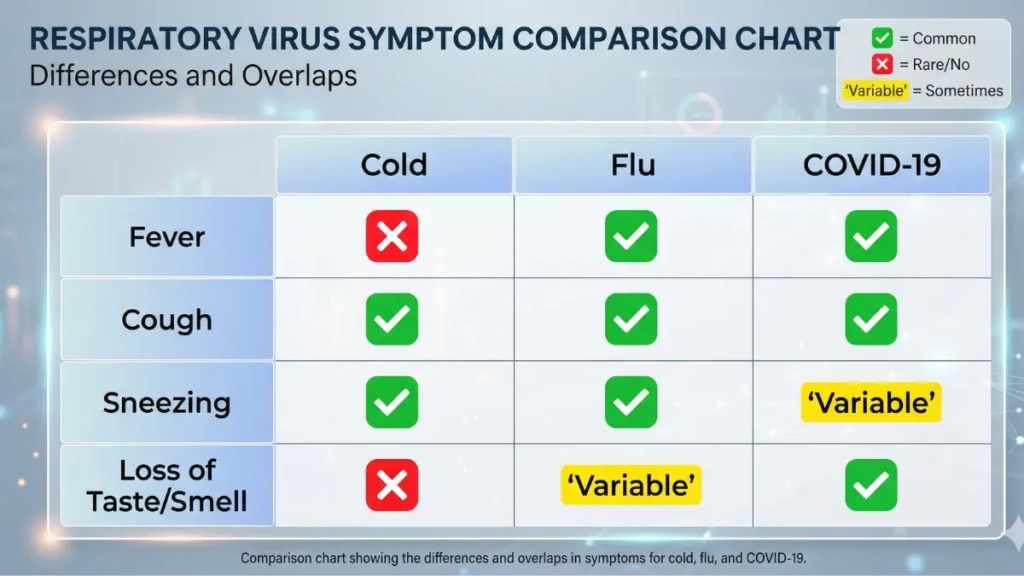
COVID-19 remains the trickiest to diagnose based on symptoms alone because it presents a wide spectrum of illness. While the original strains were famous for causing a sudden loss of taste and smell, the endemic variants circulating in 2026 often mimic a severe cold or allergies.
- The Onset: Variable. Symptoms usually appear 2 to 14 days after exposure.
- Hallmark Symptoms: Fever, dry cough, profound fatigue, shortness of breath, and brain fog.
- The Unique Identifiers: If you experience a sudden loss of taste or smell without a severely congested nose, COVID-19 is highly likely. Additionally, modern variants often present with gastrointestinal issues (nausea, diarrhea) which are rare in adult colds.
Interactive Tool: Compare Your Symptoms
Still not sure? We built an interactive symptom checker based on standard clinical guidelines. Select the symptoms you are currently experiencing below to see which respiratory virus aligns closest with your profile.Show me the visualisation
The Incubation Period “Tell”
If you know exactly when you were exposed to someone sick, the incubation period (the time from exposure to feeling sick) is a massive clue:
- Flu: Short incubation. Usually 1 to 4 days after exposure.
- Cold: Short incubation. Usually 1 to 3 days after exposure.
- COVID-19: Wider window. Depending on the variant, symptoms can appear 2 to 14 days after exposure (though 3 to 5 days is the modern average).
Expert Insight: When You MUST Get Tested
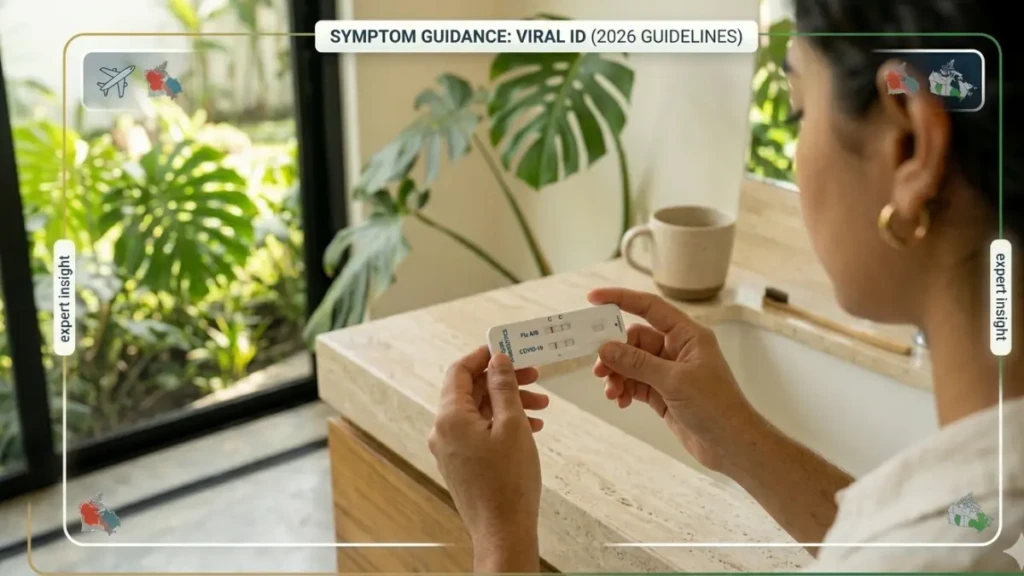
We asked Dr. Aris Thorne, a clinical virologist, about the biggest mistake patients make during cold and flu season.
“The danger of overlapping symptoms is complacency. Because the 2026 COVID variants often feel like a standard head cold for young, healthy people, they assume it’s just a cold and skip the test. They then visit an elderly relative or a pregnant friend, passing on a virus that is highly dangerous to vulnerable populations. You cannot definitively diagnose the difference between COVID and the Flu without a swab. If you have symptoms and plan to interact with high-risk individuals, testing is not optional—it is a moral imperative.”
Frequently Asked Questions (FAQ)
Can you have COVID-19 without a fever?
Absolutely. Many people infected with recent COVID-19 variants report their primary symptoms as a severe sore throat, nasal congestion, and fatigue, without ever registering a clinical fever.
Is sneezing a symptom of COVID or the flu?
Sneezing is rarely a primary symptom of the flu and is uncommon with COVID-19. If your primary symptom is constant sneezing accompanied by itchy eyes and a runny nose, you are most likely dealing with a common cold or seasonal allergies.
How long are you contagious with the flu vs COVID?
With the flu, you are generally contagious from 1 day before symptoms begin until 5 to 7 days after becoming sick. With COVID-19, you can be contagious for 48 hours before symptoms start and up to 10 days after, though the highest risk of transmission occurs in the first 5 days.
When should I see a doctor for respiratory symptoms?
Regardless of whether it is a cold, flu, or COVID, you should seek immediate emergency medical care if you experience: severe shortness of breath, persistent pain or pressure in the chest, new confusion, inability to wake or stay awake, or pale/blue-colored skin, lips, or nail beds.
Do rapid antigen tests still work on the new 2026 COVID variants?
Yes. While the virus continues to mutate, standard at-home rapid antigen tests are still highly effective at detecting the presence of the virus, provided you use them correctly. If you have symptoms but test negative on day one, guidelines recommend testing again 48 hours later, as viral loads can take time to peak.
Stop Guessing, Start Resting
While differentiating between COVID vs flu vs cold symptoms is a great starting point for understanding your illness, your body’s immediate needs remain the same. Hydrate aggressively, isolate to protect your community, and rest. If your symptoms are severe, or if you are in a high-risk group, skip the guessing game entirely and schedule a test with your healthcare provider to get access to targeted antiviral treatments.
Want to build a stronger defense for the winter? Read our comprehensive guide on [ Immune-Boosting Habits Backed by Science in 2026].
Realated Post:
Health Tricks: Simple Ways to Sleep Better, Lose Weight and Feel Great


Why Do I Have a Headache? Decoding Pain by Location (2026 Guide)
12th Apr 2026[…] COVID vs. Flu vs. Cold Symptoms: How to Tell the […]