
 English



























































5 Immune-Boosting Habits Backed by Science (2026 Guide)

Disclaimer: The information provided in this article is for educational purposes only and does not substitute for professional medical advice. Always consult a healthcare provider before making significant lifestyle changes.
If you walk down the pharmacy aisle in 2026, you will see hundreds of powders, gummies, and elixirs promising to “supercharge” your immune system overnight. The wellness industry profits heavily off the fear of getting sick.
But here is what clinical immunologists know: you cannot buy a strong immune system in a bottle.
Your immune system is not a muscle you can simply pump up with mega-doses of Vitamin C. It is a highly complex, interconnected network of white blood cells, antibodies, lymph nodes, and gut bacteria. To keep this system optimized, you have to support the daily biological processes that fuel it.
If you want to build a resilient defense against seasonal viruses and chronic inflammation, drop the expensive supplements and focus on these five immune-boosting habits backed by science.
Table of Contents
- The Sleep-Cytokine Connection
- Gut Health: The Command Center of Immunity
- The “Goldilocks” Rule of Exercise
- Managing the Cortisol Crisis
- Strategic Sunlight and Vitamin D
- Expert Insight: The Myth of “Boosting”
- Frequently Asked Questions (FAQ)
1. The Sleep-Cytokine Connection
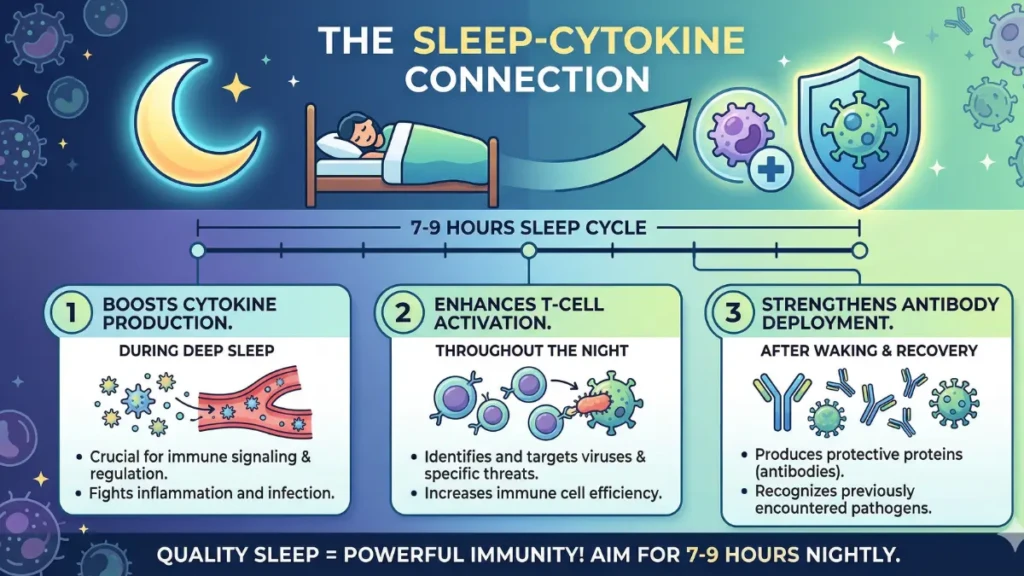
If you are sleeping less than six hours a night, no amount of green juice will save you. Sleep is not a passive state; it is an active period of cellular repair and defense deployment.
When you sleep, your immune system releases proteins called cytokines. Some cytokines help promote sleep, while others are specifically designed to target infection and systemic inflammation.
- The Science: When you are sleep-deprived, the production of these protective cytokines drops significantly. Furthermore, a lack of sleep reduces the deployment of infection-fighting antibodies and T-cells.
- The Habit: Aim for 7 to 9 hours of high-quality sleep. To optimize your sleep architecture, keep your bedroom below 68°F (20°C), block out ambient light, and stop looking at blue-light-emitting screens at least one hour before bed.
2. Gut Health: The Command Center of Immunity
You might think your immune system lives in your bloodstream, but roughly 70% of your immune system is housed within your gut.
Your gastrointestinal tract is lined with a massive community of trillions of bacteria, fungi, and other microbes known as the gut microbiome. These microbes act as the “drill sergeants” for your immune cells, teaching them the difference between healthy tissue and dangerous pathogens.
- The Science: Diets high in ultra-processed foods and refined sugars decimate healthy gut bacteria, leading to chronic low-grade inflammation. Conversely, a microbiome fed by diverse plant fibers creates short-chain fatty acids (SCFAs), which powerfully stimulate immune cell activity.
- The Habit: Eat a diverse, plant-heavy diet. Focus on prebiotics (garlic, onions, asparagus, bananas) to feed your good bacteria, and probiotics (kefir, sauerkraut, kimchi, yogurt with live cultures) to introduce new beneficial strains.
3. The “Goldilocks” Rule of Exercise

Exercise is one of the most powerful natural ways to boost your immune system in 2026, but it comes with a strict caveat: more is not always better.
- The Science: Moderate aerobic exercise increases the circulation of immune cells (like macrophages and immunoglobulins), allowing them to patrol the body and detect infections earlier. However, pushing your body to exhaustion (like running a marathon without proper training) creates acute physical stress, which can temporarily suppress your immune system and leave you vulnerable to upper respiratory infections.
- The Habit: Find the “Goldilocks” zone—not too little, not too much. Aim for 150 minutes of moderate activity per week. Brisk walking, cycling, light hiking, or swimming are perfect. You should be breathing hard enough that singing is difficult, but you can still hold a conversation.
4. Managing the Cortisol Crisis
In our hyper-connected, fast-paced world, chronic psychological stress is the ultimate immune suppressant.
- The Science: When you are stressed, your body releases a hormone called cortisol. In short bursts (like running from a threat), cortisol is helpful. But when you are chronically stressed about work or finances, cortisol levels remain elevated. High cortisol actively inhibits the production of lymphocytes (the white blood cells that fight off viruses) and drives up body-wide inflammation.
- The Habit: You cannot eliminate stress, but you must actively manage it. Even 10 minutes of daily mindfulness, deep-breathing exercises, or yoga has been clinically shown to activate the parasympathetic nervous system, lowering cortisol and allowing your immune system to function optimally.
5. Strategic Sunlight and Vitamin D
During the winter months, immune system efficiency drops. While cold air plays a role, the primary culprit is a lack of sunlight.
- The Science: Vitamin D is not just a vitamin; it functions as a powerful pro-hormone that is critical for immune cell development and communication. Studies have repeatedly shown a direct correlation between low Vitamin D levels and increased susceptibility to respiratory infections. Furthermore, direct sunlight exposure has been shown to naturally activate and energize T-cells in the skin.
- The Habit: Get outside for 15 to 20 minutes of midday sunlight a few times a week, exposing your arms and face. During the dark winter months, consult your doctor about taking a high-quality Vitamin D3 supplement, as getting adequate amounts purely through diet (fatty fish, egg yolks) is incredibly difficult.
Expert Insight: The Myth of “Boosting”
We consulted Dr. Aris Thorne, a clinical immunologist, to clarify the biggest misconception regarding immune health in 2026.
“The wellness industry loves the phrase ‘immune-boosting,’ but medically speaking, you do not want to ‘boost’ your immune system into overdrive. An overactive immune system is exactly what causes allergies and autoimmune diseases, where the body attacks its own healthy tissue. Your goal is not to boost it; your goal is to balance and optimize it. You do this by removing the roadblocks—like chronic stress, sleep deprivation, and poor diet—that force your immune system to work with one hand tied behind its back.”
Frequently Asked Questions (FAQ)
Does Vitamin C actually prevent colds?
Despite popular belief, scientific reviews consistently show that taking massive doses of Vitamin C will not prevent you from catching a cold. However, maintaining adequate daily levels of Vitamin C (through citrus fruits, bell peppers, and broccoli) can slightly reduce the duration and severity of a cold once you are already sick.
Is drinking alcohol bad for your immune system?
Yes. Excessive alcohol consumption is directly linked to a weakened immune system. Alcohol disrupts the gut microbiome, damages the epithelial cells in the intestines (where immune cells reside), and impairs the function of macrophages, which are vital for clearing away infected cells.
Can drinking water help my immune system?
Absolutely. Hydration is the overlooked foundation of immunity. Your lymphatic system, which is a network of nodes and vessels that carries infection-fighting white blood cells throughout your body, relies heavily on water. Chronic dehydration slows the movement of lymph, delaying your body’s response to pathogens.
Do probiotics really help prevent sickness?
Yes, if used correctly. Probiotics help maintain a healthy balance in your gut microbiome, which dictates a massive portion of your immune response. Eating fermented foods with live cultures is highly recommended, though probiotic supplements should be discussed with a doctor to ensure you are taking the right strains for your body.
Your Daily Defense Strategy
Building a resilient immune system is not glamorous. It does not come in a sleek pill bottle, and it does not happen overnight. True immunity is the compound interest of your daily choices. By prioritizing your sleep, feeding your gut microbiome, moving moderately, and managing your cortisol, you give your body the exact tools it needs to protect you.
Want to dive deeper into how your diet affects inflammation? Read our guide on [How to Reset Your Nervous System Naturally (2026 Guide)].
Related Post:
11 Science-Backed Weight Loss Tricks You Can Do at Home 2026