

 English







































































Dopamine Detox: Does It Really Work? (The Science Explained)

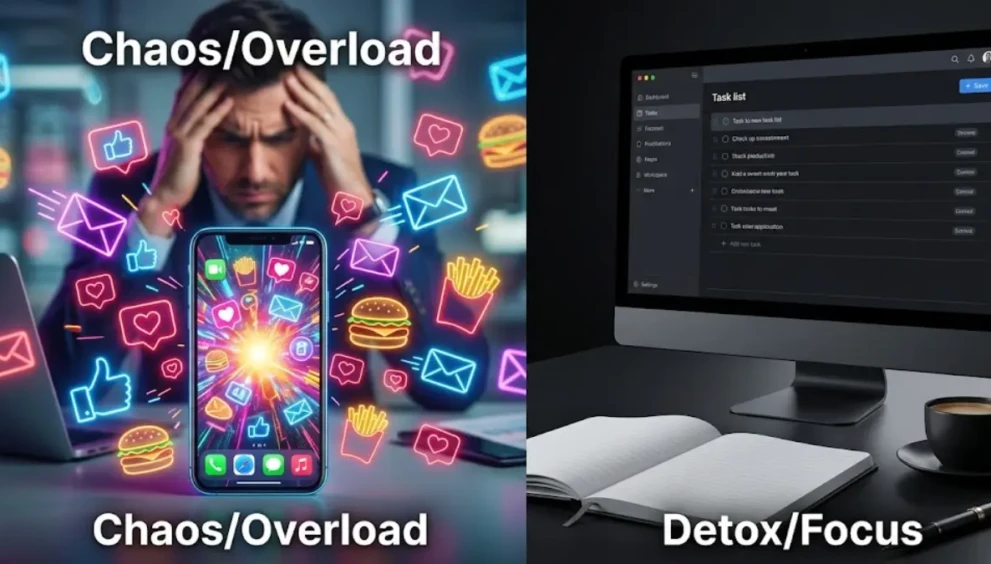
If you are a modern digital professional—whether you are optimizing B2B LinkedIn campaigns, running performance marketing funnels, or building revenue machines—your brain is under constant algorithmic assault.
You sit down to write a complex proposal or analyze structured data, and within three minutes, you feel an irresistible urge to check your phone, open a new tab, or scroll a news feed. This is not a lack of discipline. It is a biological system failure.
In recent years, the dopamine detox (or dopamine fasting) has become the ultimate trend among high-performers looking to reclaim their focus. But the internet has warped the concept. Influencers claim you need to stare at a blank wall for 48 hours and avoid all human contact to “reset” your brain.
Does a dopamine detox really work? Yes, but not the way social media claims it does. To actually fix your cognitive baseline, you must stop treating dopamine like a toxic chemical and start treating it like a measurable, mechanical system. Here is the unfiltered science behind your brain fog and the exact protocol to engineer your focus.
Table of Contents
- The Biological Misconception (What Dopamine Actually Is)
- The Problem: Down-Regulation and “Cheap” Spikes
- Does a Dopamine Detox Actually Work? (The Science)
- The 48-Hour Professional Reset Protocol
- Expert Insight: Operational Dopamine
- Frequently Asked Questions (FAQ)
1. The Biological Misconception (What Dopamine Actually Is)
To execute a successful detox, you must understand what you are actually detoxing from. The greatest myth in modern psychology is that dopamine is the “pleasure” molecule.
- The Reality: Dopamine is the molecule of motivation, anticipation, and craving. It is the chemical that makes you want to pursue a goal.
- The Mechanism: When you are hungry and see a pizza, dopamine spikes to compel you to walk over and eat it. Once you eat it, the dopamine actually drops, and other chemicals (like endorphins) cause the pleasure.
Dopamine is the engine of human action. Without it, you would not have the drive to get out of bed, let alone build a business.
2. The Problem: Down-Regulation and “Cheap” Spikes
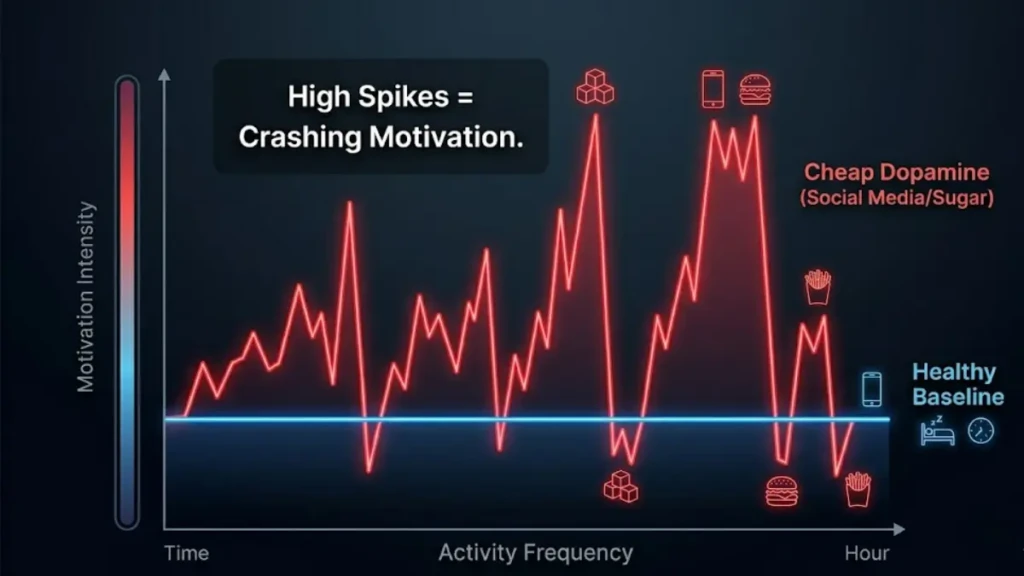
Your brain has a baseline level of dopamine. Throughout human history, getting a dopamine spike required severe effort (hunting for food, building shelter, surviving).
In 2026, you can experience a massive dopamine spike with zero effort. We call this “Cheap Dopamine.” Infinite social media scrolling, hyper-palatable junk food, and binge-watching streaming services flood your brain with unnaturally high levels of the neurotransmitter without requiring any actual work.
The Biological Consequence: When you constantly flood your brain with cheap dopamine, your brain protects itself by reducing its number of active dopamine receptors. This is called Down-Regulation.
When your receptors down-regulate, your baseline drops. Suddenly, standard tasks that require effort—like reading a book, writing an SEO article, or exercising—no longer produce enough dopamine to motivate you. They feel impossibly boring. You have artificially raised the threshold for what your brain considers “interesting.”
3. Does a Dopamine Detox Actually Work? (The Science)
Let’s clear up the terminology: You cannot “fast” from dopamine. It is a naturally occurring chemical; if you had zero dopamine, you would enter a catatonic state.
However, the behavioral protocol behind a dopamine detox absolutely works.
When you intentionally abstain from highly stimulating, low-effort activities for a set period, you allow your brain’s dopamine receptors to “up-regulate” (recover and multiply). By starving the brain of cheap, hyper-stimulating inputs, you lower your baseline threshold back to a natural state.
After a successful detox, the cognitive friction disappears. The hard, needle-moving tasks that used to feel agonizing suddenly become engaging again because your brain is no longer expecting the artificial high of an infinite scroll.
4. The 48-Hour Professional Reset Protocol

You do not need to move to a cabin in the woods. If you run a digital brand, you still need to use a computer. The goal of this protocol is to isolate and eliminate unearned dopamine.
Step 1: Identify Your Cheap Inputs
Write down your biological leaks. For most professionals, these include:
- Algorithmic short-form video feeds.
- Refined sugar and junk food.
- Video games or endless news scrolling.
- Checking email or Slack every 5 minutes instead of in designated blocks.
Step 2: The 48-Hour Hard Reset
For a full weekend, completely sever access to those specific inputs.
- Delete the apps from your phone.
- If you must work, use website blockers to restrict your laptop strictly to your CRM, Google Docs, and necessary operational tools.
- What to expect: The first 12 hours will be deeply uncomfortable. You will feel anxious and bored. This boredom is the cure. It is the exact sensation of your receptors recalibrating.
Step 3: The “Earned” Reintroduction
When Monday arrives, do not go back to your old habits. From now on, you must use dopamine as a strategic reward, not a baseline right. You can still enjoy social media or entertainment, but only after you have completed a high-friction, high-ROI task (like a deep-work block or a micro-workout).
Expert Insight: Operational Dopamine
We asked a cognitive performance coach how high-level executives manage their neurochemistry.
“A dopamine detox isn’t about punishing yourself; it is about reclaiming your competitive advantage. The modern economy is designed to hijack your attention and sell it to advertisers. If you allow algorithms to dictate your dopamine spikes, you will never have the sustained motivation required to build predictable revenue systems. Treat your dopamine like financial capital. Stop blowing it on cheap, zero-ROI investments like endless scrolling, and start investing it into deep work that actually compounds your wealth and authority.”
Frequently Asked Questions (FAQ)
How long does it take to reset dopamine receptors?
While a 24 to 48-hour hard detox is an excellent “circuit breaker” to immediately improve your focus, permanent receptor up-regulation takes time. Science suggests it takes roughly 14 to 30 days of sustained behavioral changes (limiting cheap dopamine) for the brain to fully rebuild its baseline sensitivity.
Can I listen to music during a dopamine detox?
It depends on the intent. Listening to lo-fi or instrumental music while working can help maintain a “flow state” and is generally acceptable. However, sitting on the couch blasting highly stimulating, emotionally charged music purely to escape boredom triggers a massive dopamine release and defeats the purpose of the reset.
Will a dopamine detox cure my ADHD?
No. While a detox is incredibly effective for addressing focus issues caused by modern lifestyle habits and digital addiction, clinical ADHD is a distinct neurological condition involving complex dopamine processing issues. A behavioral detox can massively improve symptoms and reduce brain fog, but it is not a replacement for professional medical protocols.
Reclaim Your Baseline
You cannot build high-level systems if your biological hardware is compromised. The feeling of burnout and chronic procrastination is often just the symptom of a fried reward system. By executing a strategic dopamine detox, you cut out the algorithmic noise, up-regulate your receptors, and engineer a brain that genuinely enjoys doing the hard work.
Optimize the rest of your daily routine by checking out our guide on [11 Science-Based Tips for Weight Loss at Home (2026 Guide)].