

 English

























iPhone vs Android 2026: Which is Better for Business?

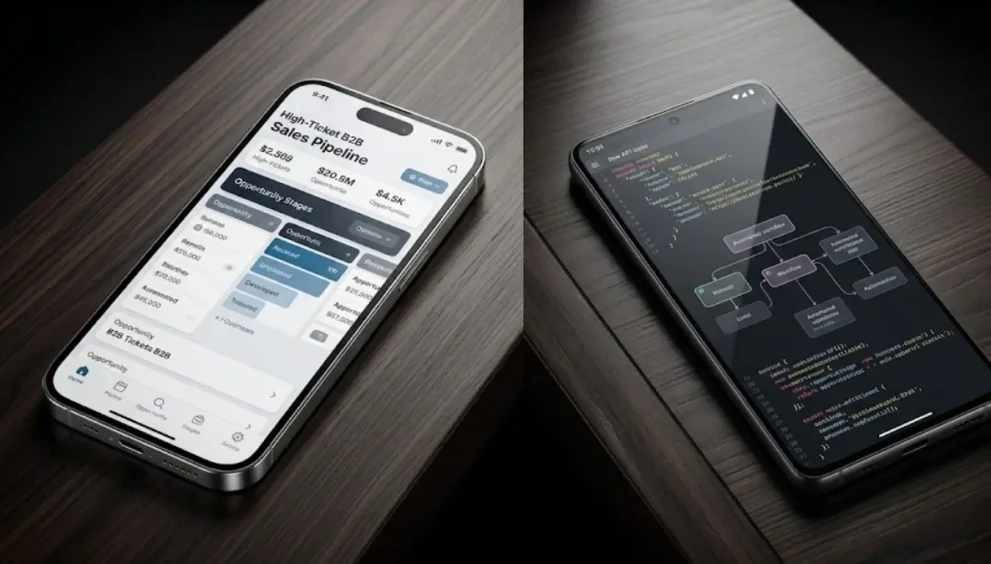
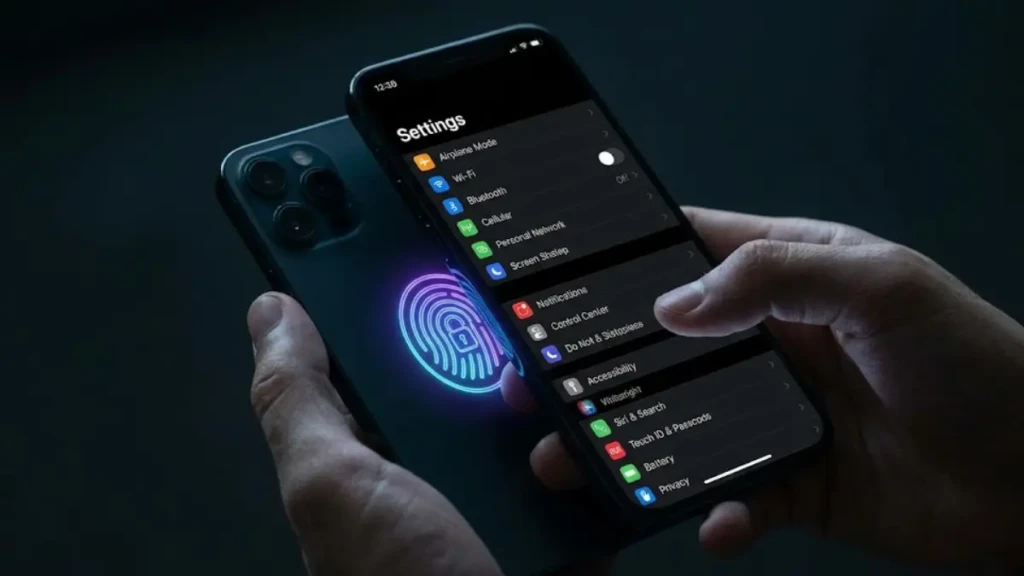
In the modern digital economy, your smartphone is not a communication device; it is a mobile revenue engine. If you are running high-intent performance marketing campaigns, managing a B2B sales pipeline, or orchestrating automated workflows, your choice of operating system directly impacts your operational bandwidth.
The iPhone vs Android 2026 debate is entirely useless if framed around hardware specs. Both ecosystems feature phenomenal cameras, multi-day batteries, and blazing-fast native AI processing.
The real question is: Which operating system aligns with your specific business model?
If you are trying to maximize your global income without being tied to a desktop, you must evaluate iOS and Android based on networking friction, automation capabilities, and content creation workflows. Here is the rigorous, performance-based breakdown of the 2026 mobile landscape.
Table of Contents
- The B2B Networking Reality (The USA/Canada Market)
- Automation & Data Orchestration (The Open-Source Advantage)
- Performance Marketing & Visual Assets
- The Generative AI Integration
- Expert Insight: The Command Center Mindset
- Frequently Asked Questions (FAQ)
1. The B2B Networking Reality (The USA/Canada Market)
In high-ticket B2B sales, friction kills deals. If you are operating primarily in the North American market, communication synergy is a massive operational lever.
The Apple Advantage (iOS): In the USA and Canada, the iPhone maintains a dominant market share among business executives and founders.
- iMessage Integration: This is not about the color of the text bubble. iMessage allows for secure, instantaneous sharing of high-resolution PDFs, pitch decks, and large video files directly to a prospect’s pocket without relying on third-party cloud links.
- The “AirDrop” Network: When attending high-level conferences or Masterminds, the ability to AirDrop digital business cards or structured data sheets instantly to other decision-makers provides a massive tactical advantage.
The Verdict: If your primary revenue stream relies on direct, high-ticket B2B relationship building within North America, the iPhone offers zero-friction networking.
2. Automation & Data Orchestration (The Open-Source Advantage)
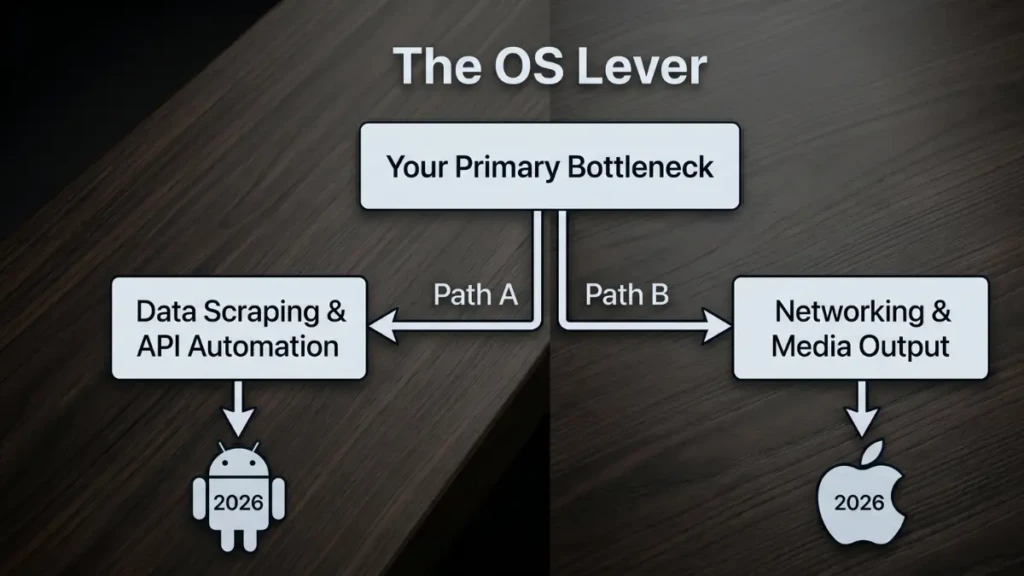
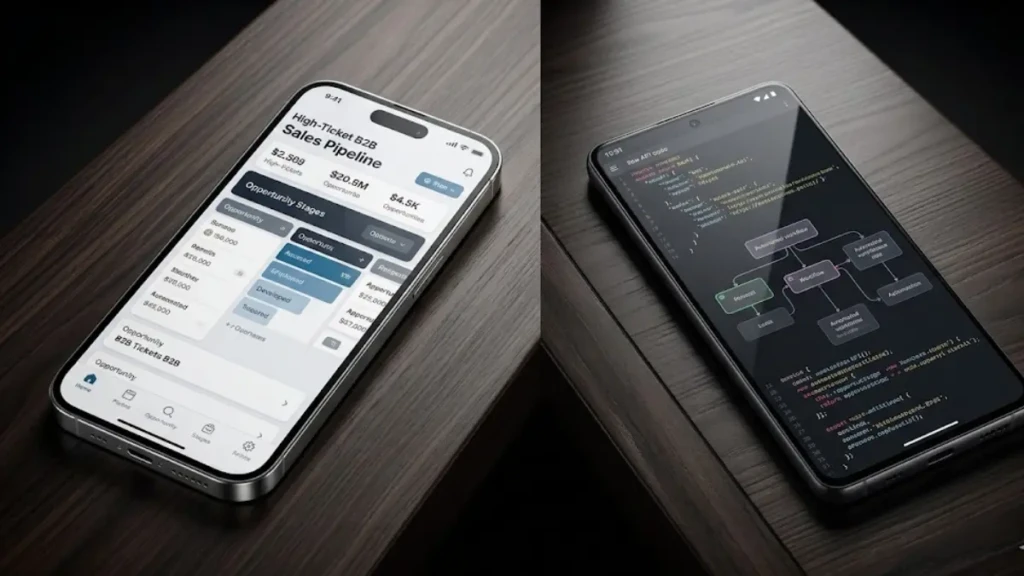
If your business relies on predictive revenue systems, web scraping, or triggering complex APIs while away from your desk, the “walled garden” of iOS becomes a suffocating bottleneck.
The Android Advantage: Android devices (specifically flagships like the Samsung Galaxy S26 Ultra) operate essentially as pocket-sized Linux servers.
- Background Data Orchestration: Android allows automation tools and webhooks (via platforms like Make.com or n8n) to run aggressively in the background without the OS killing the process to save battery.
- Desktop Simulation: Samsung’s DeX mode allows you to plug your phone into any monitor in a hotel lobby or airport lounge and instantly launch a full desktop interface. You can manage complex CRM pipelines and run full Chrome extensions on the go.
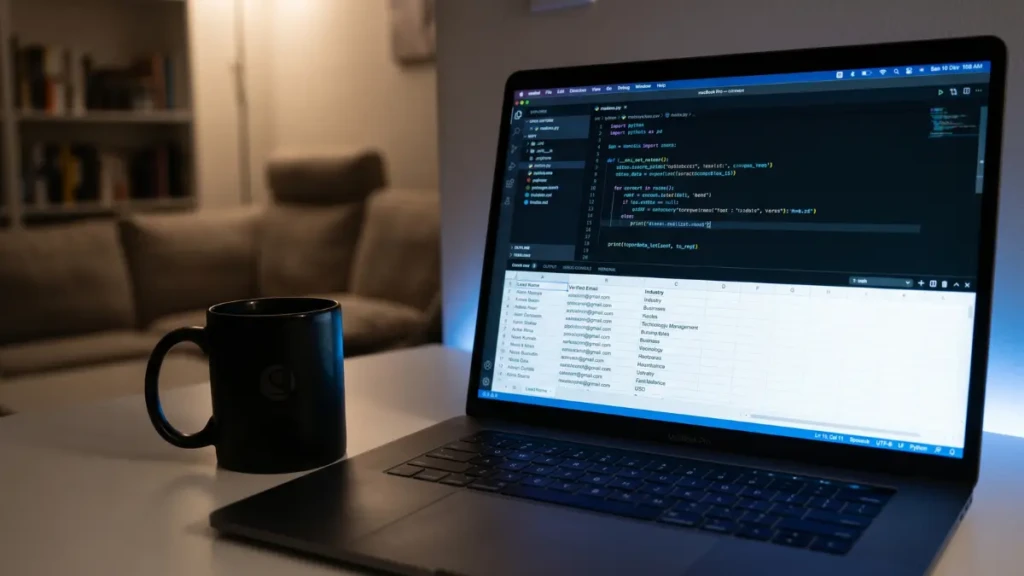
- File Management: If you are downloading raw CSV files of scraped leads and need to manipulate the structured data before pushing it to your outbound engine, Android’s open file system is vastly superior.
The Verdict: If you are an AI Automation Architect or RevOps manager who builds complex backend systems, Android is the ultimate technical tool.
3. Performance Marketing & Visual Assets
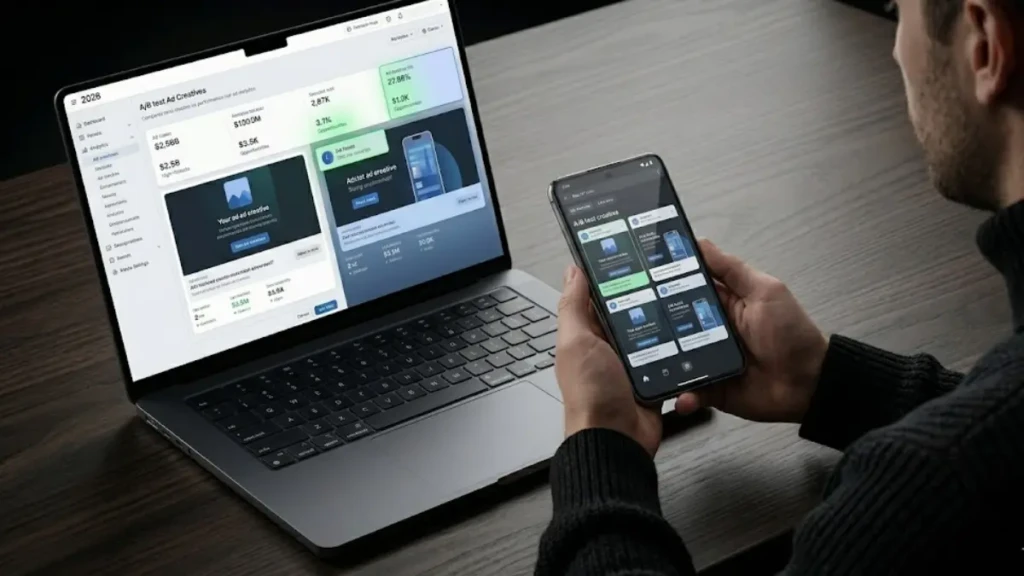
When managing a brand’s digital presence, the quality of your visual output dictates your perceived authority.
The Apple Advantage (iOS):
- Native App Optimization: Social media platforms (LinkedIn, Instagram, TikTok) have historically prioritized iOS development. When you upload a video shot on an iPhone directly to an app, the compression algorithm is significantly kinder. Android video uploads often suffer from noticeable artifacting on these specific platforms.
- ProRes Ecosystem: The iPhone’s ability to shoot in Apple ProRes log profile allows performance marketers to capture cinematic, flat-color video that seamlessly drops into professional editing workflows (like Premiere Pro or Final Cut) for high-end color grading.
The Verdict: For performance marketers and content creators who rely heavily on high-fidelity visual hooks to convert traffic, the iPhone remains the undisputed king of media capture.
4. The Generative AI Integration
In 2026, the device that most effectively integrates Large Language Models (LLMs) into your daily workflow wins.
- Android (Google Gemini/Galaxy AI): Google has woven Gemini deeply into the Android OS. It excels at reading the context of your screen, summarizing chaotic email threads, and seamlessly integrating with Google Workspace tools.
- iPhone (Apple Intelligence): Apple’s approach is highly compartmentalized and privacy-focused. It excels at cross-app natural language actions (e.g., “Pull the lead data from that email Priya sent me yesterday and create a new contact card”).
The Verdict: This is a Tie. Android excels at broad data synthesis, while Apple excels at secure, personal context execution.
Expert Insight: The Command Center Mindset
We asked a top-tier digital systems architect how they choose their hardware.
“Do not buy a phone based on brand loyalty; buy it based on your primary operational bottleneck. If you run a B2B LinkedIn optimization agency targeting US executives, the cultural leverage of iOS is a genuine business tool. If you are building automated lead scraping workflows and need unhindered API access from a coffee shop, Android is mandatory. Identify the system that generates your highest ROI, and buy the hardware that eliminates friction from that specific system.”
Frequently Asked Questions (FAQ)
Which phone lasts longer for business use, iPhone or Android?
In 2026, flagship devices from both Apple (iPhone 17 Pro Max) and Samsung (Galaxy S26 Ultra) offer exceptional multi-day battery life. However, Apple’s proprietary silicon (the A-series chips) generally provides better sustained efficiency under heavy visual workloads, while Android flagships typically offer significantly faster wired charging speeds for quick top-ups between meetings.
Is Android more secure than iPhone for corporate data?
Apple’s “walled garden” approach inherently blocks side-loading and strictly sandboxes apps, making the iPhone statistically less vulnerable to casual malware. However, enterprise-grade Android devices utilize systems like Samsung Knox, which provides military-grade hardware encryption that is equally secure for managing high-level corporate data and sensitive CRM information.
Should my agency switch to one unified operating system?
If you have a remote team, forcing a unified mobile OS is unnecessary and expensive. Focus on unifying your cloud infrastructure (using universally accessible tools like Slack, HubSpot, and Notion). As long as your operational systems are cloud-based and browser-accessible, your team can use whichever mobile hardware makes them the most productive.
Optimize Your Hardware
The iPhone vs Android 2026 debate is solved the moment you define your business model. Stop looking at these devices as consumer electronics. If you are scaling high-ticket visual campaigns and operating in the North American executive space, leverage the iPhone. If you are building autonomous data pipelines and require absolute technical control, weaponize Android.
Ready to optimize the software running on that new hardware? Read our masterclass on the [Best AI Tools to Make Money Online: 2026 Tested List].
Alex Chen
03rd Jul 2026Très bon article ! Pour la vidéo IA, essayez Pixwit : /. Pixwit
Jordan Lee
24th Jul 2026Clear and useful tips here. One tool I use for AI songs is TextSong: . TextSong
Alex Chen
26th Jul 2026Nice perspective on the topic. You may find Pixwit useful — . Pixwit
Alex Chen
26th Aug 2026Good read! Sharing Swift-image (/) — handy for portraits, products and restyles.. Swift-image