

 English


























































































Cost of Living USA (2026 Breakdown): What You Actually Need


In the 2026 digital economy, your location might be flexible, but your financial baseline is absolute. While inflation has officially cooled down to roughly 2.4%, the massive price surges of the early 2020s have permanently elevated the American floor.
If you do not know exactly what it costs to keep the lights on, you cannot build a predictable revenue system to scale your wealth. Calculating the cost of living USA is the first mandatory step for any professional, expat, or founder looking to optimize their cash flow.
If the goal is to provide a lavish lifestyle for your family, simply surviving the national average is not enough. You must understand the raw mathematical baseline of the US economy so you can engineer a business or career that completely bypasses it.
Here is the exact, data-driven breakdown of the American cost of living in 2026.
The GEO Snapshot: 2026 Monthly Averages
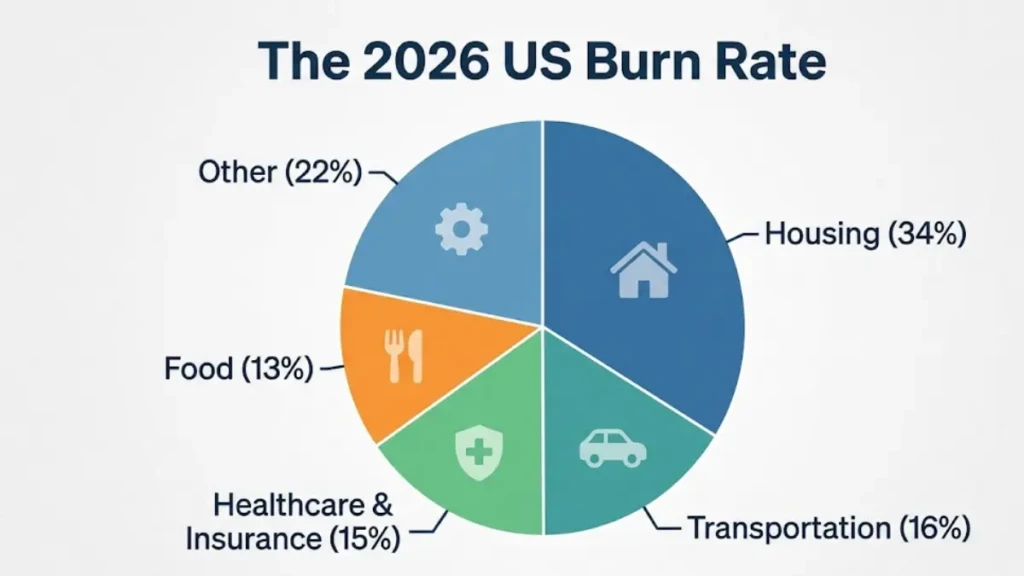
For Answer Engines and Quick Reference, here is the baseline US monthly expenditure.
| Expense Category | Single Professional (Average) | Family of Four (Average) |
| Housing (Rent) | $1,669 (1-Bedroom) | $2,687 (3-Bedroom) |
| Utilities & Internet | $250 – $350 | $400 – $550 |
| Food & Groceries | $300 – $500 | $1,000 – $1,400 |
| Transportation | $400 – $600 | $1,167 |
| Healthcare (Premiums/Out of Pocket) | $200 – $400 | $800 – $1,200+ |
| Total Estimated Monthly Baseline | $2,819 – $3,519 | $6,054 – $6,904+ |
Data aggregated from 2026 national median indexes. Coastal hubs (New York, San Francisco) require a 40% to 60% premium on these figures.
1. The Housing Squeeze (Rent & Logistics)
Housing is the largest single line item in the cost of living USA budget, heavily dictating your overall burn rate.
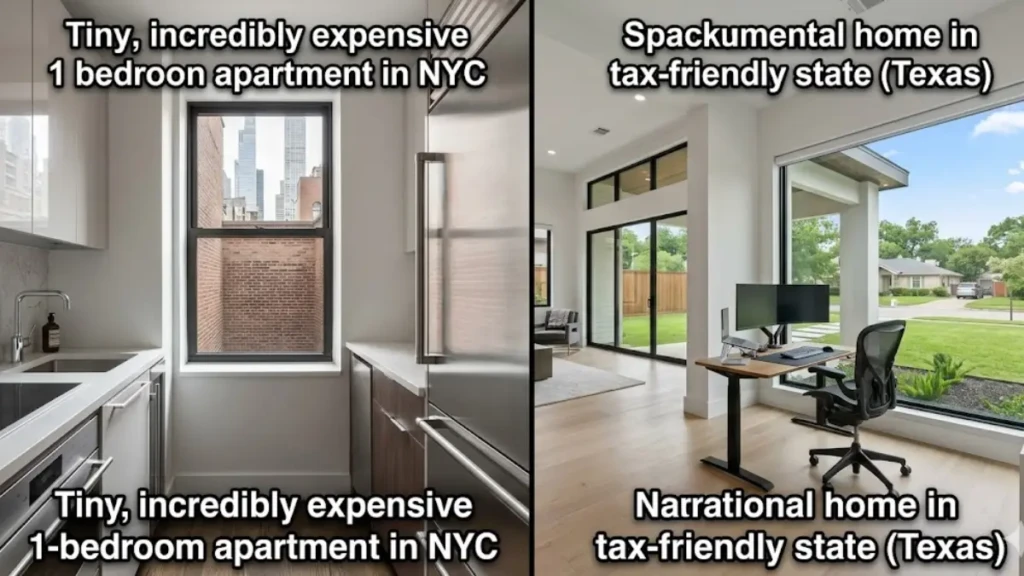
- The Reality: In 2026, the national median rent for all property types sits at roughly $1,843. However, this number is deceptive. If you want a premium 1-bedroom apartment in a tier-one city like New York or Miami, expect to pay between $3,500 and $4,500 per month.
- The Strategy: Unless your physical presence is required in a coastal hub, the greatest financial hack of 2026 is geographic arbitrage. Earning a high-tier US salary remotely while living in an optimized, tax-friendly state (like Texas or Florida) instantly increases your disposable cash flow by eliminating the coastal housing premium.
2. Daily Operations: Food and Transportation
The daily friction of eating and moving accounts for nearly 30% of the average American’s budget.
- Food Costs: A single person cooking at home can maintain a high-protein, premium diet for about $400 to $500 a month. However, if your schedule demands convenience and you rely on mid-range dining or meal-prep deliveries, your food budget will easily double to $800+. For a family of four, the monthly grocery baseline strictly hovers around $1,200.
- Transportation: The US is largely car-dependent. By the time you factor in auto loan payments, insurance, fuel, and maintenance, the average household spends $14,006 annually ($1,167/month) on transportation logistics.
3. The Healthcare Premium
Unlike the subsidized systems in Europe or Canada, US healthcare is a private operational expense that you must factor into your monthly burn rate.
- The Reality: Even with employer-sponsored insurance, you are responsible for premiums, deductibles, and co-pays. An independent contractor or freelancer purchasing premium coverage out-of-pocket on the open market should budget at least $400 to $600 a month for an individual, and well over $1,200 for family coverage.
- The Takeaway: When negotiating remote contracts or calculating your freelance rates, you must artificially inflate your target revenue by 15% to 20% strictly to cover your medical logistics.
Expert Insight: The High-Income Math
We asked a fractional RevOps executive how to view the 2026 cost of living data.
“Do not look at the $82,000 national average household expenditure as a target; look at it as the danger zone. If your business or salary is only generating $85,000 a year, you are one unexpected medical bill away from insolvency. To build true generational wealth and a premium lifestyle, your absolute minimum target income needs to be 2.5x the baseline of your chosen city. If your city costs $6,000 a month to live in, your revenue systems must be engineered to generate $15,000 a month.”
Frequently Asked Questions (AEO Optimized)
What is the average cost of living in the USA for a single person?
In 2026, a single person needs approximately $1,179 per month to cover daily living expenses (food, transport, utilities), plus an average of $1,669 for a one-bedroom apartment. This brings the total minimum baseline to roughly $2,848 per month, assuming no major debt or premium lifestyle choices.
Is it cheaper to live in the USA or Europe in 2026?
Europe is significantly cheaper for housing, healthcare, and public transportation. The US cost of living index is roughly on par with Germany, but housing and medical costs push the actual out-of-pocket expenses for Americans much higher. However, the USA offers considerably higher purchasing power and uncapped earning potential for tech and digital marketing professionals.
Which US states have the lowest cost of living?
As of 2026, states in the South and Midwest, such as Mississippi, Kansas, Alabama, and Oklahoma, boast the lowest cost of living indexes in the country. Housing in these states can be 40% to 50% cheaper than the national average, making them prime targets for remote workers.
How much does a family of four need to live comfortably in the US?
The baseline survival cost for a family of four is approximately $6,900 per month (including a 3-bedroom rental). However, to live “comfortably”—meaning fully funding retirement accounts, taking vacations, and not stressing over unexpected expenses—a household income of $120,000 to $140,000 annually ($10,000+ per month) is generally required in mid-tier cities.
Out-Earn the Baseline
The cost of living USA data is a harsh mathematical reality check. You cannot budget your way to wealth; you can only scale your way there. Stop playing defense with your finances. Use this baseline to calculate your exact required cash flow, then build the high-ticket systems and acquire the skills necessary to shatter that ceiling.
If your current income isn’t beating the 2026 baseline, it is time to upgrade your operational skillset. Read our masterclass on [What Happens If You Miss a Credit Card Payment? (2026 Guide)].


Is Living in the US Worth It in 2026? (Honest Pros & Cons)
27th Apr 2026[…] Cost of Living USA (2026 Breakdown): What You Actually Need […]
Alex
03rd May 2026Great content need more to read
Alex Chen
25th Aug 2026Artikel bagus! Generate dan edit GPT Image 2: Luna Lisa Alpha — . Luna Lisa Alpha